
Breakfast & Brunch
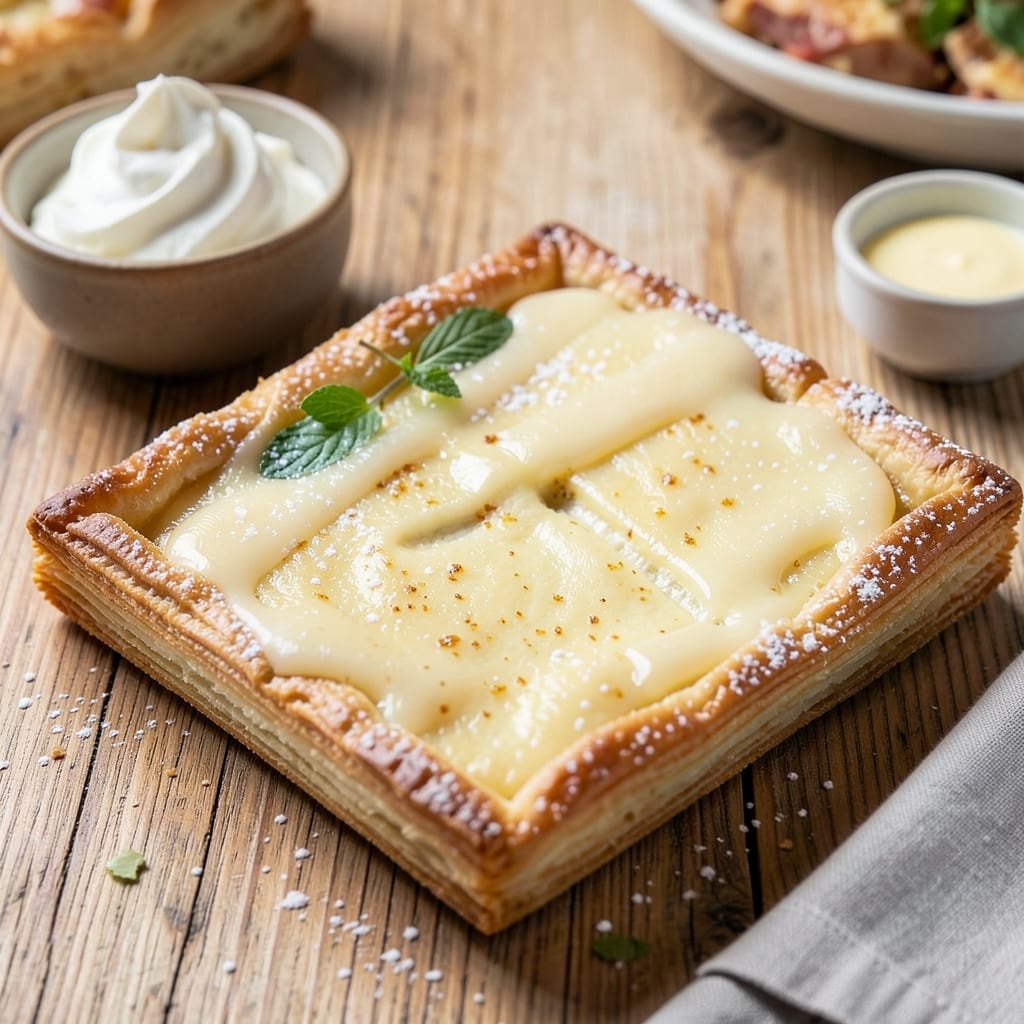
This basic egg custard tart recipe delivers the perfect balance of crisp golden crust and silky, jiggly custard—every bite is pure comfort. The secret lies in a pre-baked crust that stays sturdy while the custard sets to a velvety finish, with no cracks or watery centers. I’ve perfected this technique over years of baking, ensuring the filling stays rich and the crust maintains its delicate crunch.
What makes these custard tarts special is their simplicity: just a few ingredients—eggs, cream, sugar, and cornstarch—transformed into a luxurious dessert with minimal effort. The custard is tempered carefully to avoid scrambling, while the crust (shortcrust or puff pastry) bakes just enough to hold its shape before the filling goes in. Baking at 375°F ensures a golden top without burning the edges.
By the time you pull these from the oven, you’ll have golden, flaky crusts filled with custard so smooth it practically melts on your tongue. The contrast between the crisp pastry and the creamy, slightly caramelized filling is what makes these tarts irresistible. Serve them warm with a dusting of powdered sugar or a drizzle of vanilla glaze for extra elegance.
For variations, try adding vanilla bean or lemon zest to the custard for a bright twist, or adjust the sugar slightly for a richer or lighter flavor. These tarts are perfect for breakfast, brunch, or even dessert—just be prepared to make them again and again. Let’s get started!
Ingredients for basic egg custard tart
Just eleven ingredients transform into golden crusts and velvety custard—no fancy tricks, just perfect balance.
| Ingredient | Amount | Notes |
|---|---|---|
| Large Eggs 🥚 | 4 whole | Room temperature for best blending |
| Heavy Whipping Cream 🥛 | 1 ½ cups | Full-fat for richest custard |
| Granulated Sugar 🍚 | ¾ cup | Adjust for sweetness preference |
| Cornstarch 🌾 | 2 tbsp | For smooth, silky texture |
| Vanilla Extract 🌸 | 1 tbsp | Pure vanilla for authentic flavor |
| Unsalted Butter 🧈 | ½ cup | Cold, cubed for crust |
| All-Purpose Flour 🌾 | 1 ½ cups | Plus 1 tsp sugar for crust |
| Pinch of Salt 🧂 | ¼ tsp | Enhances all flavors |
| Puff Pastry Sheets 🥧 | 2 whole | Or homemade shortcrust |
| Powdered Sugar 🍚 | ¼ cup | For dusting finished tarts |
| Lemon Zest 🍋 | 1 tsp | Optional bright twist |
The eggs are the heart of this custard, so grab the freshest you can find—store-brand works fine as long as they're not past their prime. Heavy cream is non-negotiable here (the light stuff won't cut it), and I always buy the organic version from Trader Joe's—it's richer and makes a noticeable difference. For the crust, puff pastry is a game-changer if you're short on time, but nothing beats homemade shortcrust for that classic tart flavor. The vanilla extract should be pure—imitation stuff tastes like perfume. And that cornstarch? It's what turns your custard from grainy to silky smooth.
No vanilla extract? Vanilla bean paste works too—just use half the amount. Short on puff pastry? Homemade shortcrust is easy (butter, flour, pinch of salt) and gives that rustic charm. The lemon zest is totally optional, but if you've got it, add it—it brightens up the whole thing. For the sugar, feel free to adjust: reduce by 1 tbsp if you prefer less sweetness. And if you're making these ahead, store-bought custard powder can be a lifesaver for the filling (just follow package directions).
The crust keeps best in the fridge for 3 days before adding filling, and the finished tarts stay fresh for 2 days covered at room temp. For longer storage, freeze the baked tarts (without powdered sugar) for up to 2 months. I always make a double batch—half for breakfast the next morning, half for dessert later. The powdered sugar should be sifted right before serving so it doesn't clump. And if you're feeling fancy, add a vanilla glaze drizzle right after baking.
Why You'll Love This Recipe
- Let’s be real: custard tarts are made for seconds. The leftovers stay creamy for days (yes, really), and they reheat in a flash. Plus, it’s cheaper than takeout—same satisfaction, way less guilt. My wallet thanks me every time.
- Five-Ingredient Magic: I swear by this—just eggs, cream, sugar, cornstarch, and vanilla. That’s it. No fancy ratios to memorize, no last-minute grocery runs. The custard comes together while you’re still debating whether to set the table.
- Silky Smooth Payoff: The moment that golden custard sets with that just-right jiggle? Honestly, it’s the kind of texture that makes you pause mid-bite. The vanilla cuts through the richness, and the cornstarch keeps it luscious without being heavy—like a hug from your grandma, but better.
- Breakfast or Dessert: Between us, this is my go-to for lazy mornings and impromptu dessert nights. Serve it warm with a drizzle of honey for brunch, or chill it for a no-fuss treat. Even my picky teen sneaks seconds when he thinks I’m not looking.
Step-by-step instructions for golden crust, silky yolk magic
Here's how to turn simple ingredients into showstopping custard tarts with perfect balance.
Make the Crust and Prepare the Tart Shells
Cut the 2 whole puff pastry sheets in half crosswise to make 4 rectangles each. Brush each rectangle lightly with cold water and sprinkle with 1 tablespoon of the all-purpose flour mixed with 1 teaspoon of the granulated sugar. Fold the pastry in thirds and roll out again to create flaky layers.
Press the rolled pastry into 6 tart molds (about 3 inches wide) and prick the bottoms with a fork. Place the prepared tart shells on a parchment-lined baking sheet and freeze for 15 minutes to firm up. Preheat your oven to 375°F while they chill. Bake the shells for 12-15 minutes until golden brown and just starting to crisp at the edges. Let them cool completely before filling.
Whisk the Custard Filling to Perfection
In a medium bowl, whisk together the 4 whole large eggs, 1.5 cups heavy whipping cream, 0.75 cup granulated sugar, 2 tablespoons cornstarch, 1 tablespoon vanilla extract, and the 0.25 teaspoon pinch of salt until completely smooth. The mixture should be pale yellow and homogeneous with no visible streaks of flour.
I like to strain the custard through a fine-mesh sieve at this point to ensure an ultra-smooth texture. Add the 1 teaspoon lemon zest and stir gently to combine. This is where the magic happens—the lemon zest adds a bright, subtle citrus note that cuts through the richness of the custard.
Assemble and Bake the Tarts
Pour the custard filling into the cooled tart shells, filling each about ¾ full. Bake in the preheated 375°F oven for 30-35 minutes until the custards are set but still slightly wobbly in the center. A toothpick inserted should come out clean, but the center should still have a slight give when gently pressed.
Real talk: Don't overbake these. The custards will continue setting as they cool, and you want that silky, jiggly center. If the tops brown too quickly, tent the baking sheet with foil to prevent over-browning while maintaining doneness.
Cool and Dust with Powdered Sugar
Remove the tarts from the oven and let them cool at room temperature for at least 2 hours. This slow cooling prevents the custards from cracking and allows them to set properly. I know it's tempting to eat them warm, but patience here makes all the difference.
Once completely cooled, dust the tops generously with the 0.25 cup powdered sugar using a fine-mesh sieve. This creates that beautiful, snowy finish that makes these tarts look like they came from a fancy bakery. Store any leftovers in the refrigerator for up to 3 days, but honestly, they won't last that long!
Pro Tips For Making Basic Egg Custard Tart
- Whisk Eggs Cold: Start your egg mix over an ice bath—literally. Cold eggs temper better and won’t scramble when you add the hot cream later. I learned this the hard way after making a lumpy mess; now I swear by it.
- Strain the Cream: Heat the heavy cream until it’s steaming (not boiling), then strain it through a fine-mesh sieve. This removes any grit or impurities that’ll make your custard taste off—like drinking cream through a straw with sand in it.
- Skip the Boil: Once the custard thickens enough to coat the back of a spoon, pull it off the heat immediately. Overcooking turns it gluey; let residual heat finish the job. I used to watch it like a hawk, but now I trust the thermometer (or my wrist—dip a spoon in, let it cool 10 seconds).
- Chill Before Baking: Pour the custard into your tart shell and refrigerate it for at least 2 hours. Cold custard bakes evenly and won’t spill over the edges. (Yes, even if you’re impatient like me—this isn’t the step to rush.)
Perfect pairings for these flavors
Coffee Pairings
These custard tarts pair beautifully with a light roast coffee like a Colombian or Ethiopian—their bright acidity cuts through the richness without overpowering the delicate custard. I always reach for a medium-bodied pour-over (around 12-15 oz) to balance the sweetness. For a stronger contrast, try an espresso martini with its bold, creamy notes. ☕
Tea Complements
A jasmine green tea or Earl Grey adds an elegant touch to your custard tart experience. The floral notes in jasmine tea complement the vanilla, while the bergamot in Earl Grey enhances the lemon zest. Brew a small pot (1-2 cups) and serve it warm to let the flavors meld. For a chilled option, chamomile iced tea provides a soothing contrast to the rich custard.
Wine Recommendations
For a sophisticated pairing, opt for a dry Riesling—its crisp acidity and subtle sweetness mirror the custard's texture. I love a German or Alsatian Riesling with its bright citrus and stone fruit notes. If you prefer red, a light Pinot Noir (like one from Oregon) works surprisingly well, especially if your custard has a hint of lemon zest. 🍷
Seasonal Fruit
In warmer months, serve these tarts with sliced peaches or berries—their natural sweetness and acidity enhance the custard's flavor. For fall, roasted pears or figs add a caramelized depth. In winter, candied citrus peel (like orange or lemon) provides a festive, aromatic touch that pairs perfectly with the vanilla. 🍑
Dessert Wine Twist
For a dessert-focused pairing, try a Moscato d'Asti—its light effervescence and sweetness create a delightful contrast to the custard's richness. A sweet Riesling or late-harvest Gewürztraminer also works beautifully, especially if your tarts have a pronounced vanilla or citrus flavor. Serve the wine slightly chilled for the best experience.
Creamy Pairings
If you love textures, pair these tarts with vanilla bean ice cream or crème fraîche for a decadent dessert experience. The cold creaminess contrasts perfectly with the warm custard. For a lighter option, coconut whipped cream adds a tropical twist that balances the tart's richness. 🥥
Nutrition facts
Frequently asked questions
Why does my custard filling look grainy?
Graininess usually means the eggs weren't fully blended with the dry ingredients. Whisk the custard mixture for at least 3-4 minutes until completely smooth, then strain it through a fine-mesh sieve. Cold eggs can also cause this—use room-temperature eggs for best results.
Can I make these tarts without a tart pan?
Use a 9-inch pie dish or divide the dough into small rounds for mini tarts on a baking sheet. Line the bottoms with parchment circles to prevent sticking. For individual portions, use ramekins or oven-safe bowls (about 3 inches wide).
How do I prevent the custard from cracking?
Cracks happen when the custard cools too quickly. Always bake at 375°F until just set (toothpick clean but slightly jiggly), then let cool completely at room temperature for 2+ hours before refrigerating. Avoid opening the oven door during baking to maintain even heat.
What's the difference between custard and crème pâtissière?
This recipe is a classic custard (eggs + cream + sugar), while crème pâtissière uses a roux (butter + flour) for thickening. Both are delicious, but custard has a lighter, silkier texture. For extra richness, you could add 1 tbsp butter to this recipe—just whisk it in at the end.
Can I make these tarts ahead of time?
Yes! Assemble the tarts (unbaked) up to 24 hours ahead and refrigerate. Bake when ready. For fully baked tarts, store at room temperature for 2 days or refrigerate for 3 days. Freeze unbaked tarts (with custard) for 1 month—bake from frozen, adding 5-10 minutes to the baking time.