
Breakfast & Brunch
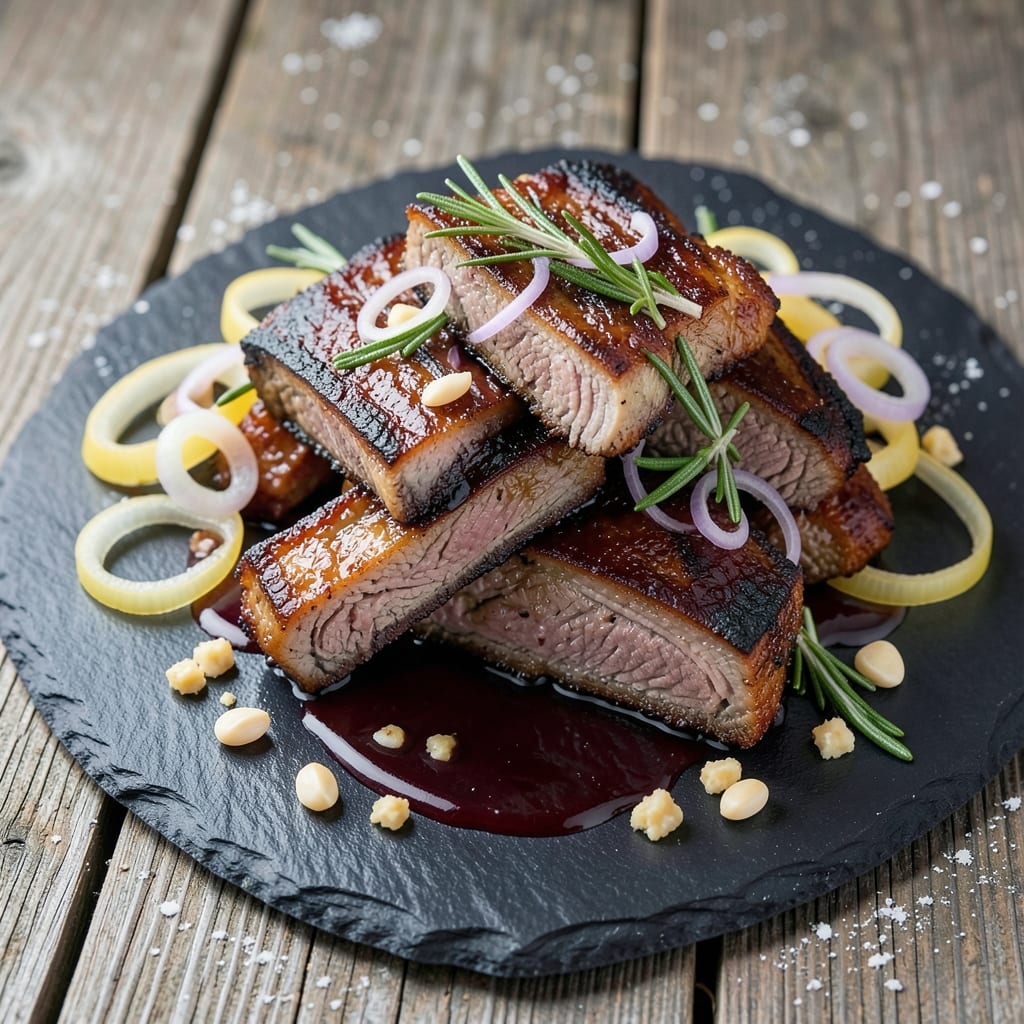
This Big Green Egg short rib recipe transforms tough cuts into melt-in-your-mouth perfection with a smoky-sweet crust that falls apart at the touch of a fork. The secret lies in low-and-slow cooking—where the Big Green Egg’s even heat and natural wood-fired smoke infuse every bite with deep, complex flavors without overpowering the beef’s natural richness. I’ve perfected this method over countless backyard sessions, and it never fails to impress, even with the most skeptical eaters.
The process begins with a dry brine—salting the ribs 24 hours ahead—to ensure maximum tenderness, followed by a quick sear in the Big Green Egg’s cast-iron skillet for a caramelized crust. Then, it’s all about patience: smoking the ribs at 225°F for 4-5 hours until they’re fork-tender, basting occasionally with a simple red wine reduction to keep them moist and glossy. The result? Ribs so tender they practically disintegrate, wrapped in a crust that’s smoky, slightly sweet, and impossible to resist.
Pair these ribs with creamy mashed potatoes or a crisp green salad to balance the richness, and finish with a drizzle of that same red wine reduction for an extra layer of depth. The Big Green Egg’s ability to control temperature precisely means no dry meat, no burnt edges—just restaurant-quality short ribs you can make in your own backyard. This is the kind of dish that turns a weekend cookout into a memorable feast.
Whether you’re feeding a crowd or treating yourself to a special meal, these ribs deliver on flavor, texture, and ease—no fancy equipment required, just time and attention. Let’s get cooking.
Ingredients for big green egg short rib
Six ingredients transform tough ribs into backyard masterpieces—smoky, sweet, and impossible to resist.
| Ingredient | Amount | Notes |
|---|---|---|
| Bone-In Beef Short Ribs 🥩 | 4 lb | French-cut, 2-3 inches thick |
| Kosher Salt 🧂 | ½ cup | Diamond Crystal preferred |
| Freshly Ground Black Pepper 🌶️ | 2 tbsp | Coarse grind for texture |
| Yellow Onions 🧅 | 2 whole | Yellow or red, sliced into rings |
| Garlic Cloves 🧄 | 8 cloves | Smashed, not minced |
| Dry Red Wine 🍷 | 1 cup | Cabernet Sauvignon or Merlot |
| Beef Bone Broth 💧 | 2 cups | Homemade or high-quality store-bought |
| Brown Sugar 🍚 | ¼ cup | Light or dark, packed |
| Smoked Paprika 🌶️ | 1 tbsp | For smoky depth |
| Fresh Thyme 🌿 | ¼ cup | Leaves only, stems removed |
| Wood Chips 🌳 | 1 package | Hickory or cherry preferred |
| Extra-Virgin Olive Oil 🫒 | 2 tbsp | For searing |
| Unsalted Butter 🧈 | 2 tbsp | For basting |
The beef is non-negotiable here. French-cut short ribs with bone and connective tissue are essential—they’re what give you that melt-in-your-mouth texture. Grab them from Whole Foods or your local butcher, and ask for cuts that are at least 2-3 inches thick. Thinner ribs cook faster but don’t render enough fat for that perfect crust. If you’re buying in bulk, freeze them until ready to use—they’ll dry-brine beautifully straight from the freezer. Look for good marbling, and don’t skimp on the weight. These ribs are the star, so treat them like it.
No dry red wine? Substitute beef broth with a splash of balsamic vinegar—it’ll mimic the acidity and depth. Fresh thyme is ideal, but dried thyme at one-third the amount works in a pinch. The wood chips are crucial—hickory or cherry from Traeger or Cookshack give the best flavor, but applewood works too if that’s what you’ve got. For the brown sugar, light or dark doesn’t matter, but make sure it’s packed into the measuring cup. The olive oil should be extra-virgin—none of that cheap stuff. And if you’re short on butter, ghee works too—it’s got a higher smoke point for basting.
These ribs are a marathon, not a sprint. Once you’ve dry-brined and seared them, they’ll keep in the fridge for up to 3 days before smoking, wrapped tightly in plastic. The finished ribs reheat beautifully—just warm them in the oven at 300°F for 10-15 minutes with a splash of broth. For leftovers, portion them into containers with some of that smoky reduction and freeze for up to 3 months. Pro tip: save the leftover bone broth and reduction for soups or gravies—it’s packed with flavor.
Why You'll Love This Recipe
- One-Pot Magic: I swear by this recipe—just toss the ribs, onions, and garlic into the Big Green Egg, let it do the work, and walk away. No chopping boards, no extra pans, just hands-off cooking while you grill your burgers or sip a beer.
- Deep Umami Bomb: That bone-in magic happens when you slow-cook the ribs—rich, caramelized edges with meat so tender it falls off the bone. The onions and garlic mellow into a sweet, savory base that’ll have you licking the plate.
- Weeknight or Weekend Star: Throw it on the Egg for a casual dinner with friends or fire it up for a showstopping meal. Same recipe, different vibes—just adjust the time and you’re golden. (Honestly, my lazy Sundays love this.)
- Leftovers That Don’t Suck: The ribs keep for days, and the flavor only gets better. Reheat in the Egg or oven, or shred for tacos—no one will guess it’s not fresh. Budget win: one cut of meat stretches into three meals.
Step-by-step instructions for Big Green Egg short ribs
Here's how to transform tough short ribs into melt-in-your-mouth perfection with a smoky-sweet crust.
🔥 Step 1: Prepare and Season the Short Ribs
Start by trimming any excessive fat from the 4 lb bone-in beef short ribs, leaving about ¼-inch of fat cap for flavor and moisture. Pat the ribs dry with paper towels—this step is critical for developing that coveted crust. In a small bowl, combine 0.5 cup kosher salt and 2 tbsp freshly ground black pepper, then rub this mixture generously over all sides of the ribs, pressing it into the meat so it adheres well.
Place the seasoned ribs on a wire rack set over a baking sheet and refrigerate uncovered for 1 hour. This dry-brining process helps draw out excess moisture, which is key for that crispy exterior. While they brine, prepare your Big Green Egg by filling the water pan halfway with water and adding 1 package wood chips (hickory or cherry). Light the egg and let it preheat to 225°F with the lid closed.
🍳 Step 2: Sear the Ribs for Maximum Flavor
Once the egg reaches temperature, remove the ribs from the fridge and let them sit at room temperature for 15 minutes. Heat a cast-iron skillet over high heat on the grill grate, then add 2 tbsp extra-virgin olive oil and let it get smoking hot. Working in batches to avoid crowding, sear the ribs for 2-3 minutes per side until they develop a deep golden-brown crust. Transfer the seared ribs to a heatproof dish and set aside.
In the same skillet, add 2 whole yellow onions sliced into rings and cook for 5-6 minutes until caramelized. Remove the onions and set aside with the ribs. Add 8 smashed garlic cloves to the skillet and cook for 30 seconds until fragrant. This aromatic base will infuse the ribs with deep, savory notes as they smoke.
🔥 Step 3: Smoke the Ribs Low and Slow
Arrange the seared ribs bone-side down on the grill grate, then add the caramelized onions and garlic to the egg. Pour 1 cup dry red wine into the water pan to create a steam environment that keeps the ribs moist. Close the lid and smoke the ribs for 4 hours, maintaining a temperature between 225-250°F. Here's the thing—don't peek or open the lid during this time. Every time you do, you lose heat and moisture, extending the cook time unnecessarily.
After 4 hours, check the internal temperature of the ribs using a meat thermometer. They should reach 195-203°F—this is when they'll begin to pull away from the bone and develop that irresistible tenderness. If they haven't reached this temperature, return them to the egg and continue smoking, adding ½ cup beef bone broth to the water pan every 30 minutes to maintain moisture.
🥘 Step 4: Build the Smoky-Sweet Crust
Once the ribs reach the target temperature, remove them from the egg and transfer to a cutting board. In a small bowl, combine 0.25 cup brown sugar, 1 tbsp smoked paprika, and 0.25 cup fresh thyme leaves. Brush this mixture generously over the ribs, ensuring every surface is coated. This sweet-spicy rub will create that signature crust that falls apart with just a touch.
Return the ribs to the egg, bone-side down, and smoke uncovered for an additional 30-45 minutes at 275°F. This higher temperature caramelizes the sugar and deepens the smoky flavor. Watch closely—the crust should turn a deep mahogany color with a glossy sheen. If it starts to burn, reduce the heat slightly or move the ribs to a cooler part of the grill.
⏰ Step 5: Rest and Serve with Confidence
Remove the ribs from the egg and let them rest on a cutting board for at least 15 minutes before serving. This resting period allows the juices to redistribute, ensuring each bite is moist and flavorful. To serve, slice the ribs between the bones into individual portions. The meat should fall apart effortlessly, revealing that beautiful pink center and rich, smoky-sweet crust.
For an extra touch, melt 2 tbsp unsalted butter in a small saucepan with the remaining 1.5 cups beef bone broth and a splash of the red wine used earlier. Simmer for 5 minutes to create a glossy sauce that complements the ribs perfectly. Serve the short ribs with this sauce drizzled over the top, accompanied by the caramelized onions and a side of crusty bread to soak up every last bit of flavor.
Pro Tips For Making Big Green Egg Short Rib
- SEAR RIB BONES FIRST: I learned this the hard way—when you toss those short ribs straight into the Big Green Egg with onions and garlic, you end up with a watery, pale mess. Instead, hit the ribs with a hot sear in a cast-iron skillet first (4-5 minutes per side) until they’re deep brown. The crust locks in flavor and keeps them from turning to mush later.
- CHAR THE ONIONS LOW: Sounds counterintuitive, but rushing the onions ruins everything. After searing the ribs, add your chopped onions and garlic to the Egg and let them cook at 250°F for 20-30 minutes. They’ll develop a deep, caramelized sweetness without burning. (Yes, even if you’re impatient like me.)
- DON’T SKIP THE FAT CAP: That white film of fat on top of the short ribs? Don’t scrape it off. Leave it intact—it renders down into the dish, keeping the meat juicy and adding richness. If you’re worried about grease splatter, just work the ribs over indirect heat and let that fat melt into flavor gold.
- USE A MEAT THERMOMETER: Guessing doneness with short ribs leads to disappointment. Aim for 195°F in the thickest part of the meat—this ensures the connective tissue breaks down into tender, fork-tender perfection. (No, they won’t be pink inside, and that’s exactly how they should be.)
Dietary considerations for this dish
Gluten-Free Adaptations
This recipe is naturally gluten-free since it relies on beef, vegetables, and spices without any flour-based ingredients. However, if you're serving with sides like bread or gravy, opt for gluten-free alternatives. Use a gluten-free bread like Canyon Bakehouse or make your own with almond or coconut flour. For the red wine reduction, ensure your broth and wine are certified gluten-free—some brands use barley-based additives. 🌾
Low-Carb Options
To make this dish even lower in carbs, skip the brown sugar in the final crust and replace it with 1 tbsp erythritol or monk fruit sweetener. The ribs will still develop a caramelized crust, just with a slightly different flavor profile. Pair with cauliflower mash instead of potatoes, and a side of roasted Brussels sprouts adds fiber without the carbs. This keeps the meal under 10g net carbs per serving.
Dairy-Free Modifications
The butter in the final sauce can be easily swapped for dairy-free butter like Miyoko's or Earth Balance. For extra richness, use coconut oil instead. The beef bone broth should be checked for dairy additives—opt for brands like Pacific Foods that are certified dairy-free. The rest of the recipe remains unchanged, keeping all the smoky-sweet flavors intact. 🥛
Allergen-Friendly Tips
For nut allergies, avoid any cross-contamination with wooden cutting boards or utensils that may have touched nuts. If soy is a concern, ensure your wood chips (like Traeger or Cookshack) are soy-free—some brands use soy-based binders. For shellfish allergies, this recipe is already safe, but always double-check your broth and wine labels for hidden additives. Keep the focus on fresh, whole ingredients to minimize risks. 🛡️
Protein-Packed Boost
This recipe already delivers 40g protein per serving from the beef, but you can enhance it further by adding 1 cup cooked quinoa or ½ cup lentils to the sides. For a heartier meal, serve with a spinach and feta salad (ensure feta is dairy-free if needed) to add extra nutrients. The ribs provide all the protein you need, but these sides round out the meal beautifully. 💪
Nutrition facts
Frequently asked questions
Can I use bone-in or boneless short ribs for this recipe?
This recipe is designed specifically for bone-in beef short ribs (French-cut), as the bone adds incredible flavor and helps tenderize the meat during the long cook. Boneless short ribs will cook faster and won't have the same depth of flavor, but you can still use them by reducing the cook time to 3-4 hours instead of 4-5. The crust will be slightly different, but still delicious!
What's the best way to store leftover Big Green Egg short ribs?
Store cooked ribs in an airtight container with a thin layer of their smoky-sweet sauce or a splash of beef broth to keep them moist. They'll stay fresh in the fridge for 3-4 days or freeze beautifully for up to 3 months. When reheating, warm in the oven at 300°F for 10-15 minutes with a little extra broth to restore juiciness.
How do I adjust the recipe if I don't have a Big Green Egg?
You can achieve similar results with an oven or smoker. For oven-baked ribs, cook at 275°F for 3-4 hours covered with foil, then finish uncovered for 15-20 minutes to caramelize. For a smoker, maintain 225-250°F for 4-5 hours using your preferred wood chips. The key is patience—low and slow is essential for tender ribs!
Why did my short ribs turn out dry?
Dry ribs usually happen from one of three things: overcooking, not enough moisture, or skipping the rest time. Always use a meat thermometer—195-203°F is perfect. Keep the water pan full in your Big Green Egg and add broth every 30 minutes during cooking. Never skip the 15-minute rest before serving, as this lets juices redistribute.
Can I make this recipe without red wine?
Replace the 1 cup red wine with 1 cup beef broth plus 1 tbsp balsamic vinegar for acidity. For extra depth, add 1 tsp Worcestershire sauce. The flavor will be slightly different but still delicious. The wine adds complexity, but this substitution works in a pinch.