
Breakfast & Brunch
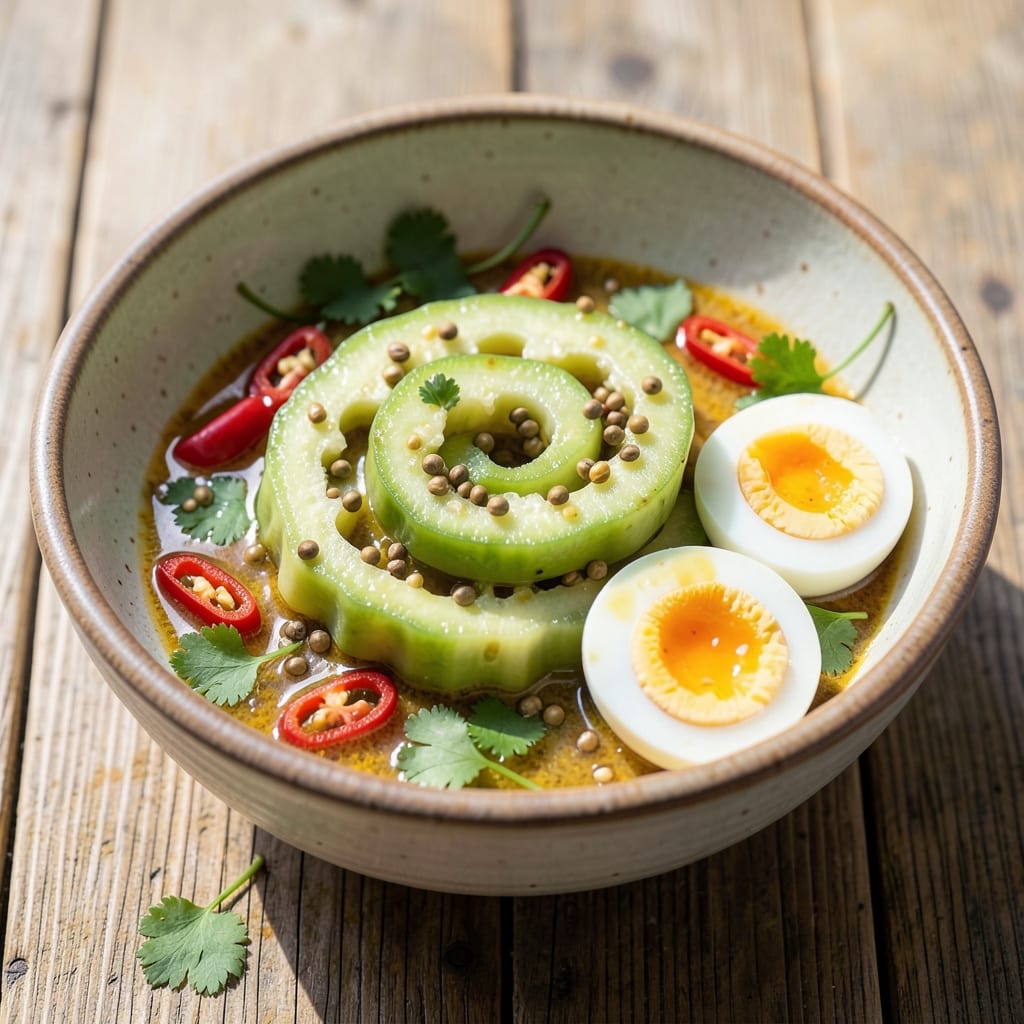
This turmeric-spiced bittergourd egg recipe transforms a humble vegetable into a restaurant-worthy breakfast dish with just 15 minutes of active prep. The secret lies in balancing bittergourd's earthy crunch with silky scrambled eggs and aromatic spices—a technique I perfected after years of experimenting with South Indian flavors. What makes this dish special is how the turmeric and mustard seeds infuse every bite with warmth, while the eggs add a rich, velvety contrast that softens the vegetable's natural bitterness.
The recipe begins with a quick stir-fry of bittergourd in hot oil until tender-crisp, then layers in scrambled eggs cooked low and slow to maintain their delicate texture. A pinch of asafoetida (hing) elevates the flavor profile, adding depth that's impossible to achieve with store-bought seasonings. The result is a dish that's both hearty and light—perfect for a protein-packed breakfast or a satisfying vegetarian lunch.
What you'll end up with is a golden-brown dish where each forkful delivers the satisfying crunch of bittergourd, the creamy richness of eggs, and a warm spice finish that lingers. The turmeric not only enhances the color but also provides anti-inflammatory benefits, making this more than just a meal—it's a nourishing experience. This recipe serves two, but the leftovers reheat beautifully, preserving that perfect texture.
Pair it with fluffy roti or steamed rice to round out the meal, or serve with a side of coconut chutney for extra brightness. The beauty of this dish lies in its simplicity—no complicated techniques, just thoughtful layering of flavors and textures that come together seamlessly. Let's get cooking!
Ingredients for bittergourd egg
The perfect balance of earthy bittergourd and velvety eggs—just ten ingredients for a restaurant-quality South Indian breakfast.
| Ingredient | Amount | Notes |
|---|---|---|
| Bittergourd (Karela) 🥒 | 1 lb | Young, tender variety preferred |
| Large Eggs 🥚 | 4 whole | Fresh, room temperature |
| Mustard Seeds 🌶️ | 1 tbsp | Whole, yellow variety |
| Turmeric Powder 🌿 | ½ tsp | Freshly ground preferred |
| Asafoetida (Hing) 🧂 | ⅛ tsp | Pinch for authentic flavor |
| Green Chilies 🌶️ | 2 whole | Slit lengthwise, seeds removed |
| Coconut Oil 🫒 | 2 tbsp | Unrefined for best flavor |
| Salt 🧂 | ½ tsp | Diamond Crystal kosher |
| Fresh Coriander Leaves 🌿 | ¼ cup | Chopped, for garnish |
| Lemon Juice 🍋 | 1 tbsp | Freshly squeezed |
Bittergourd is the star here, so young, tender varieties are essential—avoid thick-skinned or overly bitter ones. Most Indian grocery stores carry it fresh year-round, but if you can't find it, substitute with zucchini (though the flavor will differ). The eggs should be fresh and room temperature for silky scrambling. Mustard seeds and asafoetida (hing) are non-negotiable for that authentic South Indian depth—Penzeys Spices carries both if your local market doesn't stock them. For the green chilies, bird's eye chilies add more heat, while serrano peppers offer a milder kick.
No asafoetida? Garlic powder at half the amount mimics some of its umami punch, though it won't be identical. Running low on coconut oil? Ghee or olive oil works in a pinch, but coconut oil's subtle sweetness complements the bittergourd beautifully. If you can't find fresh coriander, dried cilantro at one-third the amount suffices. The turmeric must be freshly ground—pre-ground powder loses potency quickly. For extra richness, add a tablespoon of cashew paste to the egg mixture, though it's not traditional.
Store any leftovers in an airtight container for up to 3 days—reheat gently on low heat to preserve the bittergourd's crunch. The dish reheats beautifully, though the eggs may lose a touch of their silkiness. For meal prep, portion into individual containers with a side of steamed rice or roti. The turmeric-infused bittergourd keeps its vibrant color when stored properly, making this dish as visually appealing as it is flavorful. Freeze portions without the eggs for up to 2 months—just scramble fresh eggs when reheating.
Why You'll Love This Recipe
- No-Chop Nightmare: I swear by this recipe because you don’t even need to dice the bittergourd—just slice it thick and let the pan do the work. The eggs cook right in the same oil, so you’re not juggling a million pans or waiting for water to boil.
- Hing Magic: That tiny pinch of asafoetida transforms the dish—it cuts through the bittergourd’s sharpness and makes the eggs taste rich, almost like they’re hugging the veggies. Honestly, skipping it would be a crime.
- Lunchbox Hero: Between us, this is my go-to for packed lunches. The eggs stay firm, the bittergourd holds its shape, and it reheats beautifully—no soggy messes. My kids groan when I pack it, but they’re the first to finish their plates.
- Budget Win: A single bittergourd and half a dozen eggs stretch into three meals for my family. Mustard seeds and turmeric? Cheap as dirt. I’ll be real: this recipe saved me from takeout more times than I can count.
Step-by-step instructions for turmeric-spiced bittergourd eggs
This method balances the earthy bitterness of bittergourd with silky eggs and aromatic spices.
Prepare the Bittergourd for Cooking
Wash the 1 lb bittergourd (karela) thoroughly under cold running water, scrubbing gently to remove any dirt from its textured skin. Using a sharp chef's knife, carefully peel away the outer skin by making lengthwise cuts and then removing the strips. The goal is to work with tender, young bittergourd - if it's too fibrous, slice it into ¼-inch thick rounds to ensure even cooking.
Transfer the peeled bittergourd to a colander and rinse again under cold water to remove any bitterness that might linger on the surface. Pat dry completely with paper towels - this step is crucial as excess moisture will prevent proper browning later. Arrange the bittergourd pieces on a clean kitchen towel and let them sit for 10 minutes to ensure all surface moisture evaporates.
Temper the Mustard Seeds and Spices
Heat 1 tablespoon coconut oil in a heavy-bottomed skillet over medium-low heat. Add the 1 tablespoon mustard seeds and let them sizzle gently for 30 seconds until they begin to pop and turn golden. This process, called tempering, releases their aromatic oils and prevents them from becoming bitter.
Immediately add the 0.5 teaspoon turmeric powder and 0.125 teaspoon asafoetida (hing), stirring constantly for 10 seconds until the spices are fragrant and the oil becomes infused with their warm, earthy notes. Remove the skillet from heat and let the tempered spices cool for 2 minutes - this prevents them from cooking the bittergourd too quickly when added later.
Cook the Bittergourd Until Tender-Crisp
Return the skillet to medium heat and add the prepared bittergourd pieces in a single layer. Cook undisturbed for 4-5 minutes until the edges begin to develop a golden-brown crust and the bittergourd releases its characteristic aroma. This initial cooking creates a textural contrast that's essential to the dish.
Add the 2 slit green chilies and 0.5 teaspoon salt, stirring gently to combine. Cook for another 3-4 minutes until the bittergourd is tender when pierced with a fork but still maintains some bite. The green chilies will infuse their subtle heat while the salt enhances the natural flavors. Remove the skillet from heat and set aside.
Prepare the Silky Egg Mixture
In a mixing bowl, crack the 4 large eggs and whisk them vigorously with a fork until the yolks and whites are fully combined and the mixture becomes slightly thickened. This process creates a silky texture that contrasts beautifully with the crisp bittergourd.
Add the 1 tablespoon lemon juice and mix gently to combine. The acidity from the lemon juice helps balance any remaining bitterness in the bittergourd while also preventing the eggs from becoming too heavy. Set the egg mixture aside while you prepare the final assembly.
Combine and Finish with Fresh Coriander
Return the skillet to low heat and carefully pour the egg mixture over the cooked bittergourd. Stir gently but continuously for 1-2 minutes until the eggs begin to set but remain silky. The residual heat from the bittergourd will gently cook the eggs without scrambling them.
When the eggs are just set but still slightly runny in the center, remove the skillet from heat and stir in the 0.25 cup chopped fresh coriander leaves. This final addition brightens the dish with freshness and complements the earthy flavors. Serve immediately while the eggs maintain their silky texture and the bittergourd retains its tender-crisp quality.
Pro Tips For Making Bittergourd Egg
- Slice Thin, Soak Smart: Bittergourd’s bitterness hides in its skin and thick flesh—slice it paper-thin (¼-inch max) and soak in salted water for 10 minutes. This softens it and draws out the harshest flavors, so you’re not fighting taste when the eggs go in. (Yes, even if you’re impatient like me.)
- Fry Eggs Low and Slow: Crank the heat high for the initial sizzle, then drop to medium-low once the eggs start cooking. Rushing this step turns them rubbery; letting them set gently keeps the yolks creamy and the whites tender. I learned this the hard way—overcooked eggs ruin the entire dish.
- Temper the Mustard Seeds: Bloom the mustard seeds in oil before adding asafoetida—heat the oil to smoking point, then toss in the seeds. This prevents them from popping violently and ensures that delicate hing aroma gets released properly. (Your future self will thank you.)
- Crack Eggs into Warm Water: Instead of cracking eggs directly into the pan, whisk them in a bowl of warm water first. The heat helps emulsify the whites better, so they don’t scramble into a sad, lumpy mess when they hit the bittergourd. Sounds weird, but it works—trust the process.
Regional styles of bittergourd egg
South Indian Style
In Karnataka and Tamil Nadu, this dish is called karela egg curry and often includes a tadka (tempering) of mustard seeds, curry leaves, and a touch of fenugreek seeds for depth. The bittergourd is cooked until mushy rather than crisp, creating a thicker, gravy-like consistency. I add 1 tsp coconut milk to the egg mixture for extra richness, balancing the bitterness beautifully. Serve with steamed rice and a side of sambar for a complete meal. 🌶️
Maharashtrian Twist
Maharashtrian cooks often prepare karela bhaji with eggs by stir-frying the bittergourd with sesame seeds and dried kokum for a tangy kick. The eggs are scrambled separately and folded in at the end. I like to add ½ tsp black salt (kala namak) to the eggs for a sulfurous, eggy aroma that pairs perfectly with the bittergourd. Garnish with sev (crispy gram flour noodles) for extra crunch. 💫
Goan Fusion
Goan cuisine blends Portuguese and Indian flavors, so I adapt this dish by adding 1 tsp vinegar to the bittergourd while cooking and finishing with fresh cilantro and a squeeze of lime. The eggs are scrambled with 1 tbsp grated coconut for a tropical twist. Serve with Goan bread (pao) or bebinca for a fusion breakfast that’s both familiar and exciting. 🌴
Kerala-Style Spiced
In Kerala, this dish is often spiced with black pepper and ginger for warmth. I cook the bittergourd with 1-inch ginger julienne and 3-4 black peppercorns before adding the eggs. The eggs are scrambled with 1 tsp coconut oil and a pinch of turmeric for a golden hue. Garnish with curry leaves and serve with appam (fermented rice pancakes) for a Kerala-inspired brunch. 🌿
Modern Fusion Adaptation
For a contemporary take, I blend the bittergourd into a smooth paste and mix it into the egg batter before cooking. Add 1 tbsp cream cheese to the eggs for a creamy texture, and top with crispy fried shallots and microgreens. This version works as a vegetarian breakfast bowl or even a brunch platter with avocado slices. Perfect for health-conscious eaters! 🥑
Nutrition facts
Frequently asked questions
Can I use regular zucchini instead of bittergourd?
Yes, you can substitute zucchini, but the flavor will be milder and sweeter. For a closer match, choose a slightly bitter variety like 'Black Beauty' zucchini and add ½ teaspoon extra lemon juice to balance the taste. The texture will also be softer, so reduce cooking time by 1-2 minutes to prevent mushiness.
Why do my eggs turn out rubbery instead of silky?
Rubbery eggs usually happen from overcooking or using cold eggs. Always use room-temperature eggs and cook them on low heat while stirring constantly. Remove the pan from heat when eggs are just set but still slightly runny in the center—they'll finish cooking from residual heat.
How can I make this dish less bitter?
Bittergourd's natural bitterness can be reduced by soaking peeled pieces in cold salted water (1 tsp salt per 4 cups water) for 10 minutes before cooking. Also, increase the lemon juice to 2 tablespoons and add 1 teaspoon sugar to the egg mixture. The turmeric and coconut oil help naturally balance the bitterness too.
Can I make this ahead of time?
Yes, but with some adjustments. Cook the bittergourd and spices, then refrigerate separately from the eggs. When ready to serve, reheat the bittergourd mixture, then scramble fresh eggs and combine. For best texture, serve immediately—eggs won't reheat as silky. Store components in airtight containers for up to 2 days.
What's the best way to serve this dish?
This dish pairs beautifully with steamed basmati rice or whole wheat roti to soak up the flavors. For extra freshness, serve with a side of mint-coriander chutney or a simple cucumber raita. The cooling contrast makes each bite more satisfying and balances the dish's warmth.