
Breakfast & Brunch
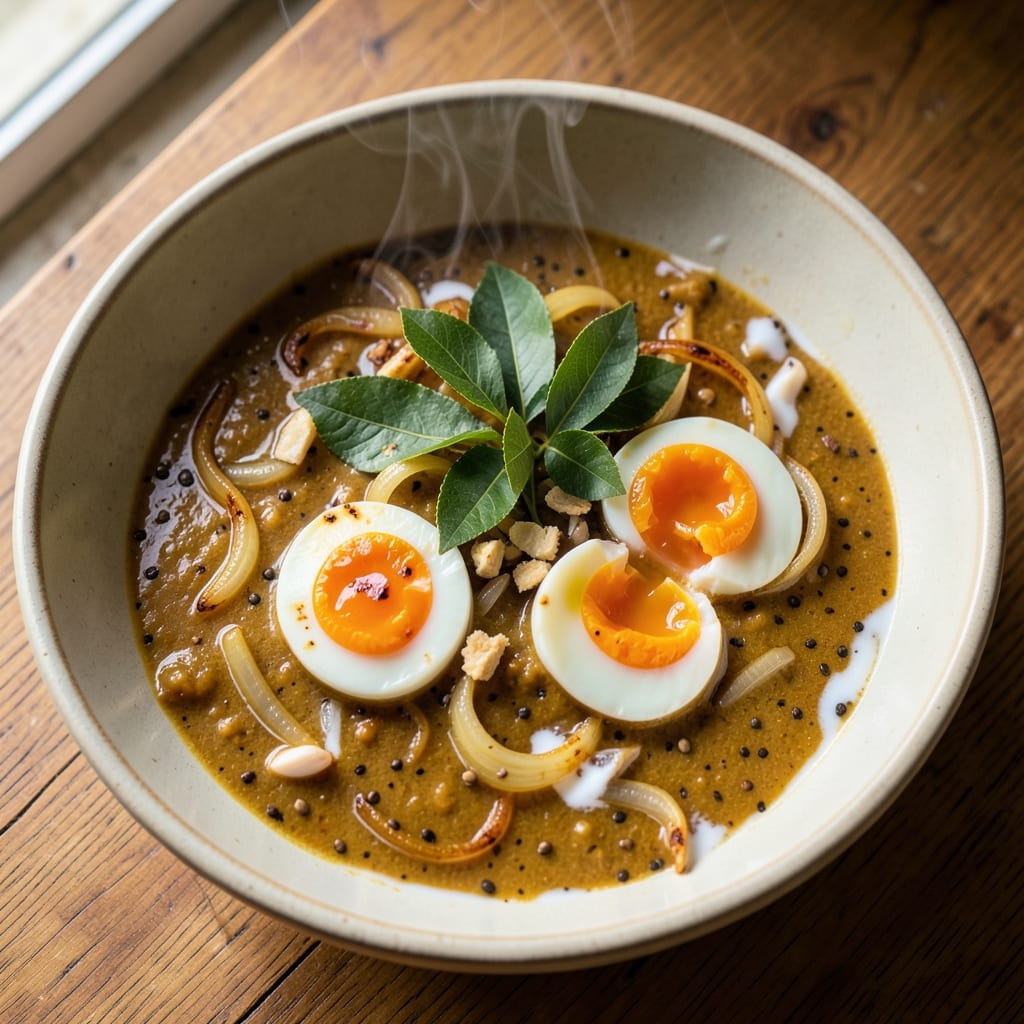
This broken egg curry transforms a simple breakfast into a vibrant, spiced coconut-turmeric bowl that’s ready in under 30 minutes. The secret lies in gently poaching eggs directly into the simmering curry, where they absorb the aromatic flavors of ginger, garlic, and coconut milk—creating a dish that’s both comforting and unexpectedly sophisticated. I developed this recipe after craving something warm, flavorful, and quick enough for busy mornings, but hearty enough to feel like a celebration.
The foundation starts with a fragrant base of mustard seeds, curry leaves, and turmeric, which infuse the coconut milk with earthy warmth. Vegetables like spinach or bell peppers wilt into the sauce, while the eggs cook tender and runny at the center—just like your favorite diner-style dish, but with a global twist. The dish balances richness from coconut with brightness from lime and cilantro, making every bite feel balanced and full of depth.
What makes this curry truly special is how effortlessly it comes together: sauté aromatics, build the sauce, and let the eggs poach in the simmering broth. No fancy techniques required—just a stovetop and a little patience. The result is a dish that’s fast yet restaurant-worthy, perfect for weekdays or weekend brunch when you want something beyond toast and coffee.
Serve it with steamed basmati rice or crusty naan to soak up the creamy, spiced sauce. The eggs add a luxurious touch without overpowering the vibrant flavors, making this curry a standout for both vegetarians and egg lovers alike. Let’s get cooking!
Ingredients for broken egg curry
Fast, fragrant, and packed with global flavors—this curry transforms breakfast into a vibrant, creamy bowl in minutes.
| Ingredient | Amount | Notes |
|---|---|---|
| Large Eggs 🥚 | 4 whole | Room temperature for even cooking |
| Coconut Milk 🥥 | 1 can (13.5 oz) | Full-fat preferred for creaminess |
| Light Coconut Milk 🥥 | ½ cup | For adjusting consistency |
| Yellow Onion 🧅 | 1 whole | Thinly sliced for even cooking |
| Garlic Cloves 🧄 | 4 cloves | Minced for aromatic base |
| Fresh Ginger 🌿 | 1 inch | Peeled and grated finely |
| Curry Leaves 🌿 | ¼ cup | Dried or fresh, optional but recommended |
| Mustard Seeds 🌶️ | 1 tbsp | Whole seeds for authentic flavor |
| Ground Turmeric 🌶️ | 1 tsp | Freshly ground preferred |
| Ground Cumin 🌶️ | ½ tsp | Toasted for deeper flavor |
| Ground Coriander 🌶️ | ½ tsp | Freshly ground for best aroma |
| Red Chili Powder 🌶️ | ½ tsp | Adjust for heat preference |
| Fresh Spinach 🌿 | 2 cups | Chopped for quick wilting |
| Fresh Cilantro 🌿 | ¼ cup | Chopped for garnish and brightness |
| Lime Juice 🍋 | 2 tbsp | Freshly squeezed for tang |
| Salt 🧂 | 1 tsp | Kosher or sea salt preferred |
| Vegetable Oil 🫒 | 2 tbsp | Neutral high smoke point |
The coconut milk is the heart of this curry—full-fat for that rich, velvety texture you’d expect in a restaurant dish. Grab a Thai Kitchen or Goya canned version for convenience, or use So Delicious for a dairy-free option. Fresh curry leaves are a game-changer (find them in the international aisle at Whole Foods or Asian markets), but dried works in a pinch. Mustard seeds are non-negotiable—they pop and add that signature crunch before softening into the sauce. For ginger, organic from the store’s produce section keeps it vibrant longer. If you’re short on time, jarred minced ginger works, but fresh is always better.
No curry leaves? Dried thyme at half the amount mimics some of that earthy depth, though it won’t be identical. Swap light coconut milk for Greek yogurt (thinned with water) if you’re avoiding dairy, but the texture will be slightly thicker. Chili powder too spicy? Red pepper flakes at one-third the amount gives heat without overpowering. Fresh spinach wilts fast—baby spinach works perfectly, but regular leaves just need a rough chop. Lime juice? Mexican limes (if you can find them) have more punch than regular, but Eureka limes are a solid backup. Salt the sauce gradually—Diamond Crystal kosher salt dissolves easily and tastes cleaner than table salt.
This curry tastes even better the next day—portion into containers with a layer of cilantro on top to keep it fresh. Stores for 4-5 days in the fridge, or freeze for 3 months (the sauce thickens slightly when thawed, so add a splash of water or coconut milk to loosen). For extra flavor, toast the cumin and coriander in a dry pan for 30 seconds before adding to the oil—worth the extra minute for a deeper, nuttier taste. Serve with steamed basmati rice or naan to soak up every last bit of that creamy, spiced sauce.
Why You'll Love This Recipe
- Fewer Ingredients, Bigger Payoff: I swear by this curry—just cracked eggs, coconut milk, and onions. That’s it. No shopping list marathon, no pantry deep dive. The eggs soak up the creamy richness like a sponge, and honestly? The flavor carries itself.
- Garlic-Coconut Magic: Between us, the combo of sautéed garlic and coconut milk is chef’s kiss. The light coconut milk adds a velvety finish, while the full-fat version keeps it decadent. It’s the kind of taste that makes you pause mid-bite—no heavy spices needed.
- Lunchbox to Dinner Party: This curry works everywhere. Pack it in a thermos for work, serve it over rice for a weeknight, or bring it to a potluck—no one will guess it’s this simple. (Yes, even on a Tuesday night.)
- Leftovers That Don’t Let You Down: Make a big batch and refrigerate it. The flavors deepen overnight, and reheating? Just a splash of water or milk to loosen it up. My freezer’s full of these jars—proof it’s my secret weapon for lazy days.
Step-by-step instructions for spiced coconut and turmeric breakfast bowl
Here's how to craft this vibrant, fast-paced curry with rich coconut flavors and tender eggs.
Toast the Spices and Build the Aromatic Base
Heat the 2 tablespoons vegetable oil in a large skillet over medium heat. Add the 1 tablespoon mustard seeds and let them sizzle for 30 seconds until they begin popping—this is your signal to move quickly. Toss in the 0.25 cup curry leaves and 1 whole yellow onion (thinly sliced), cooking for 5 minutes until the onion softens and turns translucent.
Add the 4 cloves garlic cloves (minced) and 1 inch fresh ginger (finely grated), stirring for 1 minute until fragrant. The ginger should release its bright aroma and the garlic should turn golden—not brown. Here's where the magic happens: sprinkle in the 1 teaspoon ground turmeric, 0.5 teaspoon ground cumin, 0.5 teaspoon ground coriander, and 0.5 teaspoon red chili powder, stirring constantly for 30 seconds to toast the spices and deepen their flavors.
Simmer the Coconut Milk and Prepare the Eggs
Pour in the 1 can (13.5 oz) coconut milk and bring to a gentle simmer over medium-low heat. The mixture should bubble softly—not vigorously—to prevent curdling. Let it cook for 5 minutes, stirring occasionally, until the spices are fully infused and the coconut milk begins to thicken slightly.
While the sauce simmers, crack the 4 whole large eggs into a small bowl. Gently whisk them with 1 teaspoon salt to combine—this ensures even cooking. The eggs should be at room temperature for perfect texture, so if they're chilled, let them sit for 10 minutes before cracking.
Cook the Eggs Directly in the Curry
Carefully pour the whisked eggs into the simmering coconut milk, stirring gently to distribute them evenly. Reduce the heat to low and let the eggs poach undisturbed for 6-8 minutes. You'll see them transform from runny to beautifully set—the whites should be opaque and the yolks still slightly runny, like soft-boiled eggs.
Here's the trick: if the curry thickens too much, stir in the 0.5 cup light coconut milk to adjust the consistency. The sauce should coat the back of a spoon but remain silky, not gluey. Taste and adjust seasoning with more salt or chili powder if needed—this is your chance to balance the flavors before adding the greens.
Finish with Spinach and Garnish
Add the 2 cups fresh spinach to the skillet and stir vigorously for 1-2 minutes until just wilted—bright green and tender, not mushy. Remove from heat and stir in the 2 tablespoons lime juice and 0.25 cup fresh cilantro (chopped). The lime brightens the dish and cuts through the richness of the coconut, while the cilantro adds a fresh finish.
Divide the curry among 4 bowls, garnishing each with an extra sprinkle of cilantro and a drizzle of remaining coconut milk if desired. Serve immediately with steamed rice or crusty bread to soak up every last bit of that velvety, spiced coconut sauce.
Pro Tips For Making Broken Egg Curry
- CRACK EGGS LOW: I used to drop them in too fast, and the whites turned rubbery before the yolks cooked. Instead, let the oil get smoking hot—then gently break one egg at a time, spacing them out. The whites will set instantly while the yolks stay runny, like a proper curry should.
- SAUTÉ ONIONS UNTIL GOLDEN: Light coconut milk will curdle if you rush this. Cook the onions until they’re deep golden—almost caramelized—before adding garlic. The extra time upfront keeps the sauce smooth later, and the flavor’s richer. (Yes, even if you’re impatient like me.)
- USE FULL-FAT COCONUT MILK LAST: The light coconut milk handles the heat better, so add it first to simmer. Stir in the full-fat version at the very end—just before serving—to keep the sauce velvety, not split. I learned this after making a sad, oily mess twice.
- STIR CONSTANTLY AFTER ADDING EGGS: The moment the eggs hit the sauce, the heat spikes and they can scramble. Keep stirring vigorously for 30 seconds to distribute the heat evenly. This keeps the yolks creamy and the whites delicate, not scrambled. (Your future self will notice the difference.)
Pro cooking tips for this dish
Egg Poaching Perfection
For flawless broken eggs in curry, use room-temperature eggs—they cook more evenly and prevent cracking. Crack them gently into a small bowl first, then whisk lightly with a pinch of salt to help them hold together in the simmering sauce. The key is low and slow heat—reduce to low once the eggs are in the curry to prevent scrambling. 🥚
Spice Toasting Secrets
Toast your spices in the oil for 30 seconds before adding coconut milk—this deepens their flavors dramatically. I like to add mustard seeds first because they pop loudly (a great signal your pan is hot enough), then follow with curry leaves and onions. If your spices burn easily, reduce heat to medium-low immediately after adding them.
Coconut Milk Control
Coconut milk can curdle if boiled too vigorously. Keep heat at medium-low and stir occasionally to prevent skin formation. If the sauce thickens too much, stir in 0.5 cup light coconut milk to balance the texture. For extra creaminess, whisk in 1 tbsp coconut cream at the end.
Spinach Timing
Add spinach only at the very end—it wilts in 1-2 minutes and releases bitterness if overcooked. Use baby spinach for faster wilting, or roughly chop regular leaves. Stir vigorously to distribute evenly before removing from heat. 🌿
Lime Juice Boost
Fresh lime juice brightens the curry and cuts through coconut's richness. Use 2 tbsp for balance, but adjust to taste—more lime = tangier finish. For extra zing, add a pinch of salt after squeezing to enhance flavor. Mexican limes pack more punch than regular, but Eureka limes work well too.
Garnish Like a Pro
Fresh cilantro adds vibrant color and freshness. Chop it coarsely for texture contrast. For extra flair, sprinkle with toasted coconut flakes or a drizzle of chili oil. Serve immediately with warm rice or naan to soak up every last drop of that creamy, spiced sauce. ✨
Nutrition facts
Frequently asked questions
Why do you poach eggs directly in the curry instead of cooking them separately?
Poaching eggs in the curry infuses them with the dish's aromatic flavors—ginger, garlic, and coconut milk—creating a harmonious blend. The gentle simmer keeps the yolks creamy and runny while the whites set perfectly. This technique also saves time and ensures every bite is packed with flavor.
Can I make this curry without coconut milk?
Swap coconut milk for Greek yogurt (thinned with water) or cashew cream (blended soaked cashews) for a similar creamy texture. For a lighter option, use half-and-half or heavy cream with a pinch of turmeric for color. The dish will still be rich and satisfying.
How do I adjust the spice level for kids or sensitive palates?
Reduce the red chili powder to ¼ teaspoon and skip the mustard seeds if they're too pungent. For extra mildness, add a pinch of sugar to balance the spices. Always taste as you go—you can always add more heat later, but you can't take it out!
Can I prep this curry ahead of time?
Yes! Make the curry base (without eggs) up to 2 days ahead and store it in the fridge. Reheat gently, then poach the eggs fresh when serving. For the full dish, it reheats well for 3 days in the fridge. Freeze for 3 months—just thaw overnight and gently reheat before adding fresh eggs.
What other vegetables work well in this curry?
Swap spinach for bell peppers, zucchini, or cauliflower—all wilt beautifully. For heartier options, try potatoes (simmered until tender) or eggplant (pre-cooked to avoid bitterness). Keep portions small so the eggs remain the star.