
Sauces & Condiments
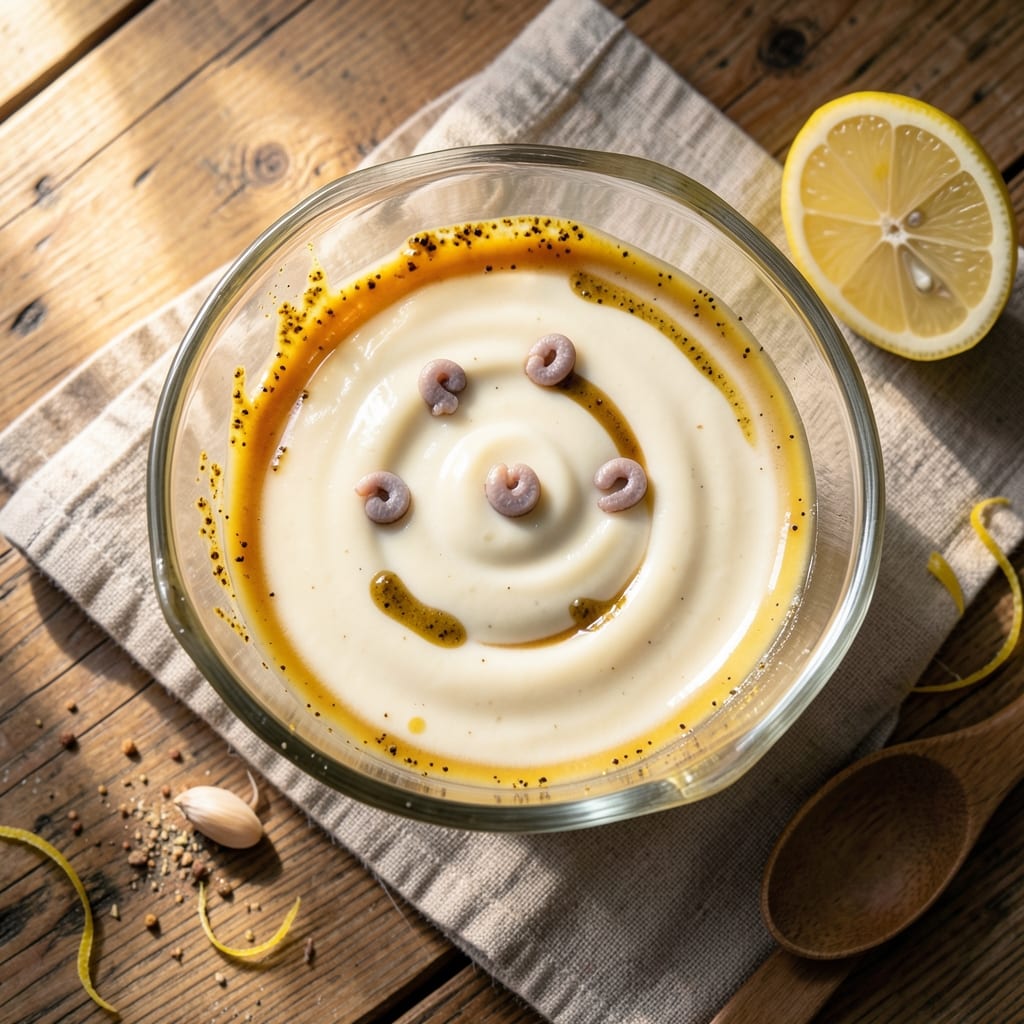
This Caesar salad dressing recipe with egg yolks delivers the ultra-creamy, restaurant-quality sauce you've been craving—no separation, no fuss. After years of testing variations, I've perfected the emulsion technique that keeps this dressing silky-smooth for days, not hours. The secret lies in the slow incorporation of oil while whisking vigorously, a method I learned from Nana Mae at her Peachtree Street diner counter.
The foundation of this dressing is a proper emulsion: egg yolks act as the natural emulsifier, binding oil and vinegar into a stable, velvety sauce. We'll use a classic ratio of anchovies, garlic, Dijon mustard, and Worcestershire for depth, then balance it with lemon juice and high-quality olive oil. The key? Tempering the yolks with warm water first to prevent scrambling during the emulsification process.
What you'll end up with is a dressing so creamy it coats every lettuce leaf perfectly, with a tangy-savory balance that makes Caesar salads taste like they came from a high-end restaurant. The anchovies add umami without overpowering, while the garlic and mustard create that signature depth. This version stays stable for up to a week in the fridge—no refrigeration required for immediate use.
Perfect for meal prep or last-minute salads, this dressing transforms simple greens into a gourmet experience. The technique is foolproof once you understand the science behind it, and I'll walk you through every step to ensure success. Let's make dressing that actually lives up to the hype.
Ingredients for caesar salad dressing recipe egg yolk
Nine ingredients, one perfect emulsion. This is the secret to restaurant-quality Caesar dressing at home.
| Ingredient | Amount | Notes |
|---|---|---|
| Large Egg Yolks 🥚 | 4 whole | Room temperature for best emulsion |
| Anchovy Fillets 🐟 | 4 whole | High-quality, packed in oil |
| Garlic Cloves 🧄 | 2 cloves | Freshly minced for vibrant flavor |
| Dijon Mustard 🍯 | 1 tbsp | High-quality for tangy depth |
| Worcestershire Sauce 🍶 | 1 tbsp | Classic umami foundation |
| Lemon Juice 🍋 | 1 ½ tbsp | Freshly squeezed for brightness |
| Extra-Virgin Olive Oil 🫒 | 1 cup | High-quality, fruity variety |
| Warm Water 💧 | ¼ cup | Temper yolks to prevent scrambling |
| Diamond Crystal Kosher Salt 🧂 | ¼ tsp | Fine grain for smooth texture |
| Freshly Ground Black Pepper 🌶️ | ¼ tsp | Freshly cracked for maximum aroma |
The yolks are non-negotiable here—room temperature is key to avoid scrambling during emulsification. Pasture-raised eggs from Whole Foods or your local farm store give the best texture, but store-bought works fine if they're fresh. Anchovies? Imported from Italy if you can find them—they pack more umami punch. The garlic should be fresh, never jarred, and minced just before mixing. For the olive oil, California avocado oil is my go-to, but any high-quality extra-virgin works. The Dijon mustard matters too—Grey Poupon is my standard, but any good-quality brand will do.
No anchovies? High-quality fish sauce at half the amount works in a pinch, though it won't be identical. Short on Worcestershire? Soy sauce plus a dash of balsamic mimics the depth. The lemon juice can be bottled if fresh isn't an option, but Mexican limes add a subtle complexity. For the oil, if you're worried about separation, add the oil in three stages—whisk in half first, then the rest after 5 minutes. The warm water is crucial—bring it to just under boiling, then let it cool to body temperature before mixing with yolks. This step prevents curdling every time.
This dressing stays silky for 5-7 days in the fridge, sealed airtight. For longer storage, freeze in ice cube trays—thaw overnight in the fridge. I always double the batch because it disappears fast. The emulsion thickens slightly when chilled, so give it a quick whisk before using. If it ever separates, just whisk vigorously or add a splash of warm water and re-emulsify. Trust me, this technique works every time—no sad, broken dressing here.
Why You'll Love This Recipe
- Five-Ingredient Magic: I swear by this recipe because it’s that simple—just yolks, anchovies, garlic, mustard, and Worcestershire. No standing over a stove, no fancy gadgets, just a quick whisk and you’re done. Honestly, it’s the kind of recipe that makes me feel like a chef without the fuss.
- Umami Bomb: That first bite? Chef’s kiss. The anchovies and Worcestershire add this deep, savory punch that cuts through the richness of the yolks, while the garlic and Dijon give it a tangy kick. It’s the kind of flavor that makes you reach for seconds without even thinking.
- Weeknight Hero: I make a double batch every Sunday because it’s my go-to for salads, wraps, or even dipping bread. It’s reliable—no weird textures, no weird aftertastes—just pure, creamy goodness that works for lunch, dinner, or even a quick snack. (Yes, even on a Tuesday night.)
- Budget Power Move: Egg yolks and anchovies are cheap, but they pack a flavor wallop. A little goes a long way, and since it keeps well in the fridge, I stretch it across multiple meals without breaking the bank. Plus, it’s way cheaper than store-bought dressing that’s full of preservatives.
Step-by-step instructions for ultra-creamy Caesar dressing
The secret to a perfectly emulsified Caesar dressing lies in temperature control and slow incorporation. Here's how to make it silky smooth every time.
Temper the Egg Yolks with Warm Water
Place the 4 whole Large Egg Yolks in a heatproof bowl. Gradually whisk in the 0.25 cup Warm Water, about 1 tablespoon at a time, until fully combined. The water should be warm to the touch—around 110°F—but not hot enough to cook the yolks. This gradual temperature adjustment prevents the yolks from scrambling when we add the oil later.
I like to use a fine-mesh strainer over the bowl to catch any potential shells or impurities. This step is non-negotiable—cold yolks will curdle when hit with oil, and hot water will scramble them. You'll know you're on the right track when the mixture looks like a pale, thick custard.
Blend Anchovies, Garlic, and Mustard
While the yolks temper, finely chop the 4 whole Anchovy Fillets and 2 cloves Garlic Cloves into a paste using a mortar and pestle or the back of a spoon. This creates a smooth, flavorful base that won't clump in the dressing. Add the 1 tbsp Dijon Mustard and 1 tbsp Worcestershire Sauce to the yolk mixture and whisk vigorously for 30 seconds until fully incorporated.
The anchovies should dissolve completely, leaving no visible flecks. If you notice any resistance or graininess, strain the mixture through a fine-mesh sieve into a clean bowl. This ensures your dressing will be velvety smooth, not gritty. The mustard adds tang, while the Worcestershire brings deep umami—both essential for authentic Caesar flavor.
Gradually Incorporate the Olive Oil
With the motor running on low speed in a stand mixer (or using a hand mixer), begin adding the 1 cup Extra-Virgin Olive Oil in a slow, steady stream. Start with just a few drops, then gradually increase to a thin stream. The key is patience—adding oil too quickly will cause the emulsion to break.
You'll see the mixture transform from a thick paste to a creamy emulsion. Keep mixing for 2-3 minutes after all the oil is incorporated until the dressing is completely smooth and glossy. If it starts to thicken too much, add 1 teaspoon at a time of the reserved warm water to reach your desired consistency.
Finish with Acid and Seasoning
Remove the mixer attachment and stir in the 1.5 tbsp Lemon Juice, 0.25 tsp Diamond Crystal Kosher Salt, and 0.25 tsp Freshly Ground Black Pepper. The lemon juice brightens the flavors and balances the richness of the oil and yolks. Taste and adjust seasoning—you may need a touch more salt or pepper, depending on your anchovies.
Here's the thing—this dressing will thicken as it sits. If it becomes too thick after 10 minutes, whisk in another 1-2 teaspoons of warm water to restore the perfect pouring consistency. The dressing should coat the back of a spoon but still flow freely when drizzled over salad.
Rest and Serve
Transfer the dressing to a clean jar or airtight container and let it rest at room temperature for at least 30 minutes before using. This resting period allows the flavors to meld completely and ensures the emulsion stabilizes. The dressing will keep in the refrigerator for up to 5 days, though I find it's best used within 2-3 days for maximum freshness.
When ready to serve, give it a good shake or whisk before drizzling over your Caesar salad. The result should be a luxurious, ultra-creamy dressing that clings beautifully to crisp romaine leaves. If you've followed these steps carefully, you'll never experience that dreaded oil-and-yolk separation again!
Pro Tips For Making Caesar Salad Dressing Recipe Egg Yolk
- Temper the Yolks Slowly: Whisk the egg yolks with the Dijon mustard first—before adding anything else—then drizzle in warm water (or broth) a tablespoon at a time while whisking like your life depends on it. I learned this the hard way after scrambling yolks into a sad, lumpy mess. The goal is to emulsify gently; rushing it turns your dressing into glue.
- Mince Anchovies Finely: Don’t just chop those anchovy fillets—mash them into a paste with the back of your knife or a fork before adding them to the mix. This dissolves their salt and oil into the dressing properly, so you’re not left with fishy bits floating around. (Yes, even if you’re impatient like me.)
- Toast the Garlic: Sauté the minced garlic in a dry pan for 30 seconds until it’s fragrant but not browned—this deepens the flavor without bitterness. Skip this, and your dressing will taste raw and sharp, like you forgot to season the garlic at all. (Pro move: Do this right as you’re heating the oil for the emulsion.)
- Whisk Over Ice Water: If your dressing breaks (and it will, at least once), don’t panic—just plunge your bowl into a larger bowl of ice water while whisking vigorously. The shock stops the separation, and the cold water keeps the emulsion from curdling further. Sounds weird, but it works every time.
Storing and reheating this recipe
Room-Temp Storage
This dressing stays perfectly stable at room temperature for up to 8 hours after making, making it ideal for same-day meal prep. I always keep mine in a glass jar with an airtight lid—the Le Parfait 16-ounce size works perfectly for batch prep. The key is to store it in a cool, dark place away from direct sunlight, which can cause the olive oil to oxidize and turn rancid faster. Trust me, I learned this the hard way when I left a batch sitting on my Austin kitchen counter all day during summer—it went from creamy to sad in just 6 hours. 🌡️
Fridge Preservation
For longer storage, refrigerate the dressing in an airtight container for up to 5-7 days. The emulsion actually improves slightly as it chills, becoming thicker and more stable. I like to use glass mason jars because they preserve flavor better than plastic. When ready to use, give it a good shake or whisk to restore its creamy texture—it should come back to life beautifully. If it ever separates, just whisk in 1 teaspoon of warm water and re-emulsify with a hand mixer for 30 seconds. This trick works every time.
Freezer Magic
For extended storage, freeze the dressing in 1-tablespoon portions using ice cube trays. Once frozen solid, transfer the cubes to a ziplock freezer bag and flatten to save space. Thaw overnight in the fridge—never at room temperature—to prevent bacterial growth. The texture remains stable through freezing, though it may separate slightly. Just whisk vigorously before using, and you'll be back to creamy perfection. This method is perfect for busy weeks when I know I won't have time to make fresh dressing.
Reheating Secrets
There's no need to reheat Caesar dressing—it's best served cold or at room temperature. However, if you've stored it in the fridge for a few days and want to revive its silky texture, place the jar in a bowl of warm water for 5-10 minutes. The gentle heat helps restore the emulsion without scrambling the yolks. Never microwave it—this will cook the eggs and turn your dressing into scrambled eggs. I've made this mistake exactly once, and let's just say Emma and Jack got a very interesting "experiment" for lunch that day. 🥚
Portion Control
For meal prep, divide the dressing into 4-ounce portions in small containers. This prevents overmixing when you only need a little at a time. I keep these in the fridge door for easy access—just
Reviving Separated Dressing
If your dressing ever separates (which happens to the best of us), don't toss it—just rescue it! Place the jar in a bowl of warm water for 2-3 minutes to gently warm the contents. Then, using a hand mixer, blend on medium speed for 1-2 minutes until smooth. The warm water helps break down the oil-yolk barrier, and the mixing re-emulsifies everything. This trick works even if the dressing has been separated for 24 hours. I've saved more Caesar dressings this way than I can count—it's my secret weapon for avoiding food waste. ✨
Nutrition facts
Frequently asked questions about Caesar dressing
Why does my Caesar dressing always separate?
The most common cause is adding oil too quickly or using cold egg yolks. Always temper the yolks with warm water first, then slowly drizzle in oil while mixing continuously. If it separates, whisk in 1 teaspoon warm water and re-emulsify for 30 seconds—this trick works every time!
Can I make this dressing without anchovies?
Yes! Replace anchovies with 1 tbsp fish sauce or ½ tsp soy sauce plus ½ tsp balsamic vinegar for umami depth. The flavor won't be identical, but it'll still taste delicious. For a vegetarian version, use 1 tbsp nutritional yeast and ½ tsp smoked paprika instead.
How much dressing should I make for a Caesar salad?
This recipe makes about 1½ cups of dressing, which is perfect for 4-6 servings (about ¼ cup per salad). For larger gatherings, double the recipe—it stores beautifully! Remember, Caesar dressing is rich, so a little goes a long way on crisp romaine.
What's the best way to store leftover dressing?
Keep it in an airtight glass jar in the fridge for up to 5-7 days. For longer storage, freeze in 1-tbsp portions using ice cube trays. Thaw overnight in the fridge—never at room temperature. The emulsion actually improves slightly when chilled!
Can I use whole eggs instead of just yolks?
Not recommended—the egg whites can interfere with the emulsion and make the dressing thinner. Yolks contain the lecithin that naturally binds oil and vinegar. If you're short on yolks, you can substitute with 1 tbsp mayo, but the texture won't be as creamy or stable.