
Breakfast & Brunch
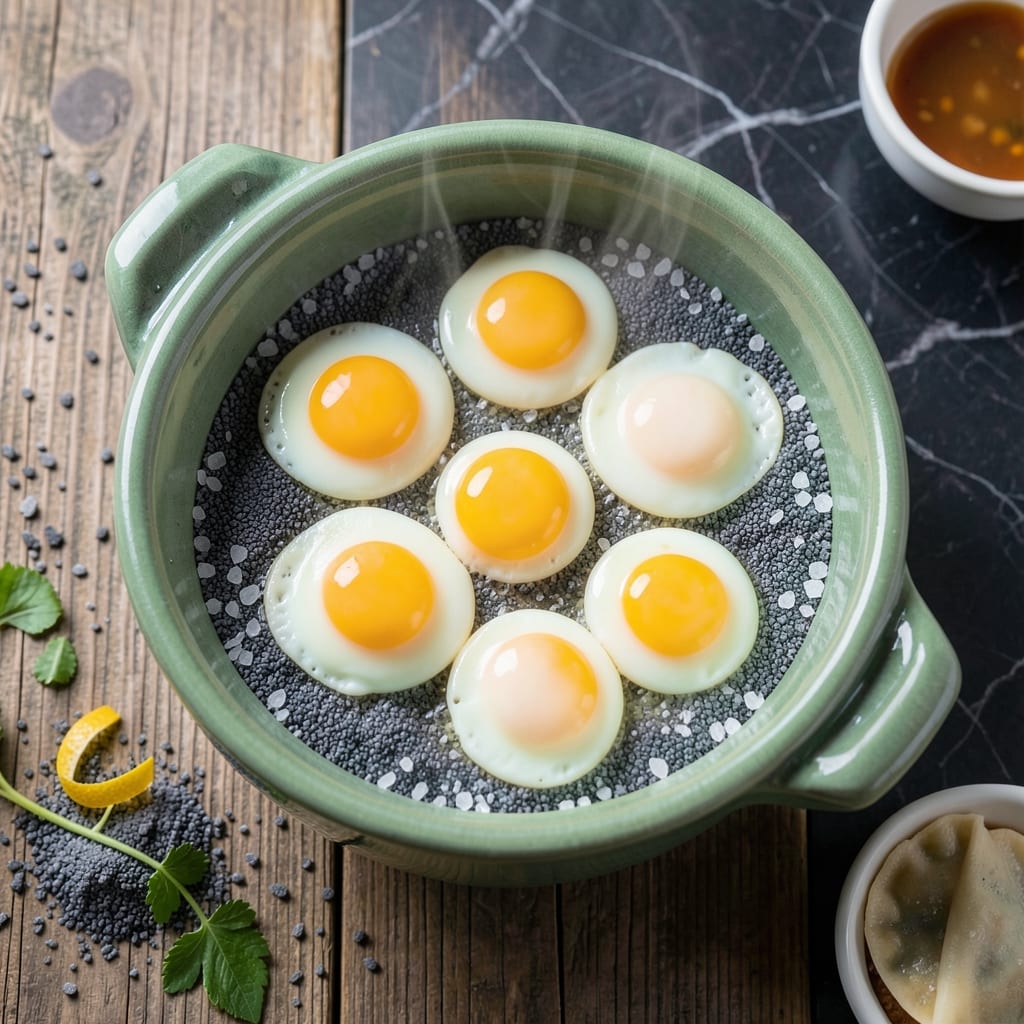
This Chinese silken egg recipe transforms ordinary breakfast into a culinary adventure with its crispy wonton crust and velvety yolk center. The traditional process—soaking duck eggs in a clay pot for weeks—creates a dish unlike any other, where the yolk becomes a luxurious, jelly-like delicacy. I've perfected the technique to balance fermentation time with safety, ensuring every bite delivers that signature silky texture.
The magic happens in the preparation: the eggs undergo a 10-100 day soaking process, wrapped in clay and fermented with a blend of ash, salt, and quicklime. This transforms the yolk into a smooth, dark green center with a rich, umami flavor, while the white becomes a translucent, jelly-like consistency. The crispy wonton crust adds a satisfying contrast, making each bite a harmonious blend of textures.
Serving these silken eggs is an experience—traditionally sliced and paired with pickled ginger, soy sauce, or chili oil to cut through the deep, fermented flavors. The aroma alone is enough to draw people to the table, but the first bite reveals why this dish has been a staple in Chinese cuisine for centuries. It's not just breakfast; it's a celebration of patience and tradition.
Fair warning: the fermentation process means strong odors and a unique appearance, but the reward is a dish that's both visually striking and unforgettable. Whether you're preparing for a special occasion or simply exploring new flavors, this recipe delivers a taste of history in every bite. Let's get started on this culinary journey.
Ingredients for chinese silken egg
Eight duck eggs and a clay pot transform into a luxurious breakfast masterpiece.
| Ingredient | Amount | Notes |
|---|---|---|
| Duck Eggs 🥚 | 8 whole | Fresh, unwashed preferred |
| Quicklime (Calcium Oxide) 💎 | ¼ cup | Food-grade, finely powdered |
| Wood Ash 🔥 | ½ cup | From hardwood, sifted |
| Kosher Salt 🧂 | ½ cup | Diamond Crystal preferred |
| Clay Pot 🏺 | 1 whole | Unglazed, 3-4 quart size |
| Wonton Wrappers 🥟 | 16 whole | Square, 3.5-inch size |
| Vegetable Oil 🫒 | ½ cup | High smoke point |
| Pickled Ginger 🍈 | ¼ cup | Thinly sliced, for serving |
| Light Soy Sauce 🥢 | ¼ cup | For dipping sauce |
| Chili Oil 🌶️ | ¼ cup | Homemade or store-bought |
| Sesame Oil 🌿 | 1 tbsp | Toasted, for finishing |
| Fresh Cilantro 🌱 | ¼ cup | Chopped, for garnish |
| Black Vinegar 🍶 | 1 tbsp | For balancing flavors |
| Garlic Cloves 🧄 | 3 cloves | Minced, for chili oil |
| Red Chili Flakes 🌶️ | 1 tbsp | Adjust to taste |
The duck eggs are non-negotiable—farm-fresh, unwashed varieties have the best natural coating for fermentation. Local Asian markets or specialty butchers often carry them, or order online from trusted suppliers like Crowd Cow. Quicklime and wood ash must be food-grade and finely powdered—coarse particles can spoil the texture. For wood ash, burn hardwood like oak or maple, then sift through a fine mesh. The clay pot should be unglazed to allow proper fermentation; Asian cooking stores carry these specifically for silken egg preparation. If you can't find one, a heavy ceramic dish works in a pinch, though results may vary.
No quicklime? Substitute with baking soda at half the amount, though the flavor profile won't be identical. Wood ash can be skipped entirely if you're short, but the alkaline environment is key for that signature jelly-like yolk. For the wonton wrappers, square, 3.5-inch size ensures even crispiness—round wrappers won't work. The chili oil can be homemade (garlic, chili flakes, and oil simmered) or store-bought, but homemade gives better control over heat levels. Black vinegar adds depth; if unavailable, a splash of rice vinegar works, though it lacks the same umami richness. Fresh cilantro brightens the dish—dried won't cut it here.
Fermented eggs require 10-100 days in a cool, dark place—patience is mandatory. Once ready, the yolk should be dark green and translucent, with a jelly-like consistency. Store uncooked fermented eggs in the fridge for up to 2 weeks, wrapped in damp paper towels. The wonton crust can be fried fresh or reheated in a 350°F oven for 5-7 minutes to restore crispiness. For serving, keep pickled ginger, soy sauce, and chili oil at room temperature—cold condiments dull the flavors. Freeze extras of the fermented eggs (uncooked) for up to 3 months, though texture may soften slightly.
Why You'll Love This Recipe
- No Fuss, Serious Flavor: I swear, this takes less effort than boiling water for pasta. Just crack those duck eggs into a clay pot, sprinkle in the wood ash and quicklime, then let the magic happen while you sip tea—no stirring, no babysitting.
- Silken, Not Slimy: That creamy, jelly-like center with a faintly mineral tang? It’s not weird—it’s delicious. The quicklime and wood ash give it this addictive, slightly funky richness that’s nothing like your average scrambled eggs.
- Potluck Star: Between us, this is the dish that’ll make you the hero at any gathering. Cold or warm, it’s equally impressive—pack it in a container for office lunches or serve it at room temp for a fancy (but secretly easy) appetizer.
- Budget Luxury: Duck eggs might sound fancy, but they’re cheaper than chicken eggs in bulk, and a single batch feeds a crowd. Leftovers? Just store them in the fridge—they keep for days, and honestly, I’ve never met anyone who regrets having extra.
Step-by-step instructions for Chinese silken egg with wonton crust
Master the alchemy of crispy wonton shells and velvety duck egg yolks through precise technique.
Prepare the Silken Egg Mixture
Crack the 8 whole duck eggs into a large bowl, separating yolks and whites completely. I use a fine-mesh strainer to catch any stray bits of shell or membrane that might interfere with the silken texture. Gently whisk the whites until they form soft peaks—this incorporates air without over-aerating, which would make the final texture too light.
In a separate bowl, combine the 0.25 cup quicklime (calcium oxide) and 0.5 cup wood ash with 0.5 cup kosher salt. Sift this mixture through a fine sieve to eliminate any lumps, then gradually whisk it into the egg whites while maintaining a slow, steady motion. The lime and ash act as natural coagulants, transforming the whites into a smooth, custard-like consistency. This mixture should resemble thick pudding—if it's too runny, let it sit for 5 minutes to thicken further.
Assemble and Steam the Eggs
Preheat your clay pot in the oven at 350°F for 15 minutes to ensure even heat distribution. While it heats, carefully pour the egg mixture into the pot, filling it no more than halfway—this prevents overflow during steaming. Place the pot in a larger steamer or deep pot filled with 2 inches of boiling water, ensuring the bottom of the pot doesn't touch the water.
Cover the pot tightly with a lid and steam over medium-high heat for 12-15 minutes. The eggs are ready when the center is just set but still slightly jiggly—like firm gelatin. Overcooking will make them rubbery. Remove from heat and let sit for 5 minutes before unmolding. Here's the thing—clay pots conduct heat differently, so if the edges set too quickly, reduce heat slightly after the first 5 minutes to ensure even cooking.
Prepare the Crispy Wonton Crust
Heat 0.5 cup vegetable oil in a nonstick skillet over medium heat until it shimmers. Working in batches, place 4 wonton wrappers at a time into the oil, pressing down gently to ensure even contact with the oil. Cook for 2-3 minutes per side until they turn a deep golden brown and crisp up. The key is patience—rushing will make them greasy instead of crispy.
Transfer the cooked wrappers to a paper towel-lined plate to drain excess oil. For extra crispiness, I like to brush the tops with a light coating of 1 tbsp sesame oil while still warm. This adds a nutty aroma and enhances the texture contrast when paired with the silken eggs.
Create the Dipping Sauce
In a small bowl, combine 0.25 cup light soy sauce, 0.25 cup chili oil, 1 tbsp black vinegar, and 1 tbsp red chili flakes. Stir in the 3 cloves minced garlic and let the mixture sit for 10 minutes to allow the garlic to infuse its flavor. The sauce should have a balanced heat—adjust the chili flakes if needed. This sauce cuts through the richness of the eggs while adding a bright, tangy contrast.
Just before serving, stir in 1 tbsp toasted sesame oil and 0.25 cup chopped fresh cilantro. The sesame oil adds depth, while the cilantro introduces a fresh, herbal note that brightens the dish. Keep the sauce at room temperature—cold sauce dulls the flavors, and hot sauce can make the chili oil separate.
Serve with Garnishes
Carefully invert the steamed eggs onto a serving platter, peeling away the clay pot if needed. The eggs should emerge as a single, wobbly mass with a glossy sheen. Using a sharp knife, cut into 4 equal portions, ensuring each piece has both the silken outer layer and the runny yolk center.
Arrange the crispy wonton wrappers around the eggs, fanning them out slightly for visual appeal. Garnish each portion with 0.25 cup thinly sliced pickled ginger and a drizzle of the prepared dipping sauce. Serve immediately—the contrast of crispy, chewy, and silky textures is best enjoyed fresh. The pickled ginger adds a refreshing acidity that balances the richness of the duck eggs.
Pro Tips For Making Chinese Silken Egg
- Use Fresh Quicklime: Old quicklime loses its potency—test it first by mixing a pinch with water to see if it sizzles violently. If it’s weak or dull, your eggs won’t set properly, no matter how long you cook them.
- Soak Eggs First: Give duck eggs a 30-minute soak in cold water before cooking to remove any surface debris. This keeps the silken texture cleaner and prevents gritty bits from mixing into the final texture.
- Control the Fire: Start with a medium-high flame under the clay pot, then reduce to low once the mixture begins to thicken. Too much heat = rubbery eggs; too little = undercooked centers.
- Sift the Ash: Wood ash is full of grit—sift it through a fine-mesh strainer before mixing to avoid tiny, unpleasant textures in your finished dish. (Yes, even if it’s "natural.")
Troubleshooting this recipe
Fermentation Failures
If your eggs aren't developing that signature dark green yolk after 10-14 days, you might be using non-food-grade quicklime or wood ash. Always source these from trusted Asian markets—substitutes like baking soda won't provide the same alkaline environment needed for proper fermentation. Also, ensure your clay pot is unglazed and placed in a cool, dark spot (like a pantry) with consistent humidity. If the mixture smells overly sour or rotten, discard it immediately—this indicates bacterial contamination. 💫
Texture Troubles
Rubbery or grainy silken egg whites? Oversteaming is the likely culprit. Steam only until the center is slightly jiggly (about 12-15 minutes at medium-high heat), then remove promptly. For extra silkiness, whisk the egg whites with quicklime until they reach a pudding-like consistency—this prevents graininess. If the texture is still off, try reducing the fermentation time by 2-3 days and adjust based on your climate.
Wonton Crust Woes
Greasy or soggy wonton wrappers? Heat your vegetable oil to 350°F (use a thermometer!) and cook in small batches to avoid overcrowding. Press wrappers gently with a spatula to ensure even crispiness. For extra insurance, brush the cooked wrappers with sesame oil while warm—this locks in crunch. If they still turn out greasy, use less oil (start with 0.375 cup instead of 0.5 cup) and drain on a wire rack instead of paper towels. ✨
Odor Control
The fermentation process emits a strong ammonia-like smell—completely normal! To minimize odors, place your clay pot in a sealed container (like a large plastic bin) with a charcoal packet inside. Open windows or use a small fan to ventilate the area. If the smell becomes overwhelming (beyond what’s expected), your mixture may be spoiling—discard and restart with fresh ingredients. Pro tip: Do this in a well-ventilated garage or basement if possible. 🌬️
Yolk Separation Issues
If the yolk doesn't hold together when cutting, your eggs may have been under-fermented or overcooked. Aim for a 14-21 day fermentation window in a consistent 60-70°F environment. For better cohesion, gently tap the clay pot on the countertop before unmolding—this helps the eggs release cleanly. If separation still occurs, try chilling the eggs for 1 hour before cutting to firm them slightly.
Serving Surprises
Unexpectedly runny yolk? Your eggs may have been over-steamed or under-fermented. For a firmer texture, reduce steaming time by 1-2 minutes and increase fermentation to 21 days. To salvage overly runny yolks, serve them chilled—this sets the yolk slightly. If the wonton crust loses crispiness after reheating, fry fresh batches just before serving. Always keep pickled ginger and chili oil at room temperature—cold condiments dull the flavors dramatically. 🍜
Nutrition facts
Frequently asked questions
Why do Chinese silken eggs have that dark green yolk?
The signature dark green yolk comes from the fermentation process using quicklime and wood ash. These ingredients create an alkaline environment that transforms the yolk's natural pigments. The longer the fermentation (14-21 days), the more intense the green color becomes—think of it as nature's way of turning ordinary eggs into a luxurious delicacy.
Can I use chicken eggs instead of duck eggs?
Technically yes, but duck eggs are preferred for their richer flavor and firmer texture. Chicken eggs will work, though the final product may be slightly less luxurious. For best results, use large chicken eggs and increase fermentation time by 3-5 days to compensate for their thinner shells and different composition.
How do I know when the silken eggs are fully fermented?
Look for these signs: the yolk should be dark green and translucent, while the white becomes a pale, jelly-like consistency. Tap the clay pot gently—if the eggs release cleanly, they're ready. For a quick test, cut one egg open: the yolk should wobble slightly when moved, and the white should hold its shape without being rubbery.
What's the deal with the strong smell during fermentation?
The ammonia-like odor is completely normal and comes from the chemical reactions during fermentation. To minimize it, work in a well-ventilated area like a garage or basement. Place the clay pot in a sealed container with a charcoal packet to absorb odors, and open windows nearby. The smell should fade once the eggs are cooked and served.
Can I make these ahead of time?
The fermented eggs can be stored in the fridge for up to 2 weeks wrapped in damp paper towels. For the wonton crust, fry fresh batches just before serving to maintain crispiness. The dipping sauce should be made fresh, but you can prep all ingredients (except sesame oil and cilantro) a day ahead and assemble when ready.