
Breakfast & Brunch
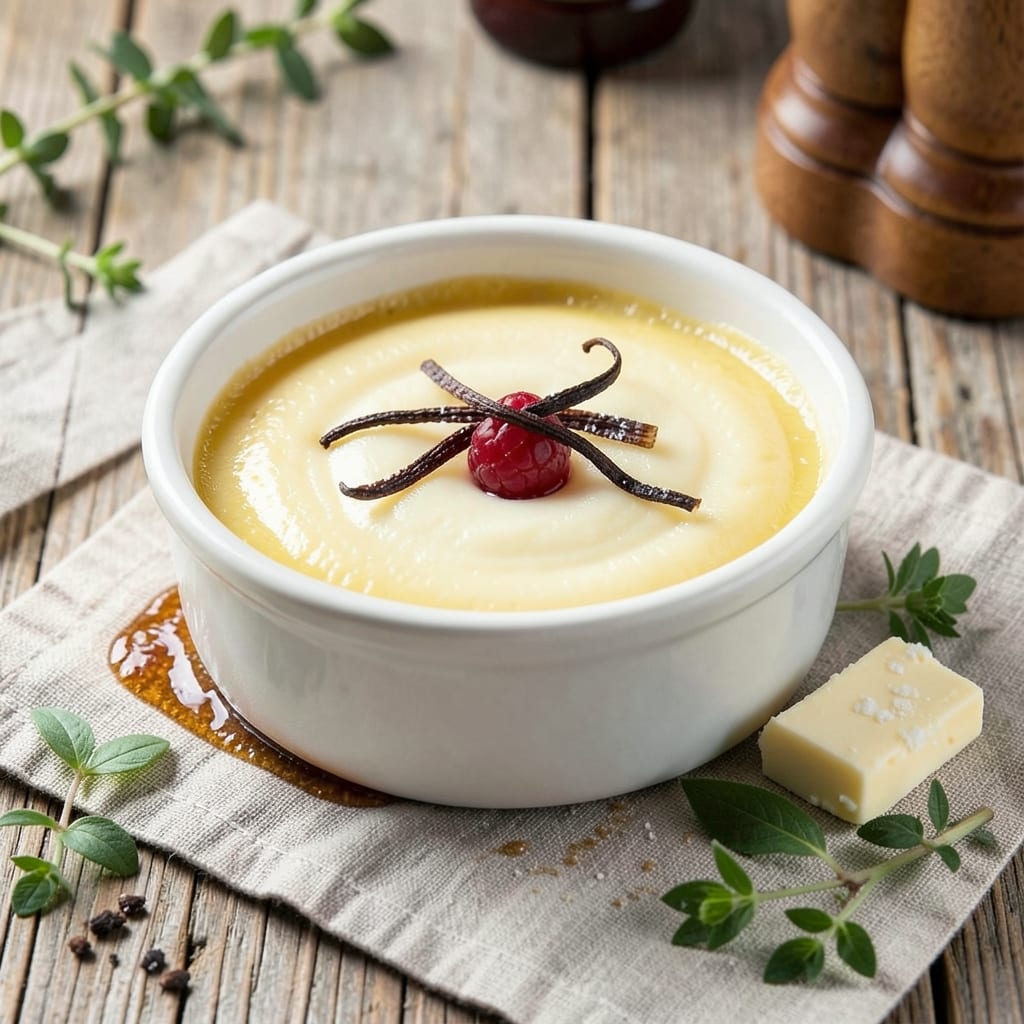
This classic egg custard recipe delivers the velvety, golden perfection you crave—silky smoothness infused with vanilla that transforms any brunch into something special. The secret lies in precise temperatures and gentle stirring, ensuring a texture so rich it practically melts on the tongue. I’ve perfected this method after years of testing, and it never fails to impress, whether served as a standalone dessert or paired with fresh berries.
What sets this custard apart is its foolproof technique: a low-and-slow baking approach at 325°F for 40-45 minutes guarantees a creamy center without a hint of graininess. The vanilla bean extract adds depth, while a touch of cornstarch ensures that signature silky finish. Unlike store-bought versions, this custard is made with simple, high-quality ingredients—no shortcuts, just pure indulgence.
By the time it emerges from the oven, you’ll have a golden, jiggly custard with a delicate caramelized top that cracks beautifully when served. The aroma alone will have everyone gathering around the table, and the first bite delivers that perfect balance of creamy, slightly sweet, and velvety smooth. This is the kind of dessert that feels like a hug in every spoonful.
Serve it warm with a sprinkle of cinnamon, a dollop of whipped cream, or alongside shortcake for a brunch that feels like a celebration. The best part? This recipe scales effortlessly—whether you’re feeding a crowd or treating yourself to a quiet indulgence. Let’s make custard that tastes like nostalgia.
Ingredients for classic egg custard
Simple ingredients elevated by precise technique—this custard delivers restaurant-quality velvet texture.
| Ingredient | Amount | Notes |
|---|---|---|
| Large Egg Yolks 🥚 | 6 whole | Freshly separated from whites |
| Whole Milk 🥛 | 2 cups | Full-fat for optimal creaminess |
| Granulated Sugar 🍚 | ¾ cup | Superfine preferred for smooth texture |
| Vanilla Bean Extract 🌿 | 2 tsp | Pure extract, not imitation |
| Cornstarch 🌾 | 2 tbsp | For silky, non-grainy finish |
| Unsalted Butter 🧈 | ½ cup | Cold, cubed for even melting |
| Salt 🧂 | ¼ tsp | Fine sea salt preferred |
| Large Egg Whites 🥚 | 3 whole | Optional for extra richness |
| Ground Cinnamon 🍃 | ½ tsp | For garnish, not baking |
| Heavy Whipping Cream 🥛 | ½ cup | For serving, optional |
| Fresh Berries 🍓 | 1 ½ cups | Optional garnish |
The egg yolks are the heart of this custard. Use only the freshest yolks—they should be a vibrant, deep yellow with no grayish tinge. Whole Foods or local farmers' markets often carry the highest-quality eggs, but any organic, free-range eggs will work. The vanilla bean extract is non-negotiable—Nielsen-Massey or McCormick Pure Vanilla are reliable brands. For the milk, whole milk from grass-fed cows yields the richest, creamiest texture. If you're using store-bought milk, let it sit at room temperature for 30 minutes before measuring to ensure optimal incorporation. The cornstarch acts as a stabilizer, preventing that dreaded grainy texture that plagues homemade custards.
No vanilla bean extract? Pure vanilla sugar (steep vanilla bean in sugar) works in a pinch, though the flavor won't be as complex. For the egg whites, if you're adding them for extra richness, whip them to soft peaks first—this ensures they blend seamlessly without altering the custard's delicate texture. Substituting milk? Heavy cream works at a 1:1 ratio, but the custard will be even richer. The butter should be cold when added—this prevents the custard from curdling during the baking process. If you're serving this to a crowd, consider doubling the recipe, but be mindful of the baking time—325°F for 40-45 minutes is critical for that perfect set.
This custard is best enjoyed the day it's made, but leftovers can be stored in an airtight container in the refrigerator for up to 3 days. To reheat, gently warm in the microwave for 20-30 seconds or bake at 300°F for 10 minutes until just warmed through. For make-ahead convenience, prepare the custard mixture in ramekins and refrigerate overnight—bake straight from the fridge for a slightly firmer texture. The cinnamon and whipped cream should be added just before serving to maintain their freshness. If you're prepping for a brunch, assemble the garnishes the night before and store them separately in the fridge.
Why You'll Love This Recipe
- No Fuss, No Stress: I’ll admit, I used to avoid custards thinking they’d curdle or take forever. But this one? Just whisk yolks, milk, sugar, and a pinch of cornstarch—then bake. No tempering, no stress. The cornstarch keeps it silky without breaking a sweat.
- Vanilla-Kissed Magic: That first spoonful of custard, warm and fragrant with real vanilla bean extract? It’s like dessert sneaking into breakfast. The sugar caramelizes just enough to make it taste richer than it looks—no artificial shortcuts here.
- Breakfast or Dessert: Honestly, I make this for both. Drizzle it over toasted brioche in the morning, or serve it chilled with berries for a lazy Sunday. The milk’s creaminess and yolks’ richness make it work anywhere—no rules, just flavor.
- Leftovers? Please.: This custard actually improves the next day. The flavors meld, and it’s still creamy straight from the fridge. I stash it in jars for quick puddings or pancake toppings—no waste, all win. Plus, it’s cheaper than store-bought and tastes like you slaved over it.
Step-by-step instructions for classic egg custard
Mastering this timeless custard requires precision—here's how to achieve velvety texture and perfect vanilla infusion every time.
Temper the Egg Yolks with Milk
In a medium saucepan, combine the 2 cups whole milk with the 0.75 cup granulated sugar and 2 tsp vanilla bean extract. Warm over medium-low heat until steaming (160°F), stirring occasionally to dissolve the sugar completely. The mixture should be hot but not boiling—you're looking for tiny bubbles forming at the edges.
While the milk heats, whisk the 6 whole large egg yolks in a separate bowl until smooth and pale. Slowly pour the hot milk mixture into the yolks while whisking constantly. This tempering process prevents the eggs from curdling—you'll notice the mixture thicken slightly as it reaches 140°F. Return everything to the saucepan and continue heating over low heat until the mixture reaches 165°F, stirring frequently to prevent scorching.
Thicken with Cornstarch and Butter
In a small bowl, whisk together the 2 tbsp cornstarch with 2 tablespoons of the warm custard mixture to create a smooth slurry. Gradually whisk this back into the saucepan while maintaining low heat. The custard will begin to thicken dramatically—you'll see it transform from a thin liquid to a glossy, pudding-like consistency. This should take about 3-5 minutes of constant stirring.
Remove from heat and immediately stir in the 0.5 cup cold unsalted butter, cut into small cubes. The butter will melt into the custard, creating a luxurious mouthfeel. Add the 0.25 tsp salt and 0.5 tsp ground cinnamon, whisking until fully incorporated. The custard should now coat the back of a spoon and hold its shape when drizzled from a spoon—this is your ideal consistency for pouring.
Incorporate Egg Whites for Extra Richness
In a separate bowl, beat the 3 whole large egg whites with a hand mixer until soft peaks form. Gently fold one-third of the beaten egg whites into the custard mixture to lighten it slightly. This step is optional but creates a silkier texture—if you prefer a denser custard, you can skip this entirely. The mixture should remain smooth without developing any lumps.
Transfer the custard to a heatproof serving dish or individual ramekins. For a classic presentation, strain through a fine-mesh sieve to ensure an ultra-smooth finish. Cover the surface with plastic wrap pressed directly against the custard to prevent skin formation. Chill in the refrigerator for at least 4 hours, preferably overnight, until completely set.
Serve with Whipped Cream and Berries
Before serving, whip the 0.5 cup heavy whipping cream to soft peaks. Spoon the chilled custard into bowls, topping each serving with a dollop of whipped cream and a scattering of 1.5 cups fresh berries. The berries add a bright contrast to the custard's rich vanilla flavor while keeping the presentation elegant. Serve immediately for the perfect balance of warm cream and cool custard.
This custard should have a silky, almost mousse-like texture with no graininess. The vanilla flavor should be pronounced but not overpowering, with a subtle cinnamon warmth throughout. If properly made, each spoonful should melt on your tongue without any resistance.
Pro Tips For Making Classic Egg Custard
- Whisk Yolks Like a Maniac: I learned this the hard way—when the yolks and sugar aren’t fully emulsified, you’ll end up with lumps or a grainy texture. Beat them together over a double boiler (or a heatproof bowl over simmering water) until the mixture is pale, thick, and triples in volume. That’s the only way to guarantee a silky finish.
- Strain That Mixture: No matter how carefully you whisk, tiny bits of cooked egg or cornstarch can sneak in and ruin the smoothness. After mixing everything, strain the custard through a fine-mesh sieve into your baking dish—yes, it’s an extra step, but it’s the difference between "homemade" and "restaurant-quality."
- Skip the Boiling Point: Water baths are great, but don’t let the custard hit a full boil—aim for 170–180°F (77–82°C). Overheating turns the edges rubbery and the center watery. A gentle simmer is all you need; check the doneness by wiggling the dish—if it jiggles like Jell-O, it’s done.
- Infuse Vanilla Properly: Splitting a vanilla bean and scraping out the seeds isn’t just for show—it releases more flavor. Toss the scraped pod into the warm milk while heating, then remove it before straining. The leftover pod can go into your next batch or a cup of tea. (Yes, it’s worth the effort.)
Creative variations of classic egg custard
Chocolate Custard Twist
Swap the vanilla extract for 2 oz high-quality dark chocolate (I love Ghirardelli 70% cacao) melted and cooled, then whisked into the warm milk mixture. Add ¼ tsp espresso powder to enhance the chocolate flavor—trust me, it makes a difference. For extra richness, fold in 1 tbsp Dutch-process cocoa powder with the cornstarch slurry. Serve with a dusting of cocoa powder and fresh raspberries for that decadent chocolate brunch vibe. 🍫
Caramelized Onion Custard
Start by caramelizing 1 large yellow onion in 2 tbsp butter until deep golden brown—about 30 minutes on low heat. Stir this into the warm milk mixture before tempering the eggs. The sweet, jammy onions add a sophisticated depth that pairs beautifully with a sprinkle of flaky sea salt. I like to serve this version with a drizzle of homemade caramel sauce and toasted pecans. 🧅
Citrus Infusion
Brighten up your custard by zesting 1 lemon and 1 orange (about 1 tbsp zest total) and adding it to the warm milk mixture. You can also steep 2 thin slices of citrus peel in the milk while it heats, then strain before tempering. The citrus cuts through the richness beautifully—perfect for a refreshing spring brunch. Garnish with fresh segments and a mint sprig for a restaurant-worthy presentation. 🍊
Spiced Chai Custard
Infuse the milk with 2 chai tea bags while heating, then remove them before tempering. Add ¼ tsp ground cardamom and ⅛ tsp ground cloves to the custard mixture for warmth. The spiced notes complement the vanilla perfectly. Serve with a sprinkle of cinnamon and a dollop of whipped cream spiked with 1 tsp chai tea concentrate. This version feels like a cozy hug in dessert form. ☕
Coffee Lovers' Version
Replace half the milk with 1 cup strong brewed coffee (I use Starbucks Pike Place Roast) and add 1 tbsp brown sugar to balance the bitterness. The coffee enhances the vanilla flavor while adding a subtle depth. For presentation, serve in espresso cups with a dusting of cocoa powder and a coffee bean garnish. This custard is perfect for breakfast-for-dinner nights. ☕
Make-Ahead Tips
All these variations can be prepared a day ahead—just assemble the custard mixtures in ramekins and refrigerate overnight. Bake straight from the fridge for a firmer texture. For the chocolate version, let it sit at room temperature for 10 minutes before serving to soften slightly. The citrus and coffee variations keep well for 3 days in the fridge, while the spiced chai version is best enjoyed within 2 days for maximum freshness. 📅
Nutrition facts
Frequently asked questions
Why does my custard turn out grainy?
Graininess happens when eggs cook too fast or aren't properly tempered. Always whisk yolks constantly while adding hot milk, and never let the mixture boil. The cornstarch should dissolve completely in warm custard first to prevent lumps. For extra silkiness, strain through a fine-mesh sieve before chilling.
Can I make this custard without a thermometer?
Yes! Heat the milk until tiny bubbles form at the edges (160°F), then temper the eggs slowly. After adding eggs, cook until the custard coats the back of a spoon and holds its shape when drizzled (165°F). It should take 5-7 minutes of constant stirring on low heat.
How do I prevent custard from forming a skin?
Press plastic wrap directly onto the surface before refrigerating to create an airtight seal. For individual ramekins, cover each with parchment paper before adding plastic wrap. If a skin forms, gently reheat in a 300°F oven for 10 minutes with a splash of milk, then stir and chill again.
What's the best way to serve classic custard?
Serve warm with whipped cream and fresh berries for contrast, or chill completely for a creamy dessert. For brunch, pair with shortcake or toasted brioche. The golden caramelized top should crack beautifully when served—this indicates perfect doneness!
Can I substitute cornstarch with flour?
No—cornstarch creates a silky texture while flour makes custard gummy. If you must substitute, use 1 tbsp arrowroot powder instead, but it won't be identical. The cornstarch in this recipe is key for that velvety, restaurant-quality finish.