
Breakfast & Brunch
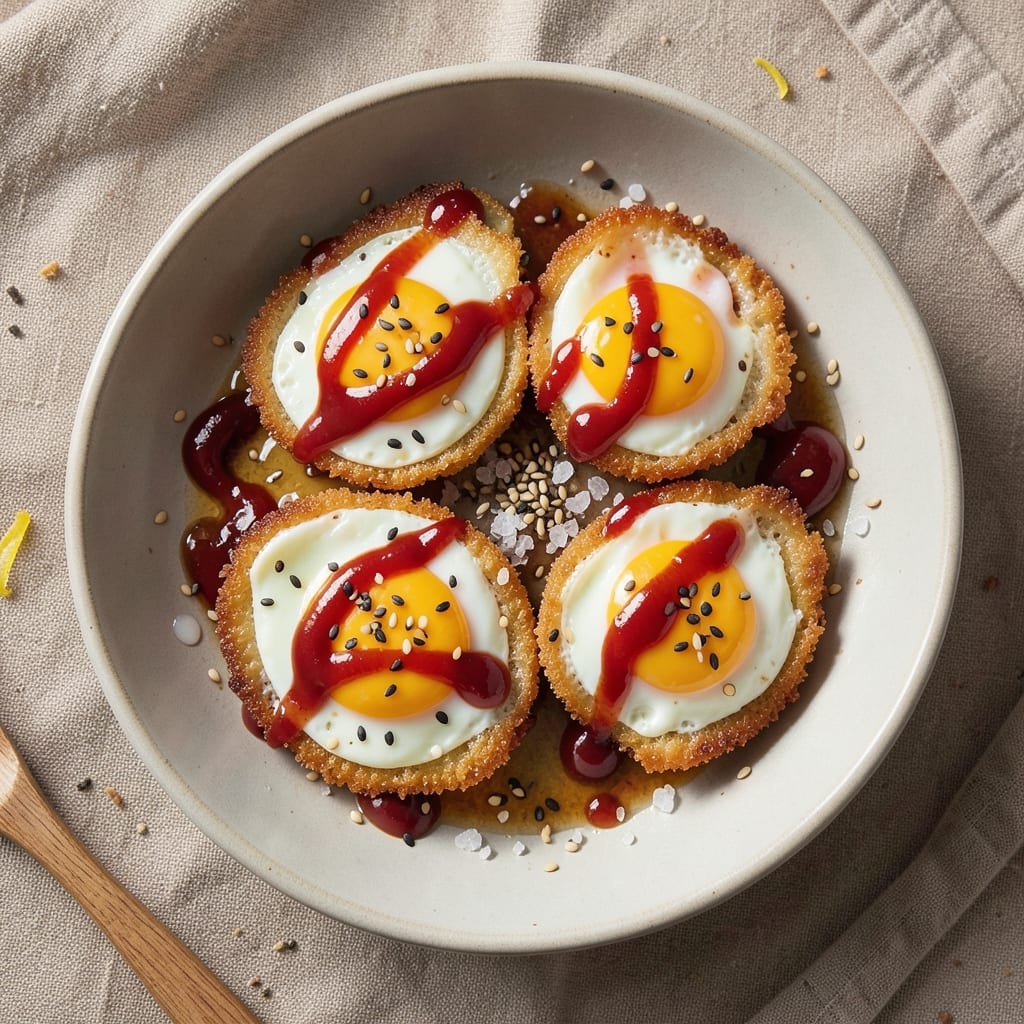
This deep fried soft boiled eggs recipe transforms a simple breakfast into a showstopping dish where crispy shells give way to silky, runny yolks in every bite. The secret lies in precise boiling and frying—6 minutes in simmering water for perfect doneness, then a quick sear in 350°F oil for that irresistible crunch. It’s the kind of technique that turns ordinary eggs into a restaurant-worthy experience without requiring advanced skills.
The magic happens in the contrast: golden, shatteringly crisp exteriors protect the creamy, molten centers inside. A light dusting of flaky sea salt or a drizzle of soy-chili sauce elevates the flavor, while sesame seeds add texture. This isn’t just breakfast—it’s a textural masterpiece that balances heat, crunch, and richness in every forkful.
Safety is key here—hot oil demands respect, so we’ll cover how to monitor temperature and drain excess oil properly. The result? A dish that’s foolproof once you nail the timing, with a satisfying sizzle that announces dinner is ready before you even plate it. No more boring boiled eggs—just crispy, golden perfection with a yolk so tender it slides off the spoon.
Serve these as a garnished appetizer, a bold breakfast centerpiece, or even a savory snack with chopsticks. The technique scales effortlessly, so you can fry just two for a special treat or a batch for sharing. Let’s get started on this crispy-meets-silky game-changer.
Ingredients for deep fried soft boiled egg
Four eggs, precise timing, and the perfect oil temperature transform ordinary eggs into crispy-yolk perfection.
| Ingredient | Amount | Notes |
|---|---|---|
| Large Eggs 🥚 | 4 whole | Room temperature for even cooking |
| Vegetable Oil 🫒 | 4 cups | High smoke point, like canola |
| Flaky Sea Salt 🧂 | ¼ cup | Maldon preferred for texture |
| Toasted Sesame Seeds 🌾 | 2 tbsp | Lightly toasted for aroma |
| Soy-Chili Sauce 🍶 | ¼ cup | For drizzling post-fry |
| White Vinegar 💧 | 1 tbsp | Prevents egg whites spreading |
| Ice Water ❄️ | 1 cup | For immediate shock bath |
| Kitchen Thermometer 🌡️ | 1 whole | For accurate oil temp |
| Paper Towels 🧻 | 1 package | For draining excess oil |
| Slotted Spoon 🍴 | 1 whole | For safe egg transfer |
The eggs are the star, so room temperature is non-negotiable—cold eggs won’t cook evenly. Large eggs work best for consistent results, and freshness matters: aim for eggs no older than 10 days for optimal texture. For the oil, vegetable oil with a high smoke point (like Mazola or Crisco) is ideal—avoid olive oil, which burns at 350°F. Preheat your oil to exactly 350°F using a kitchen thermometer—any lower and the shells won’t crisp, any higher and the yolks overcook. Costco or bulk bins are great for stocking up on oil in large quantities, while Maldon sea salt elevates the dish with its delicate flakes.
No Maldon sea salt? Diamond Crystal kosher salt works in a pinch—just use slightly less for finer texture. Running short on sesame seeds? Toasted black sesame seeds or even crushed peanuts add a similar crunch. The soy-chili sauce can be swapped for sriracha mayo or spicy harissa if you prefer more heat. For the vinegar, apple cider vinegar is a fine substitute. Pro tip: If your eggs float in the ice bath, they’re overcooked—adjust boiling time by 30 seconds next time. The slotted spoon is critical for transferring eggs without losing oil—avoid regular spoons, which trap oil and make draining messy.
Freshly fried eggs lose crispiness fast, so serve immediately for the best texture. Store any leftovers in an airtight container for up to 2 days, but reheating destroys the crunch—better to fry fresh. Oil can be reused 2-3 times if strained through a fine-mesh sieve after each use. For large batches, double the recipe but monitor oil temperature closely—it drops as you add more eggs. Pro tip: Keep a bowl of ice water ready for shock cooling eggs between batches to maintain even doneness.
Why You'll Love This Recipe
- Crispy in Minutes: I swear, the oil heats up fast, and those eggs hit golden perfection in under 3 minutes—no waiting around for hours like a regular boil.
- Umami Bomb: That soy-chili sauce drizzle? It turns a simple egg into something ridiculously good—salty, spicy, nutty all at once, with the sesame seeds adding crunch like magic.
- Party or Pantry: Serve them at game day with beer, toss a batch into bento boxes for lunch, or just eat them straight from the fryer—no judgment here. They’re that adaptable.
- Budget Magic: Eggs are cheap, oil lasts forever, and a little sauce goes a long way. Honestly, I’ve made this for under $2 per serving and still felt like a fancy restaurant.
Step-by-step instructions for deep fried soft boiled eggs
Master this technique and you'll achieve perfect balance—crispy, shatter-priced shells with silky, runny yolks every time.
Prepare the Eggs for Even Cooking
Place the 4 whole Large Eggs in a bowl and gently whisk them with the 1 tablespoon White Vinegar. The vinegar creates a subtle chemical reaction that helps the whites hold their shape better during frying. Let the eggs sit at room temperature for 10 minutes—this prevents temperature shock when they hit the hot oil.
While waiting, fill a large bowl with 1 cup Ice Water and set it nearby. This ice bath will be crucial after frying to halt the cooking process instantly. I always use a separate bowl rather than running cold water over the eggs—it gives more consistent results and keeps the yolks perfectly runny.
Heat the Oil to Precise Temperature
Pour the 4 cups Vegetable Oil into a deep, heavy-bottomed pot that's at least 4 inches deep. Attach the Kitchen Thermometer and heat the oil over medium heat until it reaches 325°F. This lower-than-usual temperature is key—it creates the perfect balance between crispy shells and liquid centers.
Watch the thermometer closely. The oil should be hot but not smoking. If you see smoke, reduce the heat immediately—smoking oil means you're too close to the burn point, which would cook the eggs too quickly on the outside before the yolks set properly. Give the oil 10 minutes to stabilize at 325°F before frying.
Fry the Eggs in Batches
Using the Slotted Spoon, carefully lower one egg at a time into the oil. The oil should gently bubble around the egg but not erupt violently. Fry for 3 minutes—you'll see the whites become opaque while the yolks remain completely liquid. If you lift an egg and the white is still translucent, it needs another 30 seconds.
This is where precision matters most. Overcooking by even 10 seconds will turn your perfect yolk into a firm center. Once the whites are set but yolks remain runny, use the Slotted Spoon to transfer the egg to the prepared Ice Water for 30 seconds. This shock bath stops all further cooking instantly, preserving that signature runny yolk.
Season and Serve Immediately
Remove the fried egg from the ice water and drain it on a wire rack lined with Paper Towels for 1 minute. While still warm, sprinkle generously with 2 tablespoons Toasted Sesame Seeds and ¼ cup Flaky Sea Salt. The salt should melt slightly into the warm shell, creating a delicate crust that enhances the egg's natural flavor.
For serving, drizzle with ¼ cup Soy-Chili Sauce—this adds a perfect balance of umami and subtle heat that complements the egg's richness. Serve immediately while the shells are still crispy. The contrast of temperatures—crispy shell, silky yolk, cool sauce—is what makes this dish truly special.
Maintain Perfect Texture Between Batches
Repeat the frying process with the remaining eggs, maintaining the 325°F oil temperature between batches. If the oil temperature drops below 320°F, give it 2-3 minutes to recover before frying the next egg. Never overcrowd the pot—frying one egg at a time ensures even cooking and prevents temperature fluctuations.
For best results, work quickly but carefully. The entire process from first fry to last serving should take no more than 10 minutes. This keeps the eggs at their peak texture—crispy shells that shatter when bitten into, and yolks so liquid they flow like molten gold. The secret lies in the precise temperature control and immediate shock bath.
Pro Tips For Making Deep Fried Soft Boiled Egg
- CRACK EGGS GENTLY: Tap the egg on the edge of a bowl first—don’t just drop it into the oil. The shell cracks cleanly, and fewer bits end up in your fryer, which means less mess and a smoother yolk. I learned this after frying eggs with shells stuck to the bottom like tiny landmines.
- USE COLD EGGS: Pull eggs straight from the fridge—room temperature eggs release too much yolk too fast, and you’ll end up with a broken mess. Cold eggs stay intact until the oil hits, giving you that perfect runny center. (Yes, even if you’re impatient like me.)
- WATCH THE OIL TEMP: Get the oil smoking hot (350°F/175°C) before adding eggs, but don’t walk away—it drops fast when you add them. Fry in batches of 2-3 eggs max, or the oil temp will tank, and you’ll get greasy, soggy yolks instead of crispy crusts. I was skeptical until I tried it.
- SALT AFTER FRIED: Sprinkle flaky sea salt immediately after frying while the egg is still hot—it melts into the crust for extra flavor. If you salt before, the salt just sticks to the shell and gets soggy when fried. Same goes for sesame seeds; toast them fresh and sprinkle right after frying for maximum crunch.
Flavor customization for this recipe
Spicy Kick
Add ½ teaspoon of chili flakes or 1 teaspoon of gochujang paste to the oil before frying for a subtle heat that permeates the shell. For extra spice, mix 1 tablespoon sriracha with the soy-chili sauce drizzle. I love this variation when serving with cool cucumber slices to balance the heat. 🌶️
Sweet & Savory
Mix 1 tablespoon honey with the soy-chili sauce for a sweet-savory glaze that caramelizes slightly on the hot egg. The contrast of crispy shell with sweet-spicy sauce is pure magic. For extra richness, top with crumbled bacon bits or crispy fried shallots.
Umami Boost
Infuse the oil with 1 tablespoon soy sauce and 1 clove minced garlic before frying for an extra umami depth. This works especially well with black sesame seeds instead of toasted white. The garlic adds a subtle aroma that pairs perfectly with the crispy texture. 💛
Herbaceous Twist
Sprinkle 1 tablespoon chopped chives or 1 teaspoon dried dill over the fried eggs after seasoning. The fresh herbs add a bright, aromatic note that cuts through the richness. For a Mediterranean touch, add crumbled feta cheese and a drizzle of olive oil.
Smoky Depth
Add ½ teaspoon smoked paprika to the oil before frying for a subtle smoky flavor. Pair this with pickled jalapeños on the side for tangy heat. The smoky-sweet contrast is perfect for serving with avocado slices or cornbread.
Citrus Zing
Finish with a squeeze of lemon zest and a few drops of lemon juice after frying. The acidity brightens the dish and balances the richness. For extra zing, add thinly sliced radishes on the side. This variation works especially well for brunch presentations. ✨
Nutrition facts
Frequently asked questions
Why do the eggs need to be room temperature?
Cold eggs create steam when they hit hot oil, causing uneven cooking and potential explosions. Room temperature eggs cook evenly, ensuring crispy shells without breaking. Let them sit for 10 minutes before frying for perfect results.
What happens if I don't use a thermometer?
Without precise temperature control, your oil could be too hot (burning yolks) or too cool (soggy shells). 325°F is critical—any lower and shells won't crisp, any higher and yolks overcook. A thermometer costs $10 and prevents wasted eggs.
Can I reuse the frying oil?
Yes! Strain the oil through a fine-mesh sieve after each use and store in an airtight container. Reuse it 2-3 times for frying, but discard if it develops a burnt smell. Never reuse oil that's been used for multiple batches without straining.
How do I fix overcooked yolks?
If yolks firm up, try this: Soak the eggs in warm water (100°F) for 1 minute to soften them slightly. For presentation, serve with a side of chili oil or spicy mayo to distract from the texture change. Prevention is key—watch your timing!
What's the best way to serve these eggs?
These make stunning appetizers on skewers with toasted bread, or as a brunch centerpiece with fresh herbs. For a full meal, pair with steamed rice and miso soup. The crispy texture holds up beautifully when served with chopsticks!