
Salads
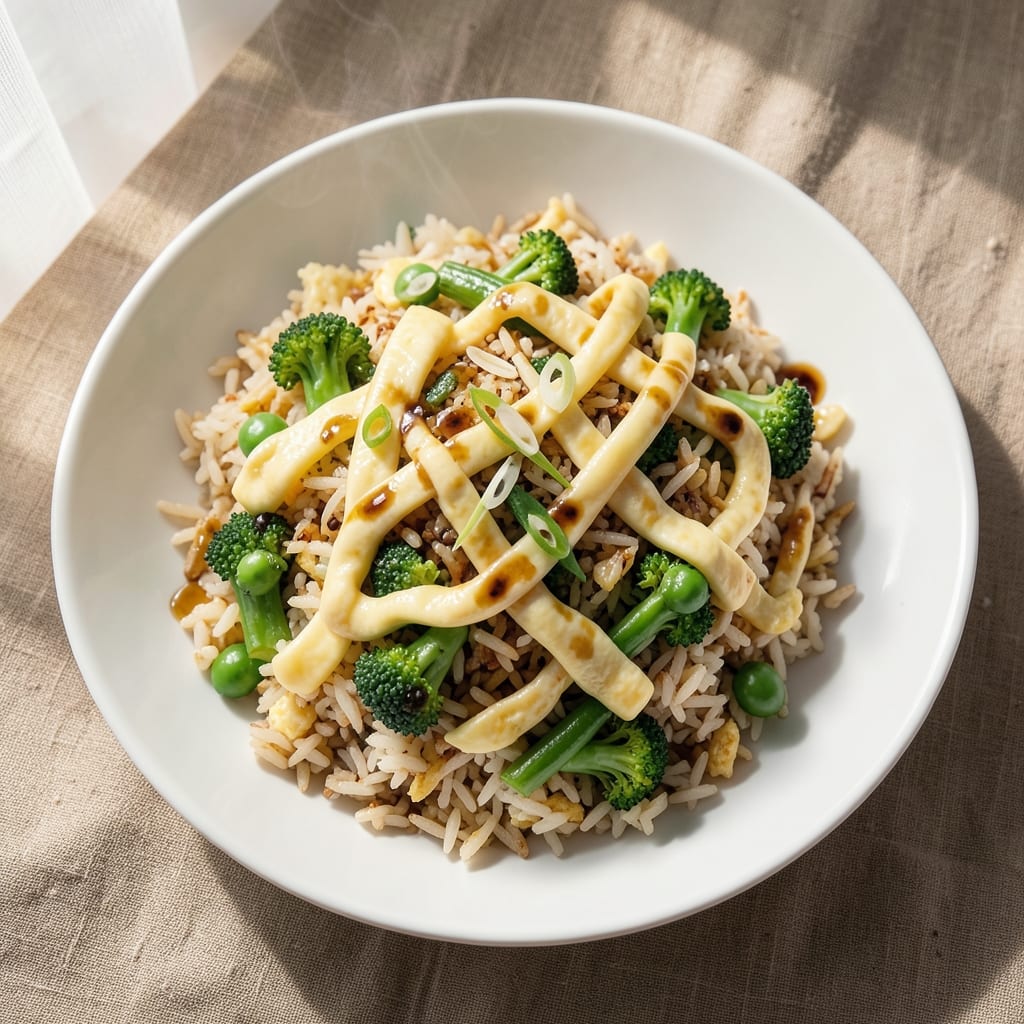
This easy fried rice recipe with egg and frozen vegetables delivers restaurant-quality results in 15 minutes using just one pan. The secret lies in proper rice texture—day-old, cold rice prevents mushiness while absorbing flavors perfectly. Frozen vegetables cut prep time without sacrificing texture, and scrambled eggs add protein-rich richness.
High heat and constant stirring create those signature wok-fried edges, while soy sauce and sesame oil build deep umami flavor. Garlic, ginger, and green onions add aromatic complexity that transforms simple ingredients into a satisfying meal. This version maintains all the classic fried rice elements while keeping the process streamlined for weeknight dinners.
Ingredients for easy fried rice recipe with egg and frozen vegetables
Simple pantry staples transform into restaurant-quality fried rice in minutes.
| Ingredient | Amount | Notes |
|---|---|---|
| Day-Old Cooked White Rice 🍚 | 4 cups | Cold or room temperature preferred |
| Large Eggs 🥚 | 4 whole | Room temperature for even cooking |
| Frozen Mixed Vegetables 🥕 | 2 cups | Peas, carrots, corn—no thawing needed |
| Vegetable Oil 🫒 | 2 tbsp | High smoke point preferred |
| Soy Sauce 🍶 | 3 tbsp | Low-sodium for flavor control |
| Sesame Oil 🫒 | 1 tsp | Toasted for authentic aroma |
| Garlic Cloves 🧄 | 3 cloves | Minced for aromatic base |
| Fresh Ginger 🌿 | 1 tbsp | Grated, for zesty kick |
| Green Onions 🧅 | 3 whole | Sliced, for garnish |
| Salt 🧂 | ½ tsp | Adjust to taste |
| Black Pepper 🌶️ | ¼ tsp | Freshly ground preferred |
| White Pepper 🌶️ | ¼ tsp | For classic fried rice color |
| Sesame Seeds 🌾 | 1 tsp | Toasted for crunch |
The rice is the foundation—day-old, cold rice creates that perfect texture. Cook a full batch the night before and store in the fridge for foolproof results. Frozen vegetables work perfectly here since they're pre-cut and thaw quickly in the hot pan. Trader Joe's and Costco carry excellent frozen veggie mixes, but any combination of peas, carrots, and corn will do. The eggs need to be room temperature for even cooking—just take them out of the fridge 10 minutes before starting. For the garlic and ginger, fresh is non-negotiable—dried powders won't give that authentic wok-house flavor.
No sesame oil? Toasted peanut oil works in a pinch, though the flavor will differ slightly. Running short on soy sauce? Coconut aminos or tamari are great substitutes. The white pepper is key for that classic fried rice color—without it, your dish will look pale. If you don't have a wok, a large nonstick skillet or cast-iron pan works perfectly. The vegetables should be thawed but not soggy—just toss them straight from the freezer into the hot pan. For extra protein, add cooked shrimp or diced chicken at the end.
This dish reheats beautifully—just add a splash of water and stir. Keeps for 3-4 days in the fridge, though it's best enjoyed fresh. For meal prep, portion into containers and store separately. The rice reheats best when covered with a damp paper towel. Double the batch and freeze half for lazy days—it thaws in minutes and tastes just as good. The sesame seeds and green onions should be added fresh at serving time for maximum flavor impact.
Why You'll Love This Recipe
- Fridge Rescue Dish: I swear by this trick—half a bag of frozen veggies and yesterday’s rice? Suddenly, dinner isn’t a scramble. Just toss them in the pan together, and boom, you’ve got a meal.
- Eggy Umami Magic: That first crack of the egg into the sizzling wok? Pure satisfaction. The soy sauce soaks into the rice while the egg turns into crispy-edged perfection—salty, savory, and impossible to resist.
- Lunchbox Hero: Pack this for work or school—it reheats like a dream. The veggies stay bright, the rice stays separate, and honestly? Nobody ever complains when you bring this.
- Pocketbook Friendly: Frozen veggies, eggs, and rice? This is cooking on a budget without sacrificing flavor. I’ve fed my whole family for under $5, and they still ask for seconds.
Step-by-step instructions for easy fried rice with egg and frozen vegetables
Master this quick one-pan technique for restaurant-quality fried rice every time.
Prep the Eggs and Aromatics
Crack the 4 whole large eggs into a bowl and whisk vigorously until the yolks and whites are fully combined and frothy. This ensures even cooking and creamy texture in your fried rice. In a separate small bowl, combine the minced 3 cloves garlic, grated 1 tablespoon fresh ginger, 0.5 teaspoon salt, 0.25 teaspoon black pepper, and 0.25 teaspoon white pepper. Mix well to create your aromatic base.
I like to toast the 1 teaspoon sesame seeds in a dry skillet over medium heat for 30 seconds until fragrant. This enhances their nutty flavor and gives your fried rice that authentic crunch. Set them aside for garnishing later.
Scramble the Eggs
Heat 1 tablespoon vegetable oil in a large wok or skillet over medium-high heat until shimmering. Pour in the whisked eggs and let them sit undisturbed for 5-7 seconds until the edges begin to set. Using a spatula, gently push the eggs from one side to the other, creating soft, silky curds rather than breaking them into small pieces.
Once the eggs are 80% cooked but still slightly runny in the center, remove them from the wok and set aside. This prevents overcooking while keeping the eggs creamy. Don't drain the wok—those flavorful egg bits will form the base of your sauce.
Stir-Fry the Vegetables
Add the remaining 1 tablespoon vegetable oil to the wok and increase heat to high. Add the 2 cups frozen mixed vegetables directly from the freezer—no thawing needed. Stir-fry for 3-4 minutes until the vegetables are tender-crisp and any ice crystals have fully melted.
Add the garlic-ginger mixture and stir for 30 seconds until fragrant. You'll smell that aromatic punch of garlic and ginger—this is where the flavor foundation builds. If the vegetables release too much moisture, let it cook off completely before adding the rice. This prevents a soggy final dish.
Combine and Cook the Rice
Add the 4 cups day-old cooked white rice, breaking up any large clumps with your spatula. Stir-fry for 2-3 minutes, letting the rice absorb the flavors from the vegetables and egg bits. This is where the magic happens—each grain gets coated with those delicious aromatics.
Pour in the 3 tablespoons soy sauce and 1 teaspoon sesame oil, stirring constantly for 1-2 minutes until the rice is evenly coated and the soy sauce is fully incorporated. The rice should look glossy and well-seasoned. If it seems dry, add 1-2 tablespoons water to create steam and prevent sticking.
Finish and Garnish
Return the scrambled eggs to the wok and gently fold everything together for 30 seconds until just combined. The residual heat will finish cooking the eggs while keeping the rice perfectly tender. Taste and adjust seasoning—you might need an extra 0.25 teaspoon soy sauce or salt to balance flavors.
Divide the fried rice among 4 plates and garnish each serving with 1 whole sliced green onion and the toasted sesame seeds. Serve immediately while hot—this dish is best enjoyed fresh from the wok with that perfect texture contrast between tender rice, creamy eggs, and crisp vegetables.
Pro Tips For Making Easy Fried Rice Recipe With Egg And Frozen Vegetables
- Scramble Eggs First: I learned this the hard way—frying the egg in the same pan after the rice gets messy. Crack the eggs into a separate bowl, scramble them in a cold, nonstick skillet over medium-low, then push them to one side. The edges stay crisp, and you won’t have to play cleanup in the rice later.
- Thaw Veggies in Oil: Frozen veggies straight from the freezer turn to mush. Dump them into the hot pan before adding rice—let them sizzle for 30 seconds while you prep the rest. The oil will thaw them evenly, and they’ll stay bright instead of soggy.
- Break Up Rice Clumps: Cold rice sticks together like glue. Use your hands (yes, even if you’re impatient like me) to separate any clumps before adding it to the pan. A fork works too, but your fingers feel every stubborn lump. No one wants a chewy bite in their fried rice.
- Soy Sauce Last: Add soy sauce at the very end—right after everything’s cooked but before you plate it. Stir once to coat the rice evenly. Dumping it in early burns the edges and makes the dish taste flat. A splash of sesame oil at the end makes a real difference.
Serving suggestions for leftovers
Quick Garnish Upgrades
Fresh cilantro leaves add a bright, herbaceous note that cuts through the richness. I like to sprinkle 1 tablespoon chopped cilantro over each serving right before eating—it stays vibrant even after reheating. For extra flair, add ½ teaspoon toasted sesame seeds while the rice is still hot for maximum crunch. 🌿
Side Dish Pairings
A simple steamed edamame with sea salt makes a perfect light side—its earthy flavor complements the fried rice beautifully. I serve ½ cup shelled edamame per person, tossed with ¼ teaspoon flaky sea salt and a squeeze of lemon. For heartier meals, pair with miso soup or egg rolls to round out the plate.
Beverage Pairings
Jasmine tea with honey drizzle is my go-to drink for fried rice—its floral notes enhance the dish's umami flavors. A cold green tea (like Jasminum) also works wonderfully. For something more substantial, a crisp Sake or dry Riesling balances the dish's richness without overpowering it. 🍶
Meal Prep Serving
When prepping ahead, portion fried rice into glass meal prep containers with a tight lid to keep it fresh. Store the sesame seeds and green onions separately to add freshness at serving time. I like to include a small silicon cup of soy sauce on the side for customizing spice levels. Reheat with 1 tablespoon water to restore moisture.
Family-Style Plating
For a communal meal, serve fried rice in a large ceramic bowl at the center of the table with chopsticks for sharing. Add a small bowl of extra soy sauce and a plate of sliced green onions for everyone to garnish their portions. This approach keeps the dish interactive and fun for kids and adults alike. 🍽️
Protein Add-Ins
Boost nutrition by adding ½ cup cooked shrimp or ½ lb diced chicken breast during the final 2 minutes of cooking. For vegetarian options, stir in ½ cup crumbled tofu or ½ cup chickpeas after the vegetables are tender. These additions keep the dish satisfying while adding variety to your weeknight meals.
Nutrition facts
Frequently asked questions
Can I use freshly cooked rice instead of day-old?
Freshly cooked rice will turn mushy when stir-fried because it contains too much moisture. For best results, always use day-old, cold rice that's been refrigerated overnight. If you're short on time, cook a full batch the night before or spread freshly cooked rice on a tray and refrigerate for 30 minutes to firm it up.
What if my frozen vegetables release too much water?
This happens when the vegetables aren't fully thawed before adding rice. First, stir-fry the veggies alone until they're tender-crisp and all ice crystals melt. Then, let the excess moisture cook off for 30-60 seconds before adding rice. If needed, push the veggies to one side of the pan and let the liquid evaporate completely.
How do I make this recipe spicier?
Add ½ teaspoon chili flakes or 1 teaspoon sriracha when combining the rice and soy sauce. For heat lovers, stir in ½ teaspoon red pepper flakes with the garlic-ginger mixture. For smoky depth, add ½ teaspoon smoked paprika when toasting the sesame seeds.
Can I make this with brown rice?
Brown rice works but requires adjustment—use 1:1 ratio but increase cooking time to 4-5 minutes since it's denser. For best texture, cook brown rice until slightly underdone, then spread on a tray to cool completely before using. The nutty flavor pairs wonderfully, but expect a chewier texture than white rice.
Why did my eggs turn out rubbery?
Overcooking or stirring too aggressively causes rubbery eggs. For silky results, remove eggs when they're 80% cooked (still slightly runny) and return them to the pan only at the very end. Use medium-high heat and stir gently with a spatula to create soft curds rather than breaking them into small pieces.