
Breakfast & Brunch
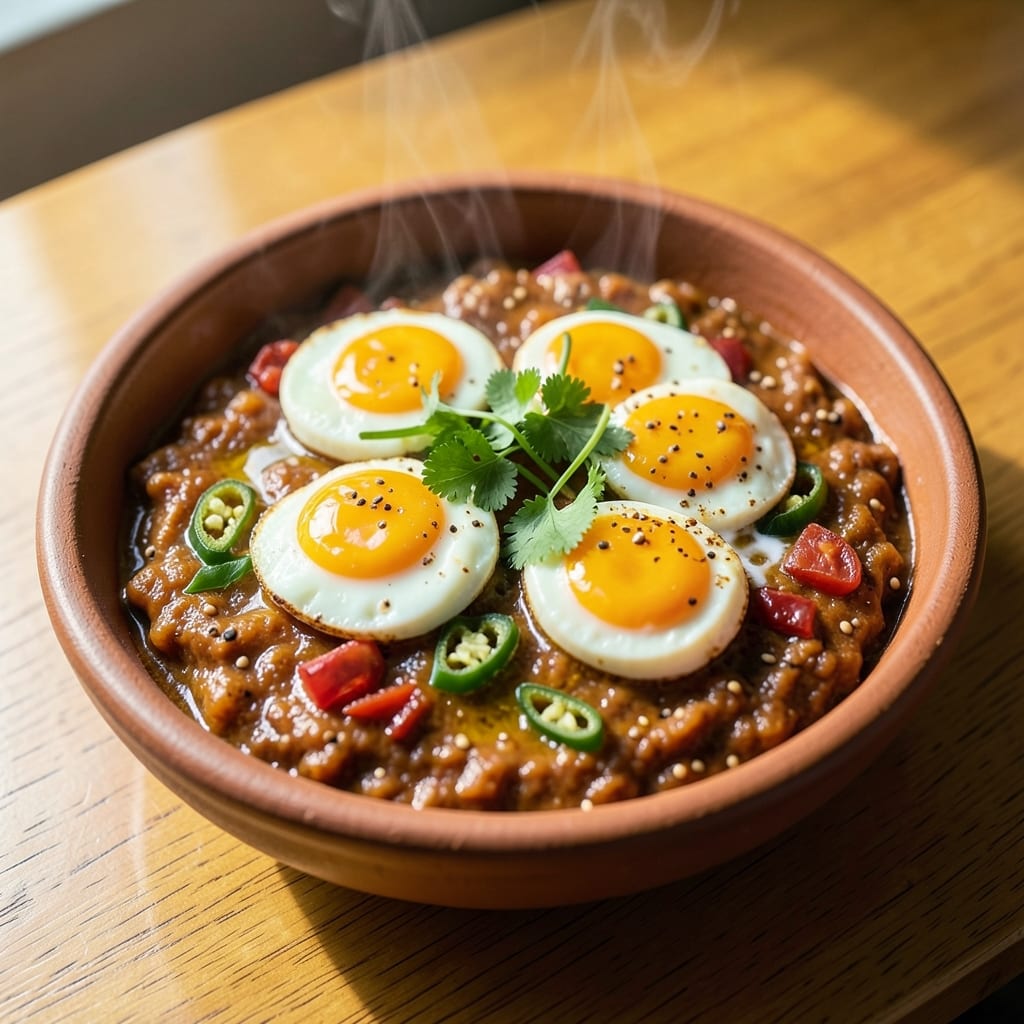
This egg bhorta recipe brings the rich, comforting flavors of Bengali cuisine straight to your breakfast table with its signature turmeric-spiced coconut gravy and velvety runny yolk. The dish transforms simple boiled eggs into something extraordinary through a fragrant tempering of mustard oil, green chilies, and aromatic spices that create layers of flavor in every bite.
What sets egg bhorta apart is its rustic charm—soft boiled eggs gently folded into a creamy coconut-tomato gravy infused with cumin, turmeric, and a hint of tangy mustard oil. The dish requires just a few key ingredients but delivers restaurant-quality results with minimal effort, making it perfect for both weekdays and special occasions.
The magic happens when the warm, spiced gravy coats the tender egg yolks, creating a luxurious texture that balances heat, creaminess, and earthy depth. Each spoonful delivers a symphony of flavors—savory, slightly spicy, and richly aromatic—that makes this dish a beloved staple in Bengali households.
Whether you're craving a hearty breakfast or a comforting snack, this egg bhorta recipe delivers the perfect harmony of textures and flavors. The dish is equally satisfying on its own or paired with steamed rice or crispy parathas for a complete meal.
Ingredients for egg bhorta
Simple ingredients transform into a luxurious Bengali breakfast with velvety yolks and aromatic spices.
| Ingredient | Amount | Notes |
|---|---|---|
| Large Eggs 🥚 | 4 whole | Soft-boiled, runny yolks preferred |
| Ripe Tomatoes 🍅 | 2 medium | Chopped, preferably Roma |
| Fresh Coconut Milk 🥥 | 1 cup | Full-fat for creaminess |
| Mustard Oil 🫒 | 3 tbsp | For authentic flavor |
| Green Chilies 🌶️ | 2 whole | Slit lengthwise, adjust heat |
| Fresh Cilantro 🌿 | ¼ cup | Chopped, for garnish |
| Turmeric Powder 🧂 | ½ tsp | Freshly ground preferred |
| Ground Cumin 🌿 | ½ tsp | Toasted for depth |
| Red Chili Powder 🌶️ | ½ tsp | Adjust for spice level |
| Salt 🧂 | ½ tsp | Adjust to taste |
| Ghee 🫒 | 2 tbsp | For tempering |
| Asafoetida 🌿 | ⅛ tsp | Optional, for aroma |
| Lemon Juice 🍋 | 1 tbsp | Freshly squeezed |
The eggs are the heart of this dish—soft-boiled for 6 minutes is ideal, with runny yolks that melt into the gravy. For mustard oil, Indian grocery stores carry it pre-bottled, but you can also find it online. If you can't get fresh coconut milk, canned full-fat works too—just shake well before using. The tomatoes should be ripe but firm; Roma tomatoes are perfect as they have fewer seeds. For the green chilies, serrano peppers work well if you can't find the Bengali variety, but adjust the quantity based on your heat tolerance.
No mustard oil? Sesame oil or coconut oil can substitute, though the flavor will differ slightly. Fresh cilantro is preferred for garnish, but dried oregano at half the amount works in a pinch. If you're avoiding asafoetida (hing), extra cumin or a pinch of garlic powder can mimic its depth. For the tomatoes, if they're not ripe, roast them in a dry pan first to enhance their sweetness. The ghee should be clarified—if using butter, melt it slowly and skim off any foam for a cleaner flavor. Always taste the gravy before adding the eggs to balance the seasoning.
This dish reheats beautifully—simply warm the gravy gently and fold in the eggs. Store the gravy separately from the eggs in the fridge for up to 3 days; combine just before serving. For longer storage, freeze the gravy in ice cube trays for up to 3 months. The eggs can be boiled up to 2 days ahead and stored in cool water. To serve, spoon the warm gravy over the eggs and garnish with cilantro—each bite should be a perfect balance of creamy, spicy, and tangy.
Why You'll Love This Recipe
- No Chopping Nightmare: I swear by this—just dice tomatoes, crack eggs, and call it a day. The mustard oil does the heavy lifting with its bold punch, so you’re not stuck dicing onions or herbs.
- Creamy Heat Magic: That first bite? Crispy eggs with a silky coconut milk base, green chilies adding a slow burn, and mustard oil cutting through it all like a flavor bomb. It’s the kind of dish that makes you go, “Wait, this is just eggs?”
- Lunchbox Hero: Between us, this is my go-to for packed lunches. The eggs hold up for a day, the tomatoes stay fresh if you prep ahead, and the coconut milk keeps it from tasting dry—no sad, soggy leftovers here.
- Pantry Goldmine: Honestly, what’s not to love? Eggs are cheap, tomatoes are seasonal, and coconut milk stretches further than you’d think. I’ve made this with a single egg and a handful of tomatoes when I was broke in college—still tasted like a feast.
Step-by-step instructions for egg bhorta with runny yolk gravy
Master this Bengali classic with soft-boiled eggs and a velvety coconut-turmeric sauce.
Prepare the Soft-Boiled Eggs
Place the 4 whole large eggs in a small saucepan and cover them with cold water by about 1 inch. Bring to a gentle boil over medium-high heat, then immediately reduce to low heat and cook for exactly 6 minutes. This precise timing ensures runny yolks while keeping whites firm. Transfer eggs to an ice bath for 5 minutes to stop cooking, then peel carefully under cool running water.
Crack each egg in half lengthwise and set aside. The yolks should remain completely liquid when gently pressed with a spoon—this is crucial for the signature bhorta texture. If any yolk breaks, save it for the gravy later. Keep the eggs warm by placing them in a shallow bowl over barely simmering water until ready to use.
Temper the Spices in Ghee
Heat the 2 tablespoons ghee in a heavy-bottomed pan over medium-low heat until it froths gently. Add the 0.125 teaspoon asafoetida and let it sizzle for 10 seconds until the aroma intensifies—this releases the umami depth characteristic of Bengali cooking. Immediately add the 0.5 teaspoon ground cumin and 0.5 teaspoon red chili powder, stirring constantly for 30 seconds until fragrant.
Next, add the 2 whole slit green chilies and cook for another 30 seconds until they soften slightly but retain their vibrant color. Be careful not to burn them—this would make the dish bitter. Remove from heat and set aside, keeping the tempering mixture warm.
Cook the Tomato Base
In the same pan, add 1 tablespoon mustard oil and heat over medium heat until it shimmers but doesn't smoke. Add the 2 medium chopped ripe tomatoes and cook for 5-6 minutes, stirring frequently, until they soften and release their juices. The mixture should reduce to a thick, pulpy consistency with minimal liquid remaining.
Stir in the 0.5 teaspoon turmeric powder and 0.5 teaspoon salt, cooking for another 2 minutes until the raw turmeric aroma disappears. Pour in the 1 cup fresh coconut milk and simmer for 3-4 minutes until the sauce thickens slightly but remains silky. The sauce should coat the back of a spoon but not be gluey.
Combine and Finish the Gravy
Return the spiced ghee mixture to the pan and combine with the tomato-coconut sauce. Add the 0.25 cup chopped fresh cilantro and simmer for 1 minute to infuse the flavors. Remove from heat and stir in the 1 tablespoon freshly squeezed lemon juice, which brightens the dish and balances the richness.
Gently fold in the peeled egg halves, reserving any broken yolks from earlier. The sauce should coat the eggs lightly but not overwhelm them. If the gravy thickens too much while combining, add 1-2 tablespoons hot water to restore its silky consistency. Serve immediately with steamed rice, ensuring each bite delivers the perfect contrast of creamy sauce and runny yolk.
Garnish and Serve
Divide the egg bhorta among serving bowls, arranging the egg halves attractively. Drizzle any remaining sauce from the pan over the top and sprinkle with an additional 1 tablespoon chopped fresh cilantro for freshness. The dish should be vibrant yellow from the turmeric, with visible green chili streaks and a glossy sheen from the coconut milk.
Serve immediately while the eggs are warm and the sauce maintains its velvety texture. The contrast of warm rice, cool runny yolks, and aromatic spices creates the perfect balance. For extra authenticity, offer a small bowl of mustard oil on the side for diners to drizzle as they eat—this traditional touch enhances the dish's complexity.
Pro Tips For Making Egg Bhorta
- CRACK EGGS AT ROOM TEMP: I learned this the hard way—cold eggs from the fridge turn rubbery when boiled for bhorta. Let them sit in warm water for 5 minutes first, then boil them in simmering water (not rolling boil) for exactly 8 minutes. They’ll stay creamy and slice cleanly, which matters when you’re layering them with tomatoes.
- SMASH TOMATOES WITH SALT FIRST: Skip the knife for the first few minutes. Roughly crush ripe tomatoes in the pan with a pinch of salt—this draws out their juices faster and softens them quicker. After 3-4 minutes of cooking, then chop them finely; you’ll end up with a smoother, less watery base that clings better to the eggs.
- LOWER HEAT FOR COCONUT MILK: After adding coconut milk, resist the urge to keep it on high heat. Simmer gently for 5 minutes—too much heat turns it grainy and separates the cream. If it starts to curdle, immediately reduce to the lowest setting and stir in a splash of water to smooth it out.
- STOP WHEN EGGS ARE SLIGHTLY UNDERDONE: Overcooked eggs turn dry and chalky in bhorta. Pull them out when the whites are just set but still slightly runny in the center (about 8 minutes for large eggs). The residual heat will finish cooking them as they sit in the warm tomato-coconut mixture—this keeps them tender and soaks up the flavors better.
Common mistakes when making this dish
Overcooking Eggs
Your eggs are the star of this dish, so 6 minutes of soft-boiling is non-negotiable. I’ve seen beginners cook them for 7-8 minutes, resulting in firm yolks that don’t melt into the gravy. The yolks should be completely liquid when gently pressed with a spoon—if they’re even slightly set, the texture will be disappointing. Use a timer and start cooling them immediately in an ice bath to stop cooking. 💡
Skipping the Ice Bath
Skipping the ice bath after boiling is a common mistake that leads to overcooked yolks. The eggs continue cooking in residual heat, turning the yolks from silky to firm. I learned this the hard way—once, I forgot the ice bath and ended up with eggs that were perfect on the outside but rubbery inside. Always shock them in ice water for 5 minutes to ensure that signature runny yolk. ❄️
Burning the Mustard Oil
Mustard oil has a low smoke point, and burning it will make your dish bitter and unpleasant. Heat it over medium heat until it shimmers but doesn’t smoke—this usually takes about 1-2 minutes. If you see smoke, immediately remove the pan from heat. I’ve ruined a few batches by letting the oil get too hot, so always keep an eye on it. 🫒
Over-Tempering Spices
Tempering spices in ghee is where the magic happens, but overcooking them can turn your dish bitter. The 0.125 teaspoon asafoetida and 0.5 teaspoon cumin should sizzle for just 10 seconds before adding the chilies. If you let them cook longer, they’ll lose their aroma and flavor. Remove the pan from heat as soon as the spices are fragrant but not browned. 🌶️
Adding Eggs Too Early
Adding the eggs to the gravy too soon can turn the sauce watery or break the yolks prematurely. Always let the tomato-coconut base thicken slightly and infuse with the spices before folding in the eggs. I’ve seen beginners rush this step, resulting in a thin, unappetizing gravy. Wait until the sauce coats the back of a spoon but isn’t gluey—this ensures the perfect consistency. 🍳
Ignoring the Lemon Juice
Lemon juice is the secret to balancing the richness of the coconut milk and mustard oil. Skipping it or adding it too late can make the dish taste flat or overly heavy. Stir in the 1 tablespoon freshly squeezed lemon juice right before combining with the eggs. This brightens the flavors and cuts through the creaminess, making each bite more vibrant. 🍋
Nutrition facts
Frequently asked questions about egg bhorta
Why does my egg bhorta turn out too thick or too thin?
The key is balancing the coconut milk and tomato reduction. For a silky texture, simmer the tomato base until it reduces to a thick pulp (about 5-6 minutes) before adding coconut milk. If too thick, stir in 1-2 tablespoons hot water while combining with eggs. If too thin, cook the tomato base longer to remove excess liquid before adding coconut milk. The sauce should coat the back of a spoon but remain pourable.
Can I make egg bhorta without mustard oil?
Yes! While mustard oil gives authentic flavor, you can substitute with sesame oil or coconut oil. For best results, use 3 tablespoons of substitute oil and add 0.25 teaspoon garlic powder to mimic mustard oil's depth. The dish will still be delicious—just slightly different in aroma. Heat the oil gently to avoid burning, as this can make the dish bitter.
How do I store leftover egg bhorta?
Store the gravy and eggs separately in airtight containers. The gravy keeps well in the fridge for 3 days and can be frozen for 3 months in ice cube trays. Reheat the gravy gently, then fold in eggs just before serving. For best texture, don't reheat eggs directly—always combine with warm gravy. The yolks should remain runny when reheated properly.
What's the best way to adjust the spice level?
Start with the 0.5 teaspoon red chili powder and 2 green chilies as written, then adjust to taste. For milder heat, reduce chili powder to 0.25 teaspoon or remove seeds from chilies. For extra spice, add 0.25 teaspoon cayenne pepper to the gravy. Always taste the gravy before adding eggs—you can't adjust spice after they're combined.
Can I use hard-boiled eggs instead of soft-boiled?
Technically yes, but the texture will be completely different. Hard-boiled eggs won't melt into the gravy, creating a more textured dish. For best results, use soft-boiled eggs with runny yolks—they should be completely liquid when gently pressed. If you must use hard-boiled, slice them thinly and cook for 1-2 minutes in the gravy to soften slightly, but expect a firmer bite.