
Breakfast & Brunch
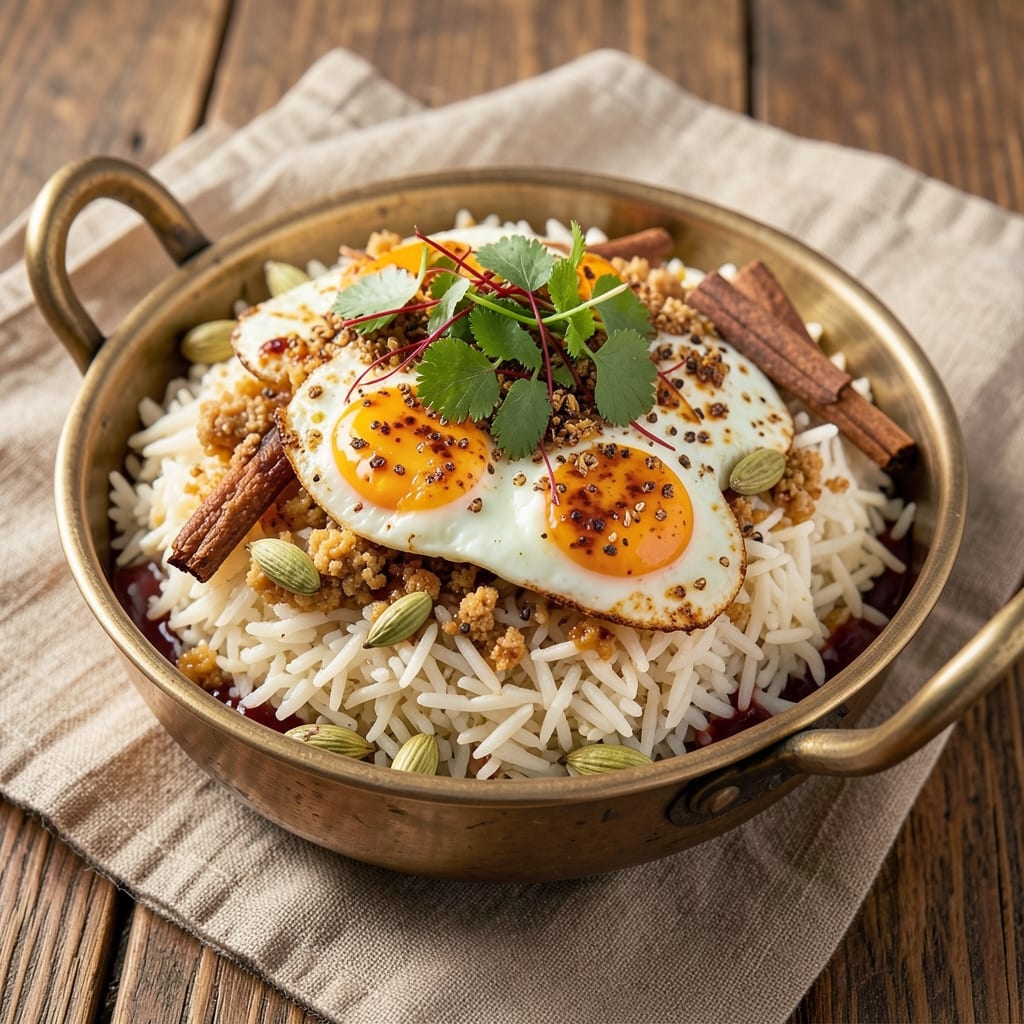
Egg bhurji biryani recipe transforms a simple breakfast into a fragrant, layered masterpiece that blends spiced rice with scrambled eggs in one aromatic pot. This fusion dish captures the essence of biryani's rich flavors while keeping the protein-packed goodness of eggs—ideal for a hearty yet satisfying morning or brunch. The secret lies in slow-cooked basmati rice infused with warm spices, topped with perfectly seasoned eggs that soak up every layer of flavor.
The magic happens in the layering: fragrant rice at the bottom, followed by spiced eggs, and finished with a final touch of ghee and fresh herbs. Unlike traditional biryani, this version skips meat but delivers the same depth of flavor through whole spices like cardamom, cloves, and cinnamon, which bloom in the rice as it cooks. The eggs, scrambled with turmeric and red chili, add a creamy texture that contrasts beautifully with the fluffy grains.
What you’ll end up with is a dish that’s as visually stunning as it is delicious—golden rice speckled with red and green spices, topped with tender eggs that absorb the aromatic essence of the biryani. The dum cooking method (sealing the pot with foil and simmering) ensures the flavors meld together, creating a dish that’s both comforting and restaurant-worthy. Perfect for a weekend brunch or a flavorful start to your day.
Pair it with a cooling cucumber raita or a simple salad to balance the richness, and you’ve got a complete meal that’s sure to impress. The best part? This recipe is foolproof—no advanced techniques required, just patience and a few key spices. Let’s get cooking!
Ingredients for egg bhurji biryani
Warm spices, fluffy rice, and tender eggs—this fusion dish needs just these essentials.
| Ingredient | Amount | Notes |
|---|---|---|
| Basmati Rice 🍚 | 1 ½ cups | Long-grain, uncooked preferred |
| Large Eggs 🥚 | 6 whole | Fresh, room temperature |
| Ghee 🧈 | ½ cup | For flavor and cooking |
| Green Cardamom Pods 🌿 | 6 whole | Lightly crushed |
| Cinnamon Sticks 🌿 | 2 whole | 1-inch pieces |
| Cloves 🌿 | 4 whole | Lightly crushed |
| Turmeric Powder 🌶️ | ½ tsp | Freshly ground preferred |
| Red Chili Powder 🌶️ | 1 tsp | Adjust for heat preference |
| Ground Cumin 🌿 | ½ tsp | Toasted for deeper flavor |
| Salt 🧂 | 1 ½ tsp | Adjust to taste |
| Fresh Cilantro 🌿 | ¼ cup | Chopped, for garnish |
| Fresh Mint Leaves 🌿 | 0.1 cup | Chopped, for garnish |
| Water 💧 | 2 ½ cups | For rice cooking |
The basmati rice is non-negotiable here—look for long-grain varieties at Whole Foods or your local Indian grocery. The eggs should be fresh and room temperature for the best scramble. For the spices, Penzeys or bulk bins at natural food stores have the freshest whole spices. Cardamom and cinnamon should smell vibrant, not stale. The ghee? Always use pure, grass-fed ghee—it makes all the difference in flavor. If you can't find whole spices, pre-ground works but loses some aroma.
No ghee? Coconut oil or butter in a pinch, but ghee's smoky flavor is key. Short on cardamom? Substitute with 1/4 tsp cardamom extract, but whole spices are better. Fresh herbs missing? Dried cilantro or mint at half the amount gets you close. For the chili powder, Kashmiri red chili gives a sweeter, deeper flavor than regular cayenne. The rice-to-water ratio is crucial—stick with 1.5 cups rice to 2.5 cups water for perfect fluffiness. If you're using pre-soaked rice, reduce water by 0.25 cups.
This dish tastes even better the next day—double the batch and store leftovers in the fridge for 4-5 days. For longer storage, freeze portions for up to 3 months. I like to portion it into single-serving containers so I can reheat just what I need. The dum cooking method (sealing the pot) keeps the rice moist, so don't skip it. If reheating, add a splash of water and cover tightly to restore moisture.
Why You'll Love This Recipe
- One-Pot Magic: I swear by this recipe—just one pot, minimal cleanup, and zero stress. The eggs soften perfectly into the rice while the ghee infuses that rich, golden aroma into every grain.
- Flavor Bomb: That first bite? Pure happiness. The eggs get tender but stay moist, the cardamom and cinnamon bloom like a spice hug, and the basmati rice soaks up all the ghee’s warmth—no dry bites here.
- Lunchbox Hero: Between us, this is my go-to for packed lunches. The leftovers reheat beautifully, and the protein from the eggs keeps everyone full until dinner. (Yes, even my picky-eating kid devours it.)
- Budget Win: Eggs are cheap, rice is cheap, and a stick of cinnamon lasts forever. Honestly, I make this when I’m pinching pennies, and it still feels like a restaurant meal. That’s the power of ghee working its flavor magic.
Step-by-step instructions for egg bhurji biryani
This one-pot wonder combines fragrant basmati rice with spiced scrambled eggs for a flavor-packed breakfast or brunch.
Prepare the Spiced Rice Base
Rinse the 1.5 cups basmati rice under cold water until the water runs clear, then soak for 20 minutes. Drain well and set aside. In a heavy-bottomed pot, heat the 0.5 cup ghee over medium heat until it shimmers but doesn't smoke.
Add the 6 lightly crushed green cardamom pods, 2 cinnamon sticks (cut into 1-inch pieces), and 4 lightly crushed cloves. Sauté for 30 seconds until the spices release their aroma—you'll smell that warm, earthy fragrance that signals they're ready. Add the drained rice and stir gently to coat each grain with the spiced ghee.
Cook the Rice with Whole Spices
Pour in the 2.5 cups water and bring to a gentle boil. Once boiling, reduce heat to low, cover with a tight lid, and let it cook undisturbed for 10 minutes. This initial cooking allows the rice to partially absorb the water while developing flavor from the spices.
After 10 minutes, remove the cinnamon sticks and cloves with tongs (you can save them for tea later). Stir in the 0.5 tsp turmeric powder, 1 tsp red chili powder, and 0.5 tsp ground cumin. Mix well to distribute the spices evenly throughout the rice. This is where the biryani gets its signature warm, slightly spicy depth.
Scramble the Eggs with Perfect Texture
In a separate bowl, crack the 6 large eggs and whisk them lightly with the 1.5 tsp salt. Heat a non-stick skillet over medium-low heat and melt a thin layer of ghee (about 1 tablespoon). Pour in the eggs and let them sit undisturbed for 5-7 seconds before gently pushing them from one side to another with a spatula.
Cook the eggs until they're just set but still slightly runny in the center—this gives that signature bhurji texture. Remove from heat and set aside. The eggs should be soft and creamy, not fully scrambled, so they blend beautifully with the rice.
Combine Rice and Eggs for Biryani Perfection
Return to the pot of rice and gently fold in the scrambled eggs using a wooden spoon. The heat from the rice will finish cooking the eggs slightly, creating a perfect fusion. Stir just enough to combine—you want to preserve some texture while ensuring even distribution.
Cover the pot again and let it sit off the heat for 5 minutes. This resting period allows the flavors to meld completely and the rice to finish absorbing any remaining moisture. The result should be fragrant basmati rice with tender, spiced egg threads throughout.
Garnish and Serve Warm
Fluff the biryani gently with a fork, then sprinkle with the 0.25 cup chopped fresh cilantro and 0.1 cup chopped fresh mint leaves. The bright, herbal notes cut through the richness of the ghee and eggs, balancing the dish beautifully.
Serve immediately while still warm, garnished with an extra sprinkle of red chili powder if you prefer more heat. This biryani makes for a hearty breakfast or a satisfying brunch—perfect for feeding a crowd with minimal effort.
Pro Tips For Making Egg Bhurji Biryani
- CRACK EGGS FAST: Beat the eggs in a bowl with a fork until just combined—no need for a whisk. When you’re ready to cook, pour them directly into the hot ghee in a thin, even layer. This keeps them from sticking and gives you that signature bhurji texture where the eggs cook into soft, fluffy bits instead of a scrambled mess.
- SALT THE RICE WATER: Add salt to your rice water before adding the rice—this ensures even seasoning. I used to sprinkle it later and ended up with half the grains underseasoned. For egg bhurji biryani, aim for about 1.5 teaspoons per 2 cups of water, since the eggs will add extra flavor but not salt.
- LOW HEAT FOR GHEE: Warm the ghee over low heat until it just smokes—this releases the nutty aroma without burning it. I learned this the hard way after my first batch tasted bitter. Once it’s ready, add the cardamom and cinnamon first, then the eggs. The spices will infuse better if the ghee isn’t screaming hot.
- LAYER RICE LAST: Cook the egg bhurji until it’s just set but still slightly runny—this lets it soak up the rice’s moisture later. Spread half the rice on top, then pour any remaining egg mixture over it, and finish with the rest of the rice. This keeps the eggs from drying out while ensuring every grain gets that rich, creamy coating.
Common mistakes when making this dish
Overcooking the Eggs
One of the biggest mistakes is scrambling the eggs too much—they should be soft and slightly runny when folded into the rice. Overcooked eggs turn rubbery and dry out the biryani. I always pull them off the heat when they're just set in the center, then let the residual heat from the rice finish cooking them gently. 🥚
Skipping the Resting Time
Rushing the 5-minute resting period after combining rice and eggs is a game-changer. This step lets the flavors meld and the rice absorb any excess moisture. I’ve seen people skip it, and the result is always less flavorful and slightly soggy. Trust me, patience here makes all the difference!
Using the Wrong Rice
Basmati rice is non-negotiable for biryani—it’s long-grain and stays separate. Short-grain or jasmine rice will turn mushy and ruin the texture. I’ve tried substituting with jasmine once, and the result was a sad, gluey mess. Stick with long-grain basmati for that perfect fluffy texture.
Ignoring the Whole Spices
Many people skip the whole spices (cardamom, cinnamon, cloves) or use pre-ground versions. Whole spices release their aroma gradually, infusing the rice with deep, warm flavors. If you’re short on time, lightly toast the ground spices in a dry pan for 30 seconds to intensify their flavor before adding them to the rice.
Not Sealing the Pot Properly
If you’re using the dum cooking method (sealing the pot with foil), make sure it’s airtight. A loose seal lets steam escape, drying out the rice. Press the foil tightly against the pot’s rim, or use heavy-duty aluminum foil for extra security. This step is key for that restaurant-quality texture.
Over-Salting the Eggs
Salting the eggs too heavily can make the biryani taste flat or even bitter. The rice already has 1.5 tsp salt, so just a light whisk of the eggs with a pinch of salt is enough. Taste the eggs before combining them with the rice—you want them to be seasoned but not overpowering. Adjust the salt in the rice if needed after folding everything together.
Nutrition facts
Frequently asked questions
Can I make this egg bhurji biryani in a rice cooker?
Yes, but with adjustments! Use the same rice-to-water ratio and sauté the whole spices with ghee in the pot first. After adding water and rice, cook until 80% done (about 12 minutes), then fold in the eggs and let it sit covered for 5 minutes off heat. The texture won't be identical to pot-cooked biryani, but it'll still be flavorful and aromatic.
How do I make this dish spicier?
Boost the heat by adding 0.5 tsp extra red chili powder to the rice and 1/4 tsp cayenne pepper to the eggs. For a smoky kick, stir in 1/2 tsp smoked paprika after combining everything. Garnish with extra chili flakes or serve with a side of green chutney for fresh heat contrast.
Can I prepare this biryani ahead of time?
This dish actually tastes better the next day. Store in an airtight container in the fridge for up to 4 days. Reheat gently in a pot with 2 tablespoons water, covered, until warm through. For freezing, portion before combining rice and eggs, freeze separately, then reheat components together for up to 3 months.
What's the difference between this and regular biryani?
This fusion version replaces traditional meat with eggs for a vegetarian protein source while keeping all the biryani's aromatic layers. The eggs are scrambled separately to maintain their texture, unlike meat which is often marinated and cooked differently. The whole spices and ghee remain the same, but the cooking method is simpler—no layering of raw ingredients.
Can I use brown rice or quinoa instead?
Not recommended for biryani texture. Brown rice needs longer cooking and absorbs more liquid, while quinoa has a distinct nutty flavor that clashes with the dish's aromatic profile. If you must substitute, use jasmine rice (though it won't be as fluffy) or stick with basmati for that signature biryani experience. The rice type is crucial for the final texture.