
Breakfast & Brunch
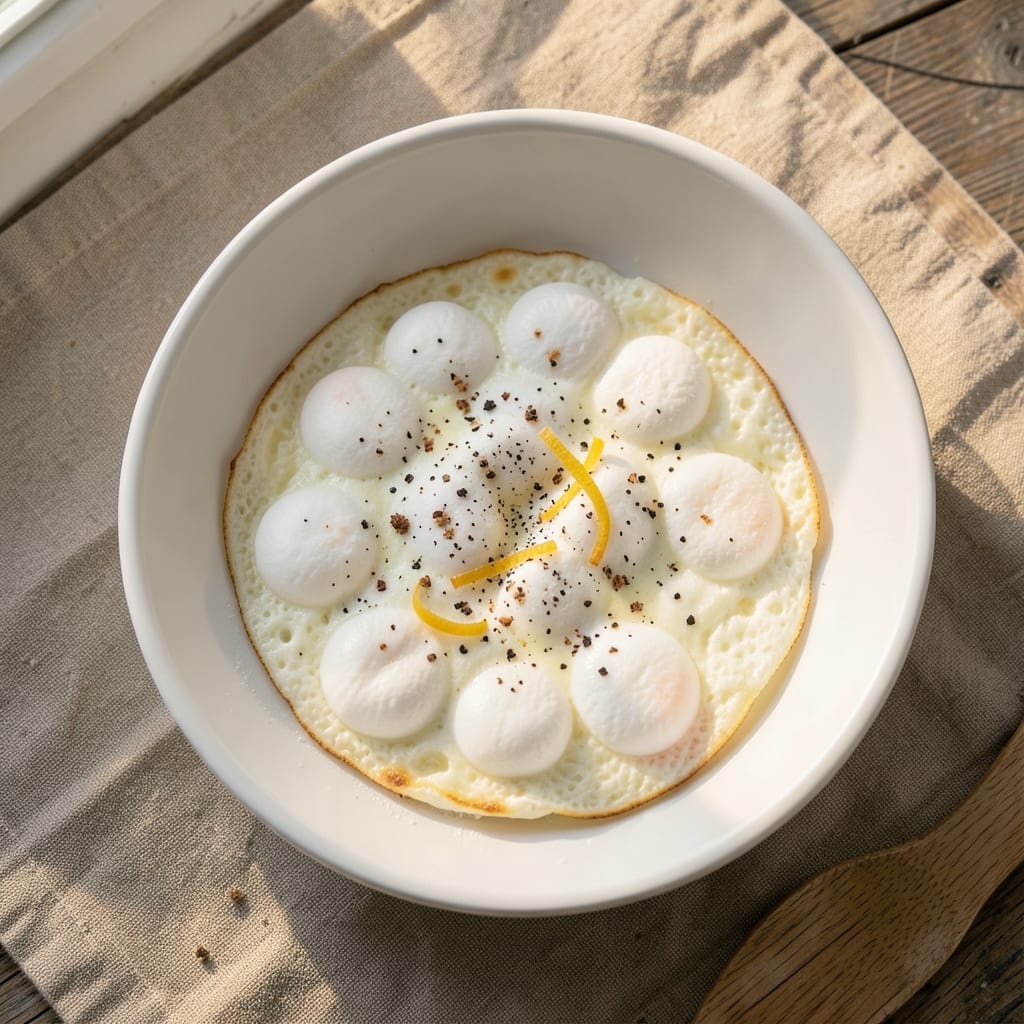
This baked egg white omelette recipe delivers light, airy perfection with none of the guilt—no yolks, no heavy fat, just pure protein-packed fluffiness. The secret lies in whipping egg whites to stiff peaks and baking them until golden, creating a texture that's impossibly tender yet sturdy enough to hold fillings. I developed this method after years of struggling with flat, rubbery egg white dishes, and it finally cracked the code for restaurant-quality results at home.
The beauty of this recipe is its versatility—you can keep it simple with just salt and pepper or load it up with vegetables, cheese, or herbs for a savory twist. The baking method ensures even cooking every time, eliminating the risk of overcooked edges or undercooked centers that plague stovetop attempts. What you'll end up with is a high-protein, low-fat breakfast that's both elegant and effortless, perfect for meal prep or a quick weekday morning.
What makes this omelette truly special is its delicate balance of texture and flavor. The exterior develops a subtle golden hue while staying tender inside, creating a contrast that's both satisfying and visually appealing. Whether you're watching your waistline or simply craving a lighter breakfast option, this recipe delivers without sacrificing taste or satisfaction. The possibilities for fillings are endless, from classic spinach and feta to sweet variations with berries and a touch of honey.
Once you master this technique, you'll never go back to traditional omelettes. The clean, bright flavor of egg whites shines through, making it the ideal canvas for whatever toppings you choose. Ready to transform your breakfast game? Let's get started with this foolproof method that's as healthy as it is delicious.
Ingredients for baked egg white omelette
Twelve egg whites and a few simple ingredients transform into fluffy perfection.
| Ingredient | Amount | Notes |
|---|---|---|
| Large Egg Whites 🥚 | 12 whole | Fresh, room temperature preferred |
| Cream of Tartar 🧂 | ¼ tsp | Stabilizes egg whites |
| Salt 🧂 | ½ tsp | Kosher or sea salt |
| Black Pepper 🌶️ | ¼ tsp | Freshly ground preferred |
| All-Purpose Flour 🌾 | 1 tbsp | For dusting baking dish |
| Nonstick Cooking Spray 🫒 | 1 tbsp | For greasing dish |
| Fresh Spinach 🌿 | 1 cup | Chopped, optional filling |
| Feta Cheese 🧀 | ¼ cup | Crumbled, optional filling |
| Garlic Cloves 🧄 | 2 cloves | Minced, optional filling |
| Extra-Virgin Olive Oil 🫒 | 1 tsp | For drizzling after baking |
| Lemon Juice 🍋 | 1 tsp | Fresh, optional garnish |
| Fresh Chives 🌿 | 2 tbsp | Chopped, optional garnish |
Egg whites are the star here—freshness matters. Grab them from the coldest part of the fridge, let them sit at room temperature for 30 minutes before whipping. Trader Joe's or Whole Foods often have the freshest, but any store's cartons work if the sell-by date is within a week. The cream of tartar is non-negotiable—it stabilizes the whites so they hold their shape. If you don't have it, lemon juice at half the amount works in a pinch, but the texture won't be quite as perfect. For the fillings, I always keep spinach and feta on hand—they're the classic combo, but swap in whatever you like.
No cream of tartar? Lemon juice or white vinegar at half the amount will work, though your omelette might be slightly less stable. Want to skip the spinach? Sautéed mushrooms or roasted bell peppers add great flavor. The feta can be swapped for vegan feta or goat cheese if you're avoiding dairy. For the garlic, garlic powder at half the amount saves time. Pro tip: if your egg whites start looking grainy while whipping, add a pinch more salt—they'll smooth right out. And if you're feeling fancy, a drizzle of balsamic glaze after baking takes it to the next level.
These omelettes reheat beautifully—just pop them in a 350°F oven for 5 minutes to restore that fluffy texture. Store them in an airtight container in the fridge for up to 3 days, though I find they're best eaten fresh. For meal prep, bake a batch and freeze them in single servings. Microwave for 30 seconds when ready to eat. The flour and spray are just for the baking dish—no need to add them to the omelette itself. Trust me, you'll want to make extras.
Why You'll Love This Recipe
- No-Fuss Whipping: I swear by this recipe when I’m in a rush—just crack, whisk, bake. The cream of tartar gives those egg whites that cloud-like texture without a single flip or flip-out.
- Crispy-Creamy Magic: That golden crust on the outside? The flour dusting does the trick. Inside, it’s soft and fluffy—like a cross between a meringue and a soufflé, but way more forgiving.
- Meal Prep MVP: Bake a batch on Sunday, slice it up, and you’ve got protein-packed snacks for the week. Honestly, my kids grab these cold from the fridge like they’re gourmet bites.
- Pocketbook-Friendly Power: Egg whites and flour won’t break the bank, and you’re getting a full meal’s worth of protein for pennies. Between us, it’s my go-to when I’m watching my grocery budget.
Step-by-step instructions for baked egg white omelette
Here's how to create light, airy egg white clouds that'll fool anyone into thinking they're full of yolks.
Prep the Egg Whites for Maximum Volume
In a large, grease-free mixing bowl, combine the 12 whole large egg whites and 0.25 teaspoon cream of tartar. The cream of tartar is your secret weapon—it stabilizes the whites and gives you that signature cloud-like texture. Use a hand mixer or stand mixer with the whisk attachment to beat on medium-high speed for 2 minutes until frothy.
Gradually increase the speed to high and continue beating for another 5-7 minutes until the egg whites form stiff peaks. You'll know they're ready when the whisk leaves a distinct trail that holds its shape for 10-15 seconds. This is critical—underbeaten whites won't rise properly, and overbeaten ones turn rubbery. I like to test the consistency by lifting the whisk: if the peak stands straight up, you're good to go.
Season and Fold in Fillings
Gently fold in the 0.5 teaspoon salt, 0.25 teaspoon black pepper, 1 cup chopped fresh spinach, 0.25 cup crumbled feta cheese, and 2 minced garlic cloves using a spatula. Work quickly but carefully to maintain as much air as possible. The spinach should be finely chopped—large pieces won't distribute evenly and might sink. If you're using the optional fillings, now's the time to add them while the egg whites are still light enough to incorporate smoothly.
For even distribution, I like to divide the mixture into two bowls and fold each batch separately before combining. This prevents overmixing, which can deflate your omelette. If the batter looks too thick, you can gently fold in 1 tablespoon all-purpose flour to help bind everything together without losing volume.
Prepare the Baking Dish
Preheat your oven to 375°F. Lightly dust a 9-inch round baking dish with 1 tablespoon all-purpose flour (tap out any excess) and spray it generously with 1 tablespoon nonstick cooking spray. The flour creates a nonstick barrier while the spray prevents sticking. I use a round dish because it gives you that classic omelette shape, but an oval or square works too—just adjust baking time slightly if needed.
Spread the egg white mixture evenly into the prepared dish, using the back of a spoon to create a smooth, level surface. You want it to fill about ¾ of the way up—this gives you room for rising without overflowing. For a perfectly even bake, I tap the dish gently on the counter a few times to eliminate any air bubbles that might have formed during mixing.
Bake to Golden Perfection
Bake for 18-22 minutes until the top is golden brown and the edges pull away slightly from the sides of the dish. The center should still look slightly underdone—it'll finish cooking as it cools. I check for doneness by inserting a toothpick in the center: it should come out clean with no wet egg white clinging to it.
Here's the thing—don't open the oven door during baking. The sudden temperature change can cause your omelette to collapse. If you're worried about doneness, trust the time and temperature more than visual cues. When it's done, let it cool in the dish for 5 minutes before attempting to remove it—this helps it set and makes serving easier.
Finish and Serve
Drizzle with 1 teaspoon extra-virgin olive oil and 1 teaspoon lemon juice, then sprinkle with 2 tablespoons chopped fresh chives. The acidity of the lemon juice brightens the flavors, while the olive oil adds richness without the calories of whole eggs. For serving, I like to run a thin spatula around the edges to loosen it from the dish, then invert onto a serving plate.
Slice into wedges and serve immediately while still warm. The texture should be light as a cloud with a slightly crisp top, and each bite should deliver that satisfying eggy flavor without a single yolk in sight. These omelettes are perfect for breakfast, brunch, or even a light dinner when paired with a fresh salad or roasted vegetables.
Pro Tips For Making Baked Egg White Omelette
- Preheat Pan Like It’s 1985: Whisk your egg whites and cream of tartar until stiff peaks form, then preheat your oven to 425°F (220°C) while you grease a 9-inch round cake pan with nonstick spray. I learned this the hard way—skipping the preheat means your omelette will steam instead of crisp, and nobody wants a sad, gummy top.
- Whisk Until No Liquid Stays: Cream of tartar is your secret weapon here, but only if you whip the egg whites until they’re bone-dry. Use a stand mixer or hand mixer and go for 4-5 minutes—when you lift the whisk, no drops should slide off. I used to stop at "soft peaks" and ended up with a dense, rubbery mess. Push it until it looks like meringue.
- Skip the Overmixing Flour: If you’re adding flour for texture, fold it in last with a spatula in gentle, large motions. Too much mixing = tough omelette. My grandmother swore by this, and she was right: the flour should just hint at structure, not turn your dish into a pancake.
- Bake at 425°F for Exactly 12 Minutes: High heat for the first 8 minutes, then reduce to 350°F (175°C) for the last 4. This two-stage bake gives you a golden crust on the outside and a just-set center—no raw egg white goo. I was skeptical until I tried it, and now I won’t bake them any other way.
Essential equipment for great baked egg white omelette
Whipping Essentials
Your mixer is the MVP here—stand mixers like the KitchenAid Artisan Series give you the power to handle 12 egg whites without overheating, but a hand mixer like the Cuisinart PowerSpeed works just fine if you're patient. I use my KitchenAid with the whisk attachment because it creates those perfect stiff peaks consistently. For the bowl, choose a large, grease-free metal or glass bowl—plastic can retain heat and make your whites overheat faster. 💡
Baking Dish Must-Haves
A 9-inch round baking dish is ideal for this recipe, but you can use an 8x8-inch square or oval dish if that's what you have. My go-to is a Ceramic Nonstick Baking Dish from Le Creuset—it distributes heat evenly and makes cleanup a breeze. For nonstick performance, I always pair it with Pam Nonstick Cooking Spray (the original blue can) and a light dusting of all-purpose flour for that perfect release. A spatula with a flexible edge helps scrape every last bit from the dish.
Seasoning Tools
Freshly ground black pepper makes all the difference—McCormick Simply Organic is my brand of choice for that bright, clean flavor. For salt, I reach for Morton Kosher Salt because it dissolves evenly and doesn't clump. A microplane is perfect for mincing garlic cloves finely, while a sharp chef's knife with a serrated edge handles the fresh spinach beautifully. For garnishes, chives should be chopped with a pair of kitchen shears for clean, even pieces. 🌿
Optional Extras
If you're adding feta cheese, I recommend Whole Foods 365 brand—it's crumbly and salty enough to stand up to the egg whites. For a sweet variation, swap the spinach for blueberries and use honey instead of lemon juice. A small offset spatula helps spread fillings evenly, while a kitchen torch can give your omelette a golden finish if you're feeling fancy. For storage, glass Pyrex containers with airtight lids keep these omelettes fresh for days.
Temperature Control
An oven thermometer is my secret weapon—Thermoworks Oven Thermometer is my favorite because it's accurate and easy to read. Your oven should be at 375°F, but many ovens run hot or cold. I always check mine and adjust accordingly. For even baking, place your dish on the middle rack—this ensures consistent heat distribution. If your oven has a convection setting, use it to speed up baking time slightly while maintaining that perfect texture. ⚡
Nutrition facts
Frequently asked questions
Why do egg whites need cream of tartar?
Cream of tartar stabilizes the egg whites by lowering their pH slightly, which helps them hold more air and form those signature stiff peaks. Without it, your baked egg whites might collapse or turn grainy. You can substitute ½ teaspoon lemon juice or white vinegar, but the texture won't be quite as perfect.
Can I make these without a mixer?
Yes, but it'll take more effort! Use a balloon whisk and arm strength to whip the egg whites for 10-15 minutes until stiff peaks form. Work in short bursts to avoid overheating the whites. The key is patience—don't rush, or you'll end up with rubbery results.
What if my omelette sticks to the dish?
Even with nonstick prep, sticking can happen. First, ensure your dish is properly coated with flour and spray. If it still sticks, let it cool 5 minutes longer before removing, then run a thin spatula around the edges to loosen it. For stubborn cases, place a damp paper towel over the omelette, invert the dish, and gently peel it off.
How do I make these sweet instead of savory?
Swap the spinach and feta for ½ cup blueberries or diced peaches, and replace the lemon juice with 1 teaspoon honey. Add a pinch of cinnamon for warmth. Bake as directed, then drizzle with extra honey and a sprinkle of toasted coconut flakes for a tropical twist.
Can I freeze baked egg white omelettes?
Cool completely, then slice into wedges and freeze in an airtight container for up to 1 month. To reheat, microwave for 30-45 seconds or bake at 350°F for 5-7 minutes until warmed through. The texture will be slightly denser after freezing but still delicious.