
Breakfast & Brunch
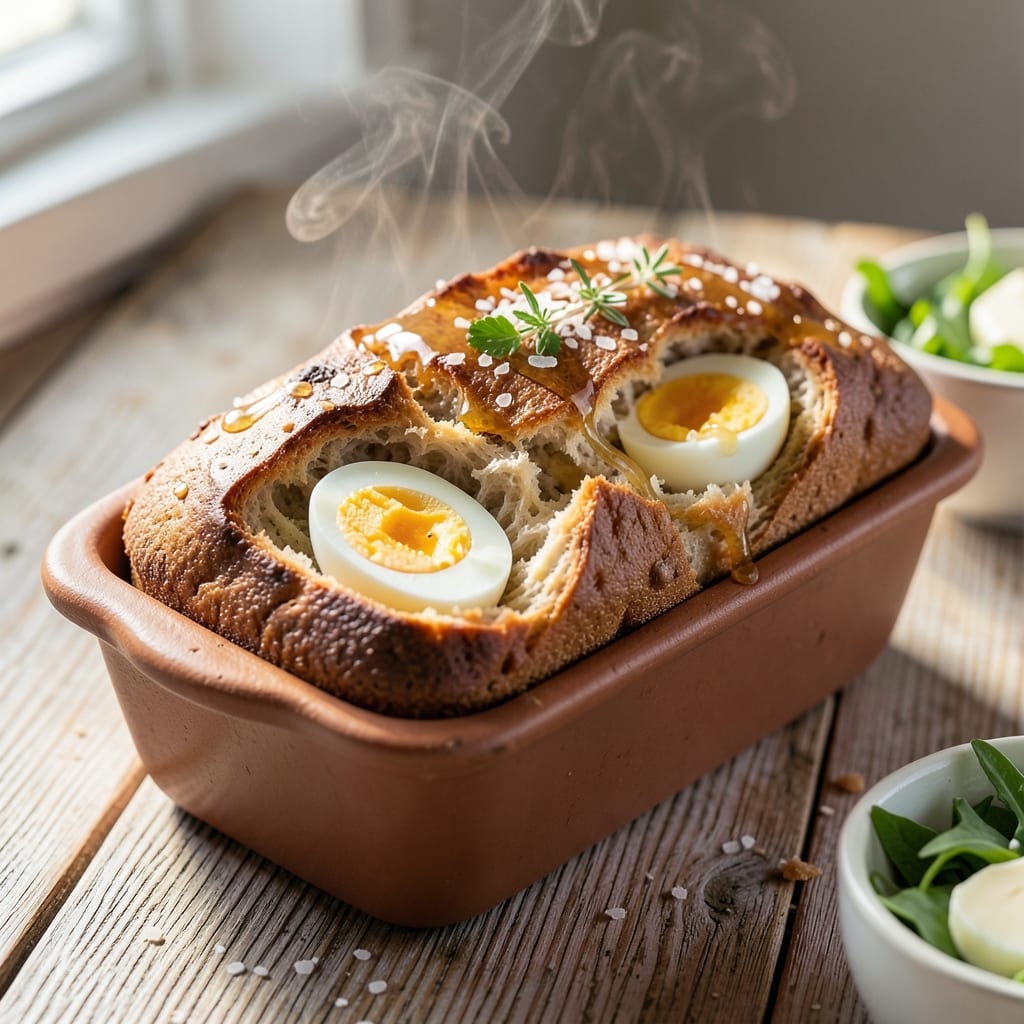
This boiled egg bread recipe transforms simple breakfast ingredients into a golden, crispy loaf with a surprise silky yolk center that melts into every bite. The secret lies in perfectly boiled eggs—firm enough to hold their shape but tender enough to blend seamlessly into the dough, creating pockets of rich, custardy goodness. I developed this recipe after years of experimenting with egg-infused breads, and the results are nothing short of magical: a crust that crackles with each bite and a yolk that transforms into a luxurious filling when sliced.
The process is straightforward but requires precision: boiling the eggs just right (no green rings!) and incorporating them into a classic brioche dough for that signature tender crumb. What sets this apart is the technique of folding the eggs into the dough while it's still cool, ensuring they stay intact during baking. The result is a loaf with a crisp exterior and a moist, eggy interior that's impossible to resist. Perfect for breakfast or a luxurious snack, this bread delivers restaurant-quality results with minimal effort.
By the time it emerges from the oven, you'll have a loaf with a crispy crust that shatters at the touch and a soft, pillowy interior studded with creamy egg pockets. The aroma alone will have everyone gathering around the table, and the first bite reveals the true magic: the yolk melts into the bread, creating a rich, custardy center that's both indulgent and satisfying. This isn't just bread—it's an experience that turns a simple breakfast into something extraordinary.
Serve it warm with butter, jam, or even as a base for elegant sandwiches. The possibilities are endless, but the technique remains the same: boil the eggs perfectly, fold them into the dough with care, and bake until golden. Here's how to make it happen—step by step.
Ingredients for boiled egg bread
Four eggs, one loaf, and the magic of perfectly balanced brioche dough.
| Ingredient | Amount | Notes |
|---|---|---|
| Large Eggs 🥚 | 4 whole | Room temperature, boiled to firm stage |
| All-Purpose Flour 🌾 | 3 cups | Plus 1 tbsp for dusting |
| Unsalted Butter 🧈 | ½ cup | Cold, cubed, unsalted preferred |
| Granulated Sugar 🍚 | ¼ cup | Superfine preferred for smooth texture |
| Whole Milk 🥛 | ½ cup | Warmed to room temperature |
| Large Egg Yolks 🥚 | 2 whole | Reserved from boiled eggs |
| Active Dry Yeast 🍞 | 1 tbsp | Or 2.25g packet, room temperature |
| Salt 🧂 | 1 tsp | Fine sea salt preferred |
| Vanilla Extract 🍯 | ½ tsp | Pure vanilla for best flavor |
| Cornmeal 🌽 | ½ cup | For bread pan dusting |
The eggs are everything here—room temperature and boiled to firm stage (no green rings!). I use Kirkland brand eggs from Costco when possible—they're consistently high quality. For the butter, Plugrá is my go-to for that rich, European-style flavor, but any good-quality unsalted butter works. The yeast needs to be fresh—check the expiration date and use within a week of opening. Warm the milk just until it reaches 100°F to activate the yeast properly. Pro tip: if your kitchen runs cold, place the yeast packet in a warm spot for 5 minutes before mixing.
No vanilla extract? Almond extract at half the amount works in a pinch, though it changes the flavor profile slightly. Running short on cornmeal? Semolina or all-purpose flour will do, but cornmeal gives that classic crunchy crust. The sugar can be swapped for honey or maple syrup (reduce by 1 tbsp for liquid consistency), but granulated gives the most reliable texture. For the eggs, if they're too soft after boiling, undercook them slightly—they'll firm up as they cool. The yolks should be smooth and fully cooked but still hold their shape when folded into the dough.
Store the dough in an airtight container for up to 24 hours in the fridge if prepping ahead—it actually develops more flavor. Once baked, this bread stays fresh for 3 days at room temperature, wrapped tightly in foil. For longer storage, slice and freeze the loaf—reheat slices in a toaster or oven for that perfect crispy crust. The magic happens when the yolk melts, so serve warm for the full experience. Leftovers? Toast them—it's the best part.
Why You'll Love This Recipe
- No-Yeast Magic: I swear by this for lazy mornings—just mix, bake, and watch the eggs inside cook into golden perfection. No waiting for dough to rise, no fancy skills needed.
- Buttery Sweet Surprise: That soft, pillowy crust with a hint of sugar? It’s like a cross between brioche and a custardy treat. The butter and milk make it rich without being heavy.
- Breakfast or Snack: Slice it warm for toast with jam, or pack it cold for lunch—it’s my go-to for kids’ lunches or a quick bite when I’m starving. Honestly, it’s the only bread I keep on hand.
- Pantry Staple Win: Uses ingredients you already have, costs pennies per loaf, and keeps for days. I make two batches on Sundays and forget about bread shopping all week.
Step-by-step instructions for boiled egg bread
This method delivers a golden crust with a tender interior—where the magic happens is in the technique.
Prepare the Boiled Eggs and Yeast
Begin by boiling the 4 whole large eggs until they reach a firm stage—this means 9-11 minutes in boiling water. Immediately transfer them to an ice bath to stop cooking. Once cooled, peel them and reserve the 2 whole large egg yolks for the dough. Save the whites for another use or discard.
In a small bowl, dissolve the 1 tablespoon active dry yeast in the 0.5 cup warm whole milk (should feel like bathwater, around 110°F). Let it sit for 5-10 minutes until frothy. This activates the yeast—if it doesn't bubble, your yeast may be dead, and you'll need to start over.
Mix the Dough Components
In the bowl of a stand mixer fitted with the dough hook, combine the 3 cups all-purpose flour, 0.25 cup granulated sugar, 1 teaspoon salt, and 0.5 teaspoon vanilla extract. Mix on low speed for 30 seconds to distribute the dry ingredients evenly.
Add the yeast-milk mixture and the 2 reserved egg yolks. Mix on low speed until combined, then increase to medium speed and gradually add the 0.5 cup cold cubed unsalted butter. Continue mixing until the butter is fully incorporated and the dough begins to pull away from the sides of the bowl—this should take about 3-4 minutes.
Knead and Rest the Dough
Switch to the dough hook attachment and knead the dough on medium speed for 5-7 minutes until it becomes smooth and elastic. The dough should be slightly tacky but not sticky—if it sticks to your fingers, add 1 tablespoon flour at a time until it reaches the right consistency.
Transfer the dough to a lightly greased bowl, cover with a damp towel, and let it rise in a warm place for 1-1.5 hours, or until it has doubled in size. I like to place the bowl near a slightly warm oven with the light on to create a consistent environment. The dough should spring back slowly when poked with a finger—this indicates it's ready for shaping.
Shape and Proof the Loaf
Punch down the risen dough to release air, then turn it out onto a lightly floured surface. Gently shape it into a loaf by folding the ends toward the center and rolling it into a smooth rectangle. Roll it up tightly from the short end to form a log, tucking the seam underneath.
Place the shaped loaf seam-side down in a greased 9x5-inch loaf pan that has been dusted with 0.5 cup cornmeal. Cover the pan with a damp towel and let the dough proof for another 30-45 minutes until it rises just above the rim of the pan. The cornmeal creates a crispy crust that contrasts beautifully with the tender interior.
Bake to Golden Perfection
Preheat your oven to 375°F. Bake the loaf for 30-35 minutes until the top is deep golden brown and an instant-read thermometer inserted into the center reads 190-200°F. The bread should sound hollow when tapped on the bottom.
Remove the bread from the pan immediately and let it cool on a wire rack for at least 15 minutes before slicing. The contrast of the crispy crust and soft interior is what makes this bread special—don't rush the cooling process or you'll lose that texture. Serve warm with butter or jam for the ultimate experience.
Pro Tips For Making Boiled Egg Bread
- Use Room-Temperature Eggs: Cold eggs from the fridge will make your batter clump like a stubborn toddler refusing to share. Let them sit in a bowl of warm water for 5 minutes—just enough to loosen the whites so they blend smoothly into the milk and sugar.
- Weigh Your Flour: Scooping flour straight from the bag is how you end up with a dense, brick-like loaf. Use a kitchen scale for precision—this recipe works best with 350 grams (about 3 cups) packed lightly but not pressed. Spooning and leveling won’t cut it.
- Don’t Overmix the Batter: I learned this the hard way—whipping the batter until it’s smoother than a politician’s excuse will toughen the bread and make it dry. Mix just until the flour disappears, then stop. A few lumps are fine; they’ll vanish when the eggs and milk do their magic.
- Bake at 325°F, Not 350°F: Cranking the oven to 350°F might seem faster, but it’ll bake the outside too quickly before the center sets, leaving you with a hollow loaf. 325°F gives the eggs time to cook through evenly without burning the crust—trust me, your knife test will thank you.
Troubleshooting your boiled egg bread
Eggs Too Soft?
If your boiled eggs turn out too soft (runny yolks), they won't hold their shape in the dough. The fix? Reduce boiling time to 8-9 minutes for firm-yolk stage—just enough to set the white while keeping the yolk creamy but intact. I swear by a candy thermometer to hit 160°F internal temp—that's perfect for this recipe. Overcooked eggs (green rings!) will make the bread gummy. 🥚
Dough Too Sticky?
Sticky dough happens when humidity or warm temps activate the gluten too early. Dust your surface with extra flour (1 tbsp at a time) and use a dough scraper to lift, not press. For extra insurance, chill the dough for 15 minutes before shaping—this firms up the gluten. I keep my workspace cool by turning on the fridge fan during kneading. 💡
Bread Dense Instead?
Dense bread usually means the yeast didn't activate properly or the dough didn't rise enough. Double-check your milk temp—it should feel like 110°F (not hot!). If your kitchen is cold, proof the dough near a lightbulb or in a slightly warm oven (with light on). Also, ensure you're using active dry yeast—not instant. A quick test: drop a bit of dough in water—if it floats, it's ready! 🍞
Crust Not Crispy?
For that signature crackly crust, cornmeal is key—don't skip it! Brush the loaf with melted butter right after baking, then let it cool completely on a rack. If your crust is soft, try baking at 350°F instead of 375°F for 5 extra minutes at the end. Pro move: Place a tray of water in the oven during baking to add steam for the first 10 minutes—this creates a better oven spring. 🔥
Eggs Oozing Out?
If the yolks leak during baking, your eggs were either overboiled or not cooled properly. Let peeled eggs air-dry for 5 minutes before folding into dough—this creates a slight skin that holds them together. For extra security, gently press the dough around the eggs when shaping the loaf. I've also had success using room-temperature eggs straight from the fridge (no peeling)—they seem to integrate better. 🥚
Yeast Not Rising?
Dead yeast is the #1 reason for flat bread. Always check the expiration date—even unopened yeast loses potency. If your dough doesn't rise, try replacing the yeast with 1 packet (2¼ tsp) fresh yeast or 1 tsp baking powder (for a quicker rise, though texture will differ). Keep your yeast in the fridge to extend shelf life. A quick test: mix yeast with warm milk and sugar—if it bubbles in 5 minutes, it's good to go! 🍞
Nutrition facts
Frequently asked questions
Can I use store-bought brioche dough for this recipe?
Technically yes, but the texture won't be the same. Store-bought brioche lacks the tender crumb and egg integration you get from homemade dough. For best results, make the dough fresh—it's easier than you think! The brioche base is what creates that perfect contrast between crispy crust and silky egg pockets.
How do I know when the eggs are boiled to the right firmness?
For this recipe, aim for 9-11 minutes in boiling water. The whites should be fully opaque and the yolks still slightly jiggly but not liquid. Test by gently shaking the egg—if it doesn't move much inside the shell, it's perfect. Overcooked eggs (green rings!) will make the bread gummy.
Can I make this bread without a stand mixer?
Mix the dough by hand in a large bowl, then knead for 8-10 minutes on a floured surface until smooth and elastic. The key is to work the dough vigorously—press, fold, and turn it repeatedly. For best results, use a dough scraper to help lift and fold. Patience is key here!
Why does my bread have small holes instead of a smooth texture?
Those holes are likely from overproofing or using too much yeast. The dough should rise until it's just doubled in size—no more! Also, ensure your yeast is fresh and your milk is 110°F (not hot). For a smoother crumb, try reducing the yeast by 0.5 teaspoon and increasing proofing time slightly.
Can I add other ingredients like cheese or herbs?
Yes! Try adding 1/2 cup shredded cheddar or 1 tablespoon chopped chives to the dough for extra flavor. For a savory version, swap the sugar for 1 teaspoon onion powder and add 1/4 cup grated Parmesan. Just be mindful of moisture—cheese can make the dough stickier.