
Main Courses
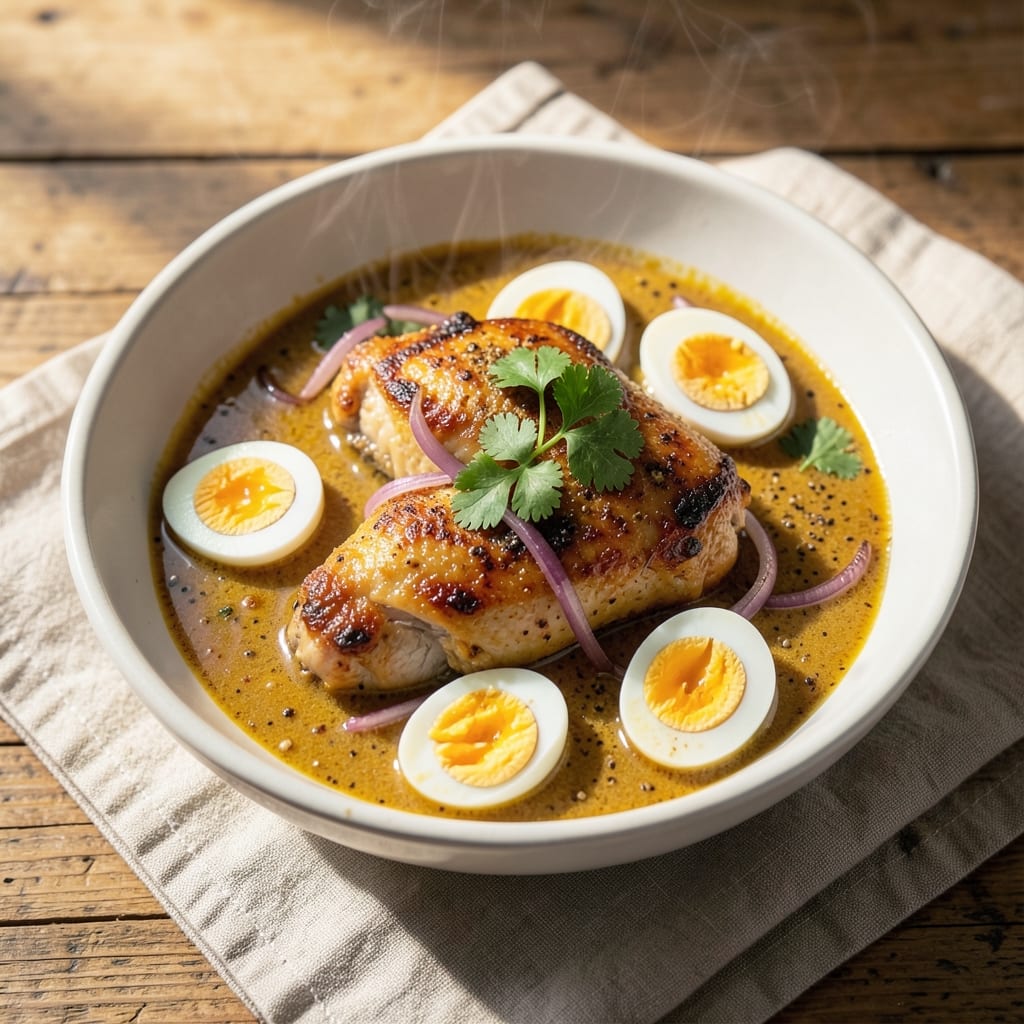
This chicken and egg curry recipe transforms simple ingredients into a fragrant, spiced one-pot wonder that’s both comforting and impressive. The secret lies in balancing bold South Asian spices with creamy coconut milk, creating a sauce that tenderizes the chicken while gently poaching the eggs—resulting in a dish that’s rich, aromatic, and effortlessly satisfying. What makes this recipe stand out is its adaptability: whether you’re feeding a crowd or cooking for two, the one-pot method ensures minimal cleanup and maximum flavor.
The foundation of this curry is a fragrant spice blend—cumin, coriander, turmeric, and garam masala—that infuses the coconut milk with warmth and depth. Chicken thighs break down beautifully in the slow simmer, while hard-boiled eggs (added at the end) absorb the flavors without overcooking. The result is a harmonious blend of textures: tender chicken, silky eggs, and a sauce that’s velvety yet bright, thanks to a touch of lime and fresh cilantro. This isn’t just a curry; it’s a foolproof weeknight dinner that tastes like a restaurant specialty.
By the time you’re done, you’ll have a one-pot masterpiece that’s ready to serve over steamed basmati rice or warm naan, with a sprinkle of toasted cashews for crunch. The aroma alone—spiced coconut, simmering chicken, and the subtle hint of lime—will have everyone at the table anticipating the first bite. The best part? Leftovers reheat beautifully, making this the ultimate meal for busy nights or lazy weekends. Let’s get cooking.
For those who love customization, this curry plays well with additions like spinach or potatoes, or a dash of heat from chili flakes. The eggs can be swapped for chickpeas or tofu for a vegetarian twist, proving this recipe is as versatile as it is delicious. Here’s how to make it—step by step, with confidence.
Ingredients for chicken and egg curry
The perfect balance of spices and textures in one aromatic, one-pot creation.
| Ingredient | Amount | Notes |
|---|---|---|
| Chicken Thighs, Bone-In 🍗 | 1 ½ lb | Skin-on preferred for flavor |
| Coconut Milk 🥥 | 1 can | Full-fat for creaminess |
| Garam Masala 🌶️ | 1 ½ tbsp | Toasted for deeper aroma |
| Ground Cumin 🌿 | 1 tbsp | Freshly toasted preferred |
| Ground Coriander 🌿 | 1 tbsp | For earthy depth |
| Turmeric Powder 🧂 | 1 tsp | Bright yellow color |
| Fresh Ginger 🌿 | 2 tbsp | Grated, freshly peeled |
| Garlic Cloves 🧄 | 6 cloves | Minced for even distribution |
| Large Eggs 🥚 | 4 whole | Hard-boiled, peeled |
| Yellow Onion 🧅 | 1 whole | Diced into 1/4-inch pieces |
| Tomato Paste 🍅 | 2 tbsp | No-sugar-added preferred |
| Fresh Lime 🍋 | 1 whole | Juiced, seeds removed |
| Fresh Cilantro 🌿 | ¼ cup | Chopped, stems removed |
| Salt 🧂 | 1 ½ tsp | Diamond Crystal preferred |
| Black Peppercorns 🌶️ | ½ tsp | Freshly cracked |
The chicken thighs are non-negotiable here—bone-in, skin-on cuts deliver the richest flavor and stay tender during the long simmer. Whole Foods or your local butcher section carries excellent options, but most grocery stores stock them too. Look for pieces with good marbling and vibrant color. For the coconut milk, full-fat cans like Aroy-D or Thai Kitchen create the creamiest sauce, though lighter versions work in a pinch. The garam masala should be freshly toasted for maximum aroma—store-bought blends from Penzeys or bulk bins at natural markets are ideal.
No garam masala? Mix 1 tsp each of cinnamon, cardamom, cloves, and cumin as a substitute. The tomato paste can be swapped for 1/2 cup crushed tomatoes if you prefer, though paste intensifies the flavor. Fresh ginger and garlic are essential for authentic taste—pre-minced jars work in a bind, but freshly grated or minced delivers superior flavor. For the eggs, hard-boil them just before adding to the curry to prevent overcooking. The onion can be swapped for shallots if you prefer a milder flavor, and frozen chopped onions thawed work fine when fresh aren't available.
This curry reheats beautifully—simmer gently on the stove or microwave with a splash of water to restore creaminess. Stores for 4-5 days in the fridge, and freezes for 3 months when portioned into airtight containers. The cilantro should be added fresh just before serving, as it wilts quickly in hot dishes. For extra richness, stir in 1 tbsp of cashew butter when reheating, or top with toasted cashews for crunch. The hard-boiled eggs can be prepped ahead and stored in the fridge for up to 1 week before adding to the curry.
Why You'll Love This Recipe
- One-Pot Magic: I swear by this recipe when I’m too tired to wash pots—just brown the chicken, toss in the spices, and let it simmer. The bone-in thighs stay juicy while the eggs soak up all that garam masala-coconut creaminess. Honestly, I’ve made it on a Friday night with a glass of wine and a stack of takeout menus open.
- Creamy Without Effort: That coconut milk and garam masala combo? It’s like a hug in a bowl. The cumin and coriander ground into the chicken while it cooks, so you don’t even notice the prep work. Between us, the first bite makes me close my eyes—it’s that good.
- Leftovers That Beg for More: This curry tastes better the next day. I make a big batch on Sundays, and by Wednesday, it’s the only thing my kids will eat. The eggs hold up perfectly, and the chicken stays tender—no sad, dry leftovers here.
- Budget-Friendly Feast: Bone-in chicken thighs stretch further than breasts, and eggs add protein without breaking the bank. A can of coconut milk and a spice blend later, and you’ve got a meal that feeds four for under $15. (Yes, even on a Tuesday night.)
Step-by-step instructions for chicken and egg curry
This aromatic curry delivers rich coconut depth and tender chicken with perfectly poached eggs—all in one pot.
Sear the Chicken for Maximum Flavor
Heat a large, deep skillet or Dutch oven over medium-high heat until hot. Pat the 1.5 lb chicken thighs, bone-in dry with paper towels—this ensures a good sear. Working in batches if needed, add the chicken skin-side down and cook undisturbed for 5-6 minutes until the skin is golden brown and crispy. Flip and cook the other side for 3-4 minutes until the meat reaches 165°F internally.
Remove the chicken from the pan and set aside. The rendered fat will form the flavor base for your curry. If the pan doesn't have enough fat, add 1 tablespoon neutral oil—but ideally, use the chicken fat. This step develops a deep, nutty flavor that infuses the entire dish.
Build the Spiced Coconut Base
In the same skillet, reduce heat to medium and add 2 tbsp fresh ginger and 6 cloves garlic cloves, mincing them directly into the pan as they cook. Sauté for 1-2 minutes until fragrant and the raw garlic scent disappears. Add 1 whole yellow onion, diced, and cook for 3-4 minutes until softened and golden.
Stir in 1.5 tbsp garam masala, 1 tbsp ground cumin, 1 tbsp ground coriander, and 1 tsp turmeric powder, toasting the spices for 30 seconds until aromatic. Add 2 tbsp tomato paste and cook for 1 minute to deepen the flavor. Pour in 1 can coconut milk and scrape up any browned bits from the bottom of the pan—this is where the magic happens.
Simmer the Chicken in Spiced Coconut Sauce
Return the seared chicken to the skillet and add 1.5 tsp salt and 0.5 tsp black peppercorns. Bring the mixture to a gentle simmer, then reduce heat to low. Cover and cook for 25-30 minutes, stirring occasionally, until the chicken is fork-tender and the sauce has thickened slightly. The chicken should pull away from the bone easily, and the sauce should coat the back of a spoon.
Here's the thing—don't rush this step. The low-and-slow cooking ensures the chicken stays juicy while absorbing the aromatic spices. If the sauce reduces too quickly, add 2-3 tablespoons water to maintain the right consistency. The curry should be rich but not watery.
Poach the Eggs Directly in the Curry
While the chicken simmers, prepare the 4 whole large eggs by cracking them into a small bowl. Once the chicken is tender, increase heat to medium-low and gently stir the curry. Create small wells in the sauce and carefully slide the eggs into the curry. The temperature should be high enough to poach the eggs but not so hot that they scramble—aim for a gentle simmer where bubbles form around the eggs but don't break the yolks.
Cover the skillet and cook for 6-8 minutes, checking occasionally. The eggs are done when the whites are set but the yolks remain runny. If the sauce threatens to boil over, reduce heat further or remove the skillet from heat for 1-2 minutes. The eggs should float gently in the sauce, fully cooked but still creamy.
Finish and Serve with Fresh Herbs
Remove the skillet from heat and stir in 1 whole fresh lime, juiced, and 0.25 cup fresh cilantro, chopped. Taste and adjust seasoning—you might need a pinch more salt or a squeeze of lime to balance the flavors. The curry should be vibrant, with a perfect harmony of spice, coconut richness, and bright acidity.
Serve immediately, spooning the curry over steamed rice or naan. The eggs should slide out of the sauce with a gentle nudge, their yolks still vibrant and the whites perfectly set. Each bite delivers tender chicken, creamy eggs, and a complex spice profile that builds with every mouthful.
Pro Tips For Making Chicken And Egg Curry
- SEAR THE THIGHS FIRST: Bone-in thighs release flavor when browned, but they also need time—don’t rush this. Hit them skin-side down in a hot pan with 2 tablespoons of oil until the skin crisps and turns golden (about 8-10 minutes). I learned this the hard way—skipping the sear means a curry that tastes more like stewed chicken than rich, aromatic spice.
- TOAST THE SPICES: Ground cumin and coriander lose their punch if you just toss them in. Dry-toast them in the same pan you seared the chicken for 30 seconds until fragrant—this deepens their flavor before adding onions or tomatoes. My grandmother swore by this, and she was right: the curry’s warmth comes alive when the spices sing.
- STIR IN COCONUT MILK GRADUALLY: Dumping all the coconut milk at once dilutes the spice base. Start with half, simmer until thickened, then add the rest—this keeps the sauce velvety without turning watery. I was skeptical until I tried it: the first batch tasted flat, but the second had layers of richness.
- HARD-BOIL EGGS LAST MINUTE: Soft-boiled eggs (6-7 minutes) slide into the curry effortlessly when added in the final 5 minutes. Overcook them, and they’ll turn rubbery; undercook, and they’ll be runny. The heat of the curry finishes them perfectly—no extra effort, just timing. (Yes, even if you’re impatient like me.)
Creative variations of these flavors
Spicy Thai Twist
Transform this curry into a Thai-inspired dish by adding 1 tbsp red curry paste (like Maesri) when you toast the spices. Swap garam masala for 1 tsp lemongrass paste and 1 tsp galangal (or ginger if unavailable). Stir in 1/4 cup fish sauce at the end for umami depth, and top with thinly sliced Thai basil instead of cilantro. The eggs will take on a fragrant, slightly tangy profile that’s pure comfort food. 🌶️
Creamy Potato Addition
For a heartier curry, add 2 cups diced potatoes when you return the chicken to the sauce. They’ll absorb the flavors beautifully and add a satisfying texture. Use waxy potatoes like Yukon Golds for a creamy finish—slice them 1/2-inch thick so they cook through in the same 25-30 minutes as the chicken. The potatoes will soak up the coconut milk, creating a luxurious, one-bowl meal. ✨
Vegetarian Chickpea Swap
Skip the eggs entirely and replace them with 1 can chickpeas, drained and rinsed. Add them during the final 10 minutes of simmering so they warm through without getting mushy. Boost the protein by stirring in 1/2 cup crumbled feta cheese at the end for a Mediterranean-inspired twist. The chickpeas will hold their shape while soaking up the rich, spiced sauce. 💫
Smoky Chipotle Kick
For a smoky depth, add 1-2 chipotle peppers in adobo sauce, finely chopped, when you toast the spices. The smoldering heat pairs perfectly with the coconut milk’s creaminess. Balance the intensity with an extra squeeze of lime and a sprinkle of toasted pepitas for crunch. This variation works especially well with bone-in chicken thighs for maximum flavor extraction. 🔥
Coconut Rice Base
Elevate the dish by cooking the rice in coconut milk instead of water. Use 1 cup jasmine rice to 1 can coconut milk, simmering for 15-18 minutes until tender. The rice absorbs the coconut flavor, creating a fragrant bed for the curry. For extra richness, stir in 1 tbsp butter at the end. This method transforms a simple side into the star of the meal. 🥥
Nutrition facts
Frequently asked questions
Why add eggs to curry? How does it work?
The eggs poach directly in the curry, absorbing the rich coconut-spice flavors while staying perfectly tender. The gentle simmer creates a creamy, custard-like texture in the egg whites without overcooking the yolks. This technique is common in South Asian cuisine—it adds protein and a luxurious mouthfeel without needing extra cooking steps.
Can I use chicken breast instead of thighs?
Chicken breast works but requires extra care—it's leaner and dries out faster. Use 1.5 lb boneless, skinless breasts, cut into 1-inch pieces, and reduce simmering time to 15-20 minutes. For best results, marinate the breasts in 1 tbsp yogurt + 1 tsp garam masala for 30 minutes before cooking to keep them moist.
What if my curry sauce gets too thick?
Stir in 2-3 tablespoons warm water or coconut milk gradually until you reach the desired consistency. The sauce should coat the back of a spoon but remain pourable. For extra richness, whisk in 1 tablespoon heavy cream at the end. Never add cold liquid—it can shock the eggs and cause them to break.
How can I make this vegetarian?
Replace the chicken with 1.5 lb firm tofu (pressed and cubed) or 1.5 lb chickpeas. For the eggs, use 4 extra-firm tofu balls (cut into halves) or 1 can chickpeas. Add the tofu/chickpeas during the final 10 minutes of simmering. Boost umami with 1 tbsp soy sauce or 1/2 cup coconut yogurt at the end.
Can I make this ahead of time?
Yes! Prepare the curry base (without eggs) up to 2 days ahead and store in an airtight container in the fridge. Reheat gently on the stove, then poach the eggs fresh when ready to serve. For make-ahead meals, hard-boil the eggs separately and add them to the curry just before serving to maintain perfect texture. The flavors actually improve overnight as the spices meld.